
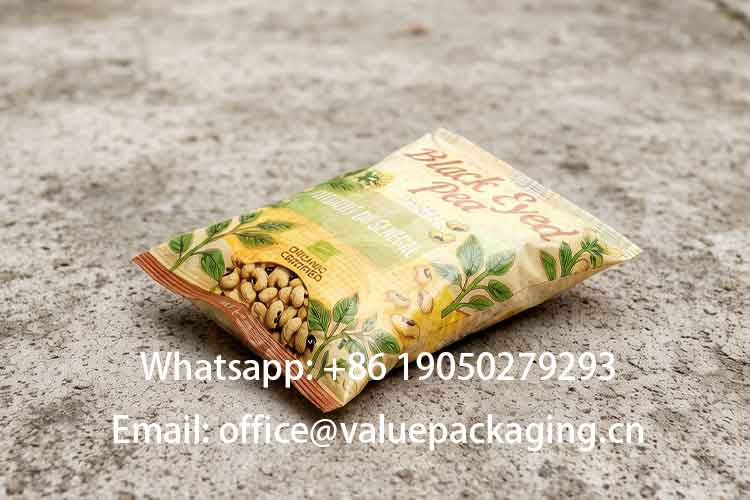
In black-eyed pea packaging, quality performance is often evaluated through seal strength, barrier properties, and shelf life stability, like drop test, airtight property test, anti-pressure test. However, before these characteristics can be reliably assessed, impact resistance must be verified first. This is why drop testing plays a critical role in black-eyed pea bags, especially for stand-up pouch formats used in modern dry food packaging.
During filling, transportation, warehousing, and retail handling, black-eyed pea bags are repeatedly exposed to drops, shocks, and stacking pressure. Without sufficient impact resistance, even well-designed packaging structures may fail under real-world logistics conditions. Drop testing ensures that black-eyed pea packaging performs as intended beyond the laboratory environment.
1. Why Black-Eyed Pea Packaging Is Vulnerable to Impact
How Internal Movement Affects Pillow Pouches
Black-eyed peas are small but relatively heavy. In a pillow pouch, they can shift and roll around when the bag is dropped. This movement pushes against the film and the seals, creating pressure points that can cause tiny creases or weak spots. Even if the outside looks fine, the bag may already have hidden stress that could lead to leaks or tears later.
Why Seals Can Be Stressed
Lab tests usually measure seals under slow, controlled conditions. But a real drop is sudden. In pillow pouches, the heat-sealed edges take most of the impact. If the seal wasn’t perfect during production, repeated handling can stretch it or create small gaps. Over time, this can allow air or moisture to sneak in, reducing shelf life.
Corners and Edges Take the Brunt
Pillow pouches don’t have a rigid base like stand-up pouches. When dropped, the corners and edges hit the surface first and absorb most of the force. These areas are the most likely to bend, crease, or weaken, which can compromise the whole package even if the center of the bag looks intact.
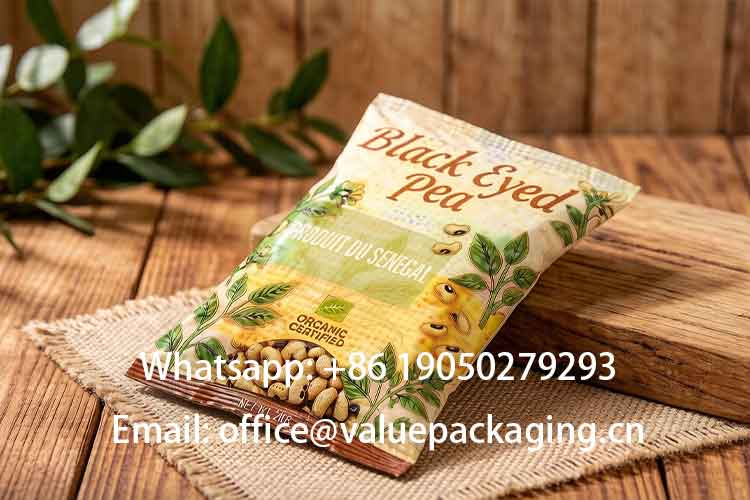
How Drop Testing Applies to Black-Eyed Pea Bags
Drop testing simulates real-world transportation and handling scenarios, replicating the impact forces that bags experience during shipment and in retail environments. For black-eyed pea bags, test samples are filled with actual product or equivalent weight to accurately reproduce how the contents move inside the pouch during impact.
Common laminate structures such as PET and LDPE are widely used in black-eyed pea packaging. PET provides stiffness and puncture resistance, while LDPE absorbs impact energy and supports seal reliability. However, for products like black-eyed peas, which can be heavy and prone to internal movement, adding PA (Nylon) to the laminate can provide an additional layer of strength. PA improves tear resistance and impact strength, making the packaging more durable and better able to withstand the rigors of transportation and handling.
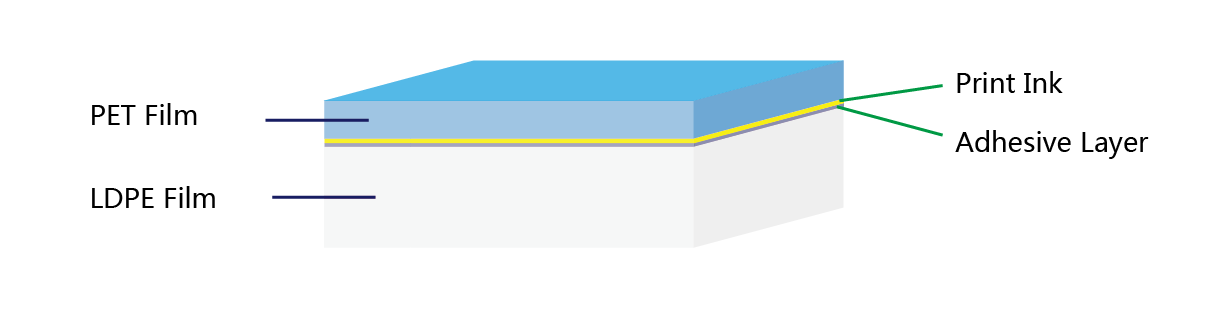
Drop testing confirms whether this combination of PET, LDPE, and PA (Nylon) can maintain product integrity throughout distribution. Testing procedures typically follow recognized standards such as ASTM and ISTA, ensuring that results are consistent and relevant to real logistics conditions. Multiple drop orientations, including flat, edge, and corner impacts, are applied to evaluate cumulative damage rather than just focusing on single-event failures.
By using this combination of materials, manufacturers can ensure that their packaging offers optimal protection, keeping black-eyed peas intact and fresh during the entire supply chain process.
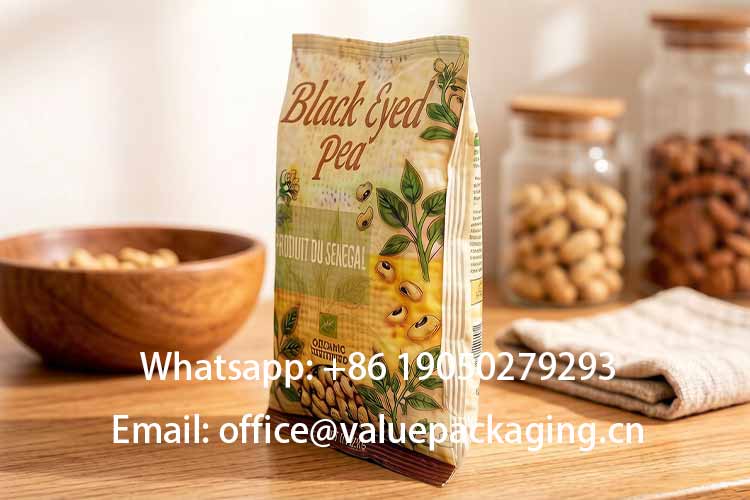
Practical Drop Testing Method for Black-Eyed Pea Packaging
Representative Sample Selection
Samples are randomly selected from production runs to reflect real manufacturing conditions, ensuring accurate evaluation of packaging performance.

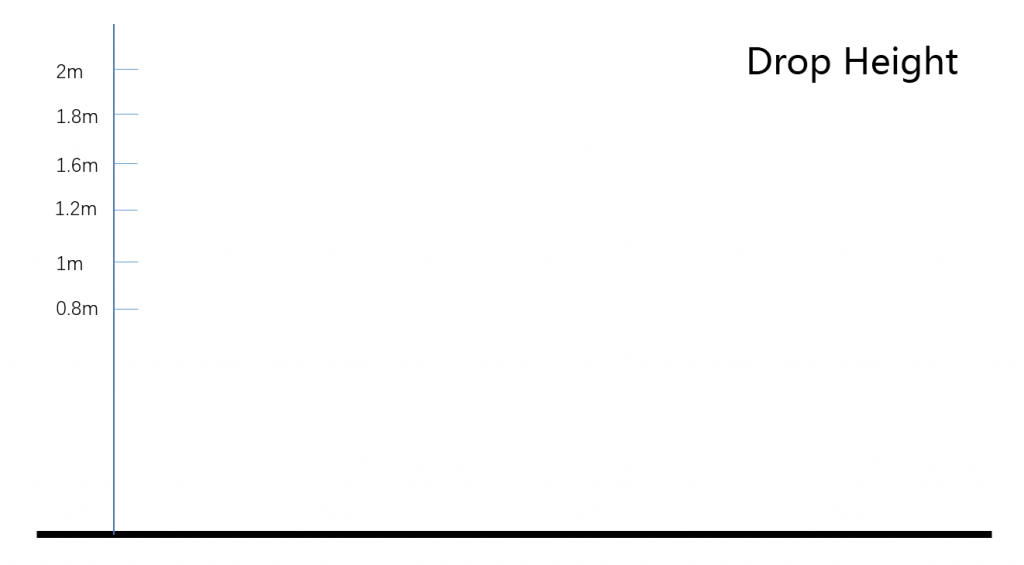
Realistic Drop Heights
Drop heights are defined based on package weight, pallet configuration, and handling scenarios. Heavier black-eyed pea bags are tested at higher drop levels to reflect warehouse and retail operations.
Multiple Orientations and Repeated Drops
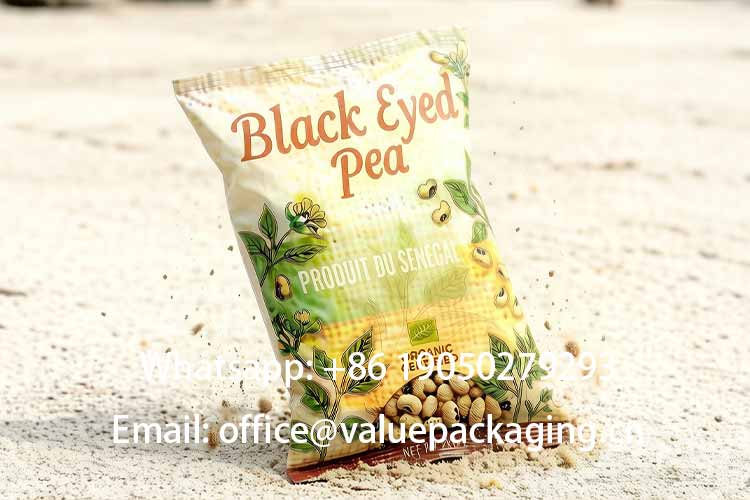
Packages are dropped multiple times in different orientations, with emphasis on edges and corners where failure is most likely to occur.
Post-Test Inspection
After testing, bags are evaluated for seal separation, film cracking, deformation, and product containment. Only packaging that remains fully sealed and structurally stable is considered to pass.
You can refer to the following video to understand our drop test procedure.
Benefits of Drop Testing for Black-Eyed Pea Bags
Ensuring Packaging Reliability During Transportation
Drop testing verifies that black-eyed pea bags can withstand shocks and drops without compromising seal integrity or product containment.
Protecting Product Quality and Shelf Appearance
Even without visible package failure, internal damage can lead to product dusting or uneven settling. Drop testing helps maintain consistent product presentation at retail.

Optimizing Packaging Structure and Materials
Test results provide data-driven insight into laminate performance, supporting structure optimization while avoiding unnecessary material overuse.
Reducing Logistics Loss and Strengthening Brand Trust
Identifying weaknesses before shipment reduces transportation damage, minimizes complaints, and builds long-term confidence in black-eyed pea packaging performance.
Conclusion
Drop testing reveals packaging weaknesses that static testing cannot identify. For black-eyed pea bags, it validates whether packaging can withstand real handling conditions throughout the supply chain.
By prioritizing impact resistance through drop testing, manufacturers ensure that black-eyed pea packaging performs where it matters most, from factory floor to consumer shelf.