
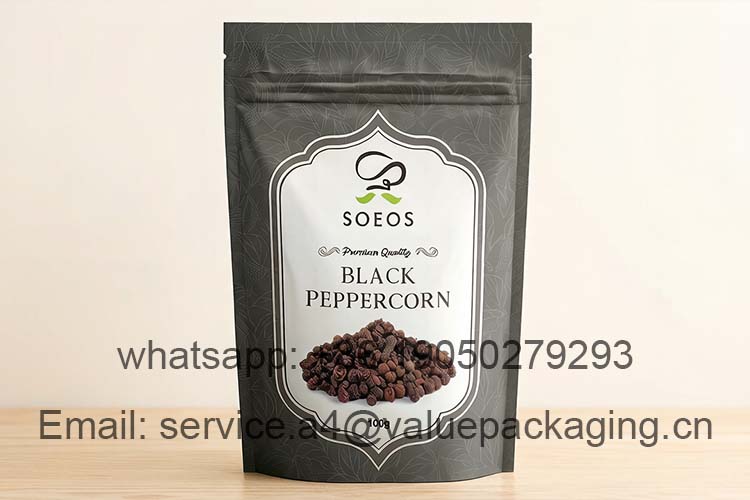
Peppercorns are a widely used spice known for their strong aroma and distinctive flavor. Whether black, white, or green, whole peppercorns are commonly used in households, food service, and industrial seasoning applications. Compared with ground spices, peppercorns have a longer shelf life, but they are still sensitive to moisture, oxygen, and aroma loss. As a result, pepper packaging plays an important role in preserving flavor intensity, preventing contamination, and maintaining product quality over time. At the same time, brands are increasingly exploring eco-friendly pepper packaging to align with sustainability goals.
1. Common Peppercorn Packaging Solutions
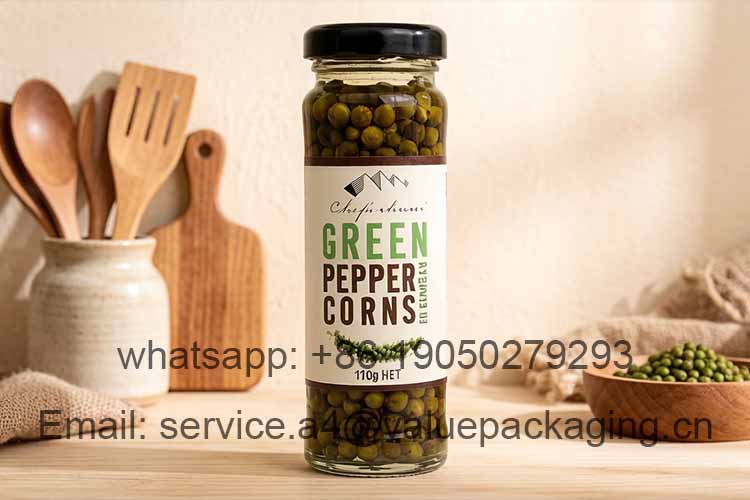
Peppercorn packaging needs to balance aroma retention, moisture protection, and convenience, while supporting both small retail formats and bulk distribution.
Glass bottles
Glass bottles are commonly used for premium pepper products. They offer excellent barrier properties against moisture and air, helping maintain flavor quality over time. In addition, the transparent and rigid appearance enhances product visibility and shelf appeal, making them suitable for high end retail positioning.
Stand-up pouches with resealable zippers
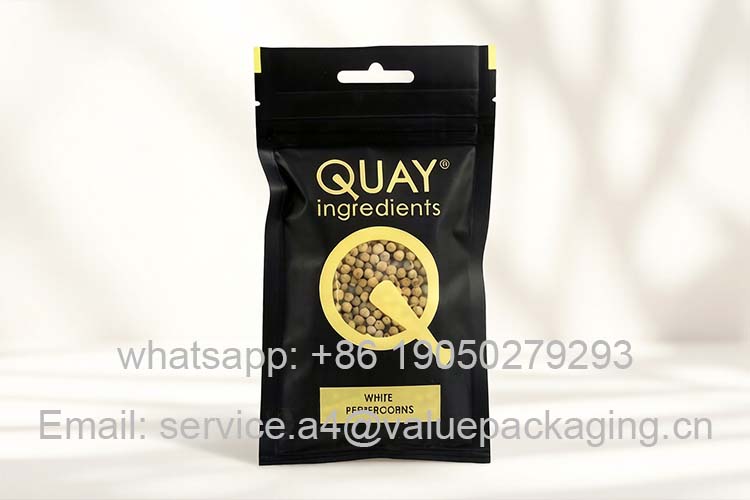
These pepper pouches are widely used in retail packaging. The resealable zipper helps limit air exposure after opening, which is important for preserving aroma and freshness. A hang hole design can also be added at the top, allowing the product to be displayed on hooks for better shelf visibility. Their lightweight and flexible structure also improves storage efficiency and reduces transportation costs.
Pillow bags
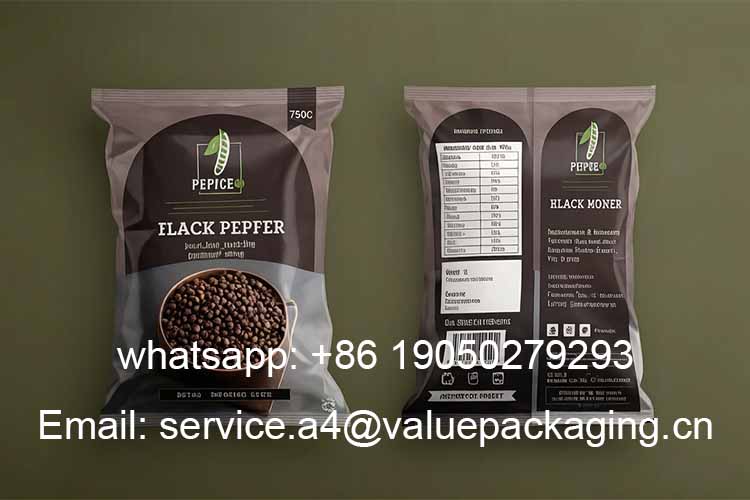
Pillow bags are a simple and cost effective packaging format for pepper. They are widely used for small to medium pack sizes and high volume distribution. This format provides efficient sealing and is easy to produce at scale, making it suitable for everyday retail and promotional packaging.
Transparent refill pouches
Transparent refill pouches are commonly used as a supplementary packaging format for peppercorn products. This format is typically used for replenishing glass bottles or grinders at home, offering a balance between product visibility, lightweight design, and cost efficiency while providing adequate moisture protection for standard storage conditions.
2. Key Packaging Requirements for Peppercorns
Although peppercorns are relatively stable, their quality depends heavily on preserving volatile compounds responsible for aroma and flavor.
- Aroma retention
Peppercorns contain essential oils that can gradually evaporate. Packaging must limit aroma loss to maintain flavor strength. - Moisture control
Exposure to humidity can lead to softening, mold risk, or reduced grinding performance. A stable moisture barrier is essential. - Oxygen control
Oxidation can slowly degrade flavor compounds, especially during long storage periods. - Odor protection
Peppercorns can absorb external odors. Packaging should prevent contamination from surrounding products. - Seal integrity
A tight seal is important to preserve internal conditions, especially for resealable consumer packs.
To meet these requirements, pepper packaging materials should provide moderate to high barrier performance, depending on shelf life expectations.
Common materials include:
- PET film
- VMPET film
- LDPE film
- BOPP film
- Kraft paper
- Metallized PET film
- AlOx and SiOx coated PET film
Compared with widely used structures such as PET/PE or BOPP/CPP, aluminum foil laminates generally involve higher material and processing costs, making them less cost efficient for standard peppercorn products. In addition, whole peppercorns are relatively stable and less sensitive to moisture and oxidation than ground spices, so the use of ultra high barrier materials like aluminum foil is often unnecessary and can be considered an over specification for typical packaging needs.
3. Sustainability Challenges in Conventional Pepper Packaging
Different material combinations are used in peppercorn packaging depending on product positioning, shelf life, and market requirements.
| Packaging Material | Key Advantages | Typical Applications |
|---|---|---|
| PET / PE | Cost-effective with basic moisture protection | Standard retail pepper pouches |
| BOPP / PE | Lightweight and printable | Economy packaging |
| PET / VMPET / PE | Improved aroma and oxygen barrier | Mid-range retail products |
| PET / AL / PE | Excellent barrier for aroma preservation | Premium or export-grade pepper |
| Kraft Paper / VMPET / PE | Natural appearance with functional barrier | Organic or specialty spices |
Flexible Packaging Material Options for Peppercorns
Selecting the right material structure for peppercorn packaging depends on the balance between cost, barrier performance, product positioning, and sustainability. Below is a closer look at commonly used material options and their practical applications.
Standard Barrier Structures
PET / PE
This is one of the most widely used and cost effective structures for pepper packaging. It provides basic moisture protection and good mechanical strength, making it suitable for standard retail pouches. While its oxygen barrier is limited, it is generally sufficient for whole peppercorns, which are relatively stable compared to ground spices.
BOPP / PE
BOPP based structures are lightweight and offer excellent printability, making them ideal for visually driven, economy level packaging. Although the barrier performance is moderate, it is adequate for short to medium shelf life products and high turnover retail environments.
High-Barrier Structures
PET / VMPET / PE
This structure incorporates a metallized layer, which significantly improves oxygen and aroma barrier performance compared to standard laminates. It is commonly used for mid range products where maintaining flavor quality over a longer shelf life is important, without the full cost of aluminum foil.
Paper-Based Functional Structures
Kraft Paper / VMPET / PE
This structure combines a natural paper appearance with the functional barrier of a metallized inner layer. It is often used for organic or specialty spice products where visual positioning and brand storytelling are important. While it offers improved barrier performance compared to pure plastic structures, it still faces recyclability challenges due to lamination.
However, these multilayer laminates are difficult to recycle due to the combination of different materials, which limits their sustainability.
4. Recyclable Mono Material Pepper Packaging
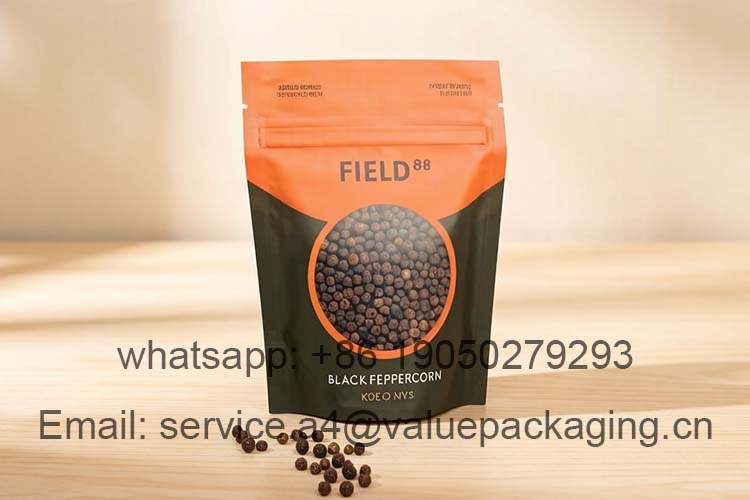
Under growing sustainability pressure, mono material solutions are becoming a practical direction for peppercorn packaging. By keeping the structure within a single polymer family, these pouches are easier to process in existing recycling streams and avoid the complexity of traditional mixed laminates.
PE-based solutions for peppercorns typically include:
Polyethylene structures are valued for their flexibility and reliable sealing performance. For peppercorns, they provide stable moisture control and package integrity during transport and repeated handling. When combined with EVOH, the structure can also offer a moderate improvement in oxygen barrier, helping retain aroma over longer storage periods.
PP-based solutions commonly include:
Polypropylene materials are often selected for their stiffness and clean appearance, which support strong shelf presentation. They also run efficiently on high speed packing lines, making them suitable for formats such as pillow bags or small retail packs. Metallized versions can further enhance barrier performance without significantly increasing structure complexity.
Examples of recyclable mono material structures:
- BOPP/VMCPP
- MDOPE/LDPE
- BOPE/LDPE
- MDOPE/BOPE/LDPE
- BOPP/VMCPP
- ABOPP/VMCPP
These structures are designed to balance functionality with recyclability. While they do not match the extreme barrier performance of aluminum based laminates, they provide sufficient protection for whole peppercorns, where aroma retention is important but not as sensitive as in ground spices. At the same time, they support a more sustainable packaging approach aligned with current market expectations.
5. Compostable Pepper Packaging
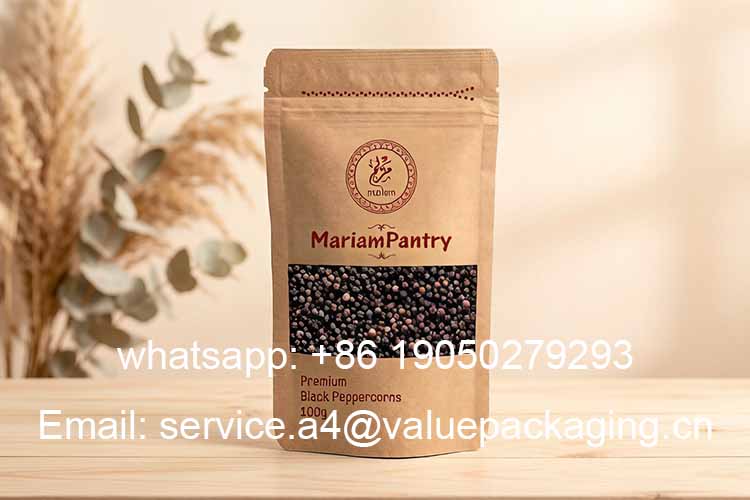
Another developing direction in peppercorn packaging is the use of compostable materials derived from renewable resources such as PLA, PBAT, and cellulose. These materials are designed to break down under industrial composting conditions, offering an alternative to conventional fossil based plastics, particularly for brands with strong sustainability positioning.
Common compostable materials include:
In practical use, these materials are rarely applied as single layers. They are typically laminated to improve mechanical strength, sealing reliability, and barrier performance. For peppercorns, the focus is less on grease resistance and more on controlling aroma loss and limiting moisture ingress, especially in humid distribution environments.
Typical compostable structures include:
- Kraft Paper/PLA+PBAT Membrane
- Cellulose/PLA+PBAT Membrane
- Metallized Paper/PLA+PBAT Membrane
- Cellulose/Metallized Cellulose/PLA+PBAT Membrane
- Kraft Paper/Metallized Cellulose/PLA+PBAT Membrane
Whole peppercorns have different packaging requirements compared to products like cookies. They are less sensitive to moisture but rely more on retaining volatile aroma compounds, making oxygen barrier more important than grease resistance, while moderate moisture protection is usually sufficient.
One limitation of compostable laminates is their relatively lower barrier performance compared with aluminum-based structures. As a result, they are generally better suited for short to medium shelf life or controlled distribution conditions. To improve performance, metallized or coated compostable layers are often used to help reduce oxygen and moisture transmission.
Overall, compostable packaging can work well for sustainability-focused peppercorn products, provided the structure is carefully designed to balance protection and performance.
6. Conclusion
Peppercorn packaging is less about physical protection and more about preserving aroma and flavor over time. Effective packaging must control moisture, limit oxygen exposure, and prevent aroma loss.
As sustainability becomes more important, recyclable mono material pouches and compostable solutions are gradually being adopted. However, maintaining aroma retention remains a key technical challenge.
By carefully selecting materials based on shelf life and product positioning, brands can achieve a balance between performance and environmental responsibility while delivering high-quality pepper products.