
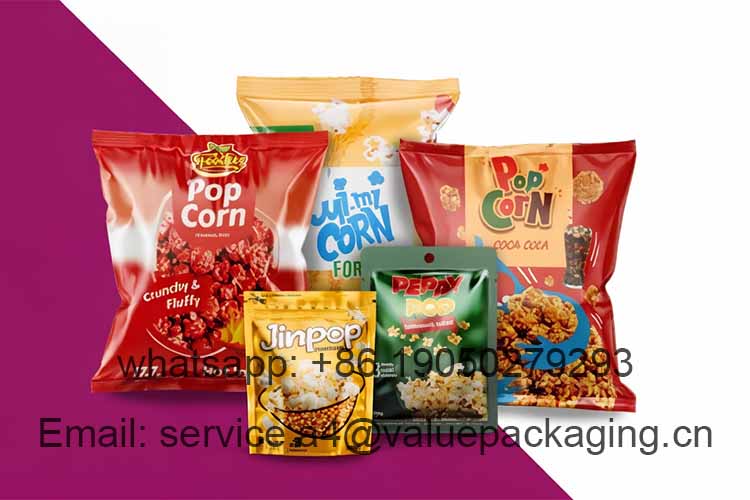
As demand for convenient and ready-to-eat snacks continues to grow, popcorn has become a staple product across cinemas, retail stores, and home consumption. Made from popped corn kernels, popcorn is light, airy, and often coated with oil, butter, or flavorings. Because of this structure, popcorn packaging plays a critical role in maintaining crispness, preventing oxidation, and protecting the product from breakage. At the same time, brands are increasingly exploring eco-friendly popcorn packaging and sustainable popcorn bags to reduce environmental impact.
1. Common Popcorn Packaging Solutions
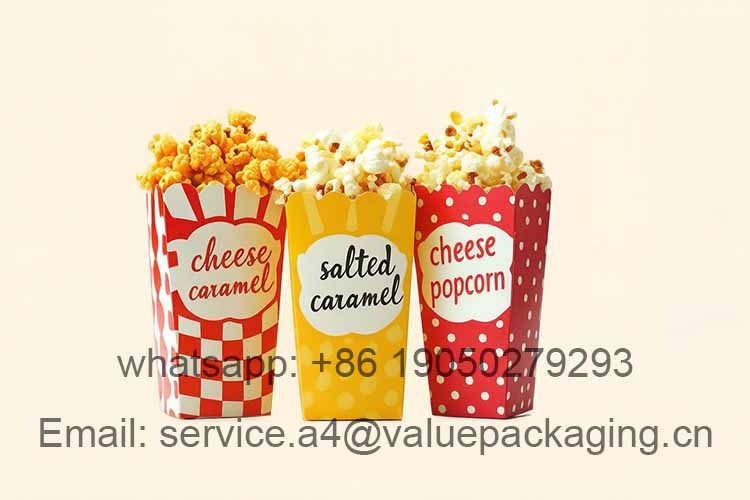
Popcorn packaging must protect the product from oxygen and moisture while offering basic protection against crushing and ensuring grease resistance and convenience for consumers. The most commonly used formats include:
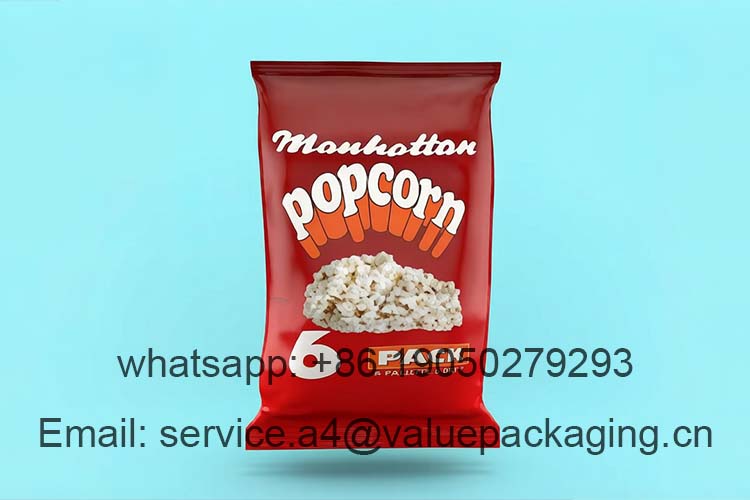
Pillow bags
Pillow bags are the most widely used popcorn bags in the snack industry. They are lightweight, cost-effective, and suitable for high-speed production lines. These bags are typically nitrogen-filled to reduce oxygen levels, helping maintain freshness while preventing the popcorn from being crushed during transportation.
Stand-up pouches with resealable zippers
These popcorn pouches are commonly used for premium or resealable products. The zipper allows repeated opening and closing, helping maintain freshness after opening. The stand-up structure enhances shelf presentation and provides more space for branding.
Paper bags with inner lining
Widely used in cinemas and takeaway applications, paper-based popcorn bags are lightweight and easy to use. These bags are usually combined with grease-resistant inner coatings to prevent oil leakage and improve handling.
Single-serve sachets
Single-serve popcorn sachets are designed for portion control and convenience. These small-sized packages are commonly used for on-the-go consumption, school snacks, or airline catering. They help maintain product freshness before opening and reduce the risk of moisture and oxygen exposure. Their compact format also makes them suitable for multipack sales and efficient distribution.
2. Traditional Materials Used in Popcorn Packaging
Due to its light structure and oil content, popcorn packaging must meet several key requirements:
- Moisture protection
Popcorn quickly loses its crisp texture when exposed to humidity, so packaging must provide an effective moisture barrier. - Oxidation protection
Oils and flavorings are sensitive to oxygen, which can lead to rancidity and flavor loss. Proper barrier materials and nitrogen flushing are commonly used. - Grease resistance
Butter or oil coatings require packaging materials that can resist grease penetration and maintain package integrity. - Physical protection
Popcorn is fragile and easily crushed, so packaging must provide cushioning and sufficient strength, especially during transportation. - Convenience
Consumers prefer packaging that is easy to open, carry, and reseal, especially for multi-serving products.
To achieve these functions, popcorn packaging materials must provide reliable barrier performance and sealing properties. Common materials include:
- PET film
- VMPET film
- LDPE film
- BOPP film
- Kraft paper
- Metallized PET film
BOPP (Biaxially Oriented Polypropylene) is commonly used for ready-to-eat popcorn due to its strength, flexibility, and ease of use on high-speed packaging lines. Its grease resistance helps protect oil-containing popcorn, while clear, glossy, or matte finishes support attractive printing and shelf appeal. For immediate consumption products, BOPP alone provides sufficient protection, making it a practical and cost-effective choice. For slightly longer shelf life, it can be lightly laminated with LDPE or VMCPP to improve sealing and maintain freshness.
3. Sustainability Challenges in Conventional Popcorn Packaging
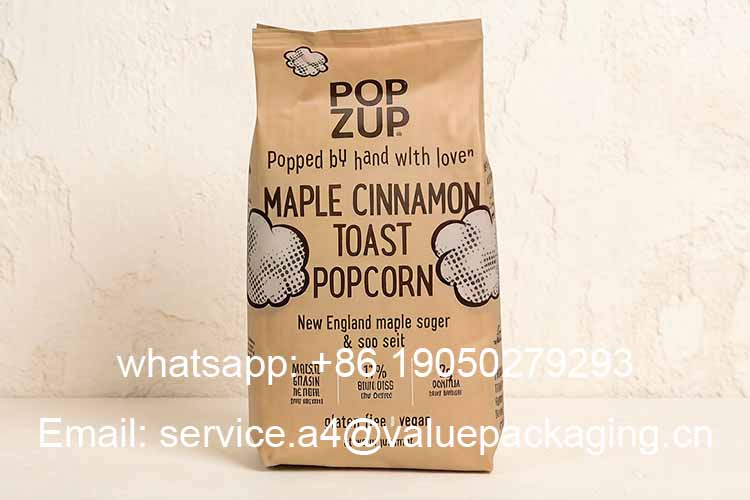
Selecting the right packaging material is essential for preserving popcorn quality and appearance. Different materials provide varying levels of barrier performance, grease resistance, and visual appeal, making them suitable for different market segments.
Depending on the usage scenario and shelf-life requirements, popcorn packaging can be divided into the following categories:
| Application Type | Key Features | Suitable Shelf Life |
|---|---|---|
| Ready-to-Eat | High transparency and printability for product display; limited oxygen and moisture barrier | Immediate consumption, short turnover, e.g., cinemas, events, freshly packed popcorn |
| Short Shelf Life | Good grease resistance and heat sealing; suitable for high-speed production. Cost-effective with basic protection; limited barrier | Freshly produced, fast-selling products; high-volume, low-cost products |
| Medium Shelf Life | Matte finish enhances visual appeal; improved oxygen and moisture barrier; stronger mechanical durability | Mid-range retail products balancing performance and branding; products requiring durability during transportation |
| Long Shelf Life | High oxygen and moisture barrier; suitable for nitrogen flushing | Export or long distribution cycle products |
Selecting the right packaging material is essential for preserving popcorn quality and appearance. In real market applications, different laminate structures are often selected based on the required shelf life, barrier performance, and brand positioning. The following reflects more practical structures commonly used in the industry, especially when shelf life requirements vary.
Ready-to-Eat Applications
Single-layer BOPP
This structure is typically used for ready-to-eat popcorn with immediate consumption needs. It offers excellent transparency and printability, allowing the product to be clearly displayed while maintaining a clean visual appearance. However, due to its limited oxygen and moisture barrier, it is only suitable for very short shelf life applications such as cinema sales, events, or freshly packed popcorn with fast turnover.
Short Shelf Life Applications
BOPP / VMCPP
Widely used for standard pillow bags in high-speed production. It provides good grease resistance and heat sealing performance, with moderate moisture and oxygen barrier. Suitable for freshly produced popcorn with relatively fast turnover.
BOPP / PE
A cost-effective structure with basic protection. It offers limited barrier properties and is typically used for low-cost, high-volume products where shelf life requirements are not strict.
Medium Shelf Life Applications
BOPP (Matte) / VMPET / PE
The matte BOPP layer improves visual appeal and creates a premium shelf presence, while VMPET provides enhanced oxygen and moisture barrier. This structure balances performance and branding, making it suitable for mid-range retail products.
PET / LDPE
Offers better mechanical strength and slightly improved barrier compared to BOPP-based structures. Commonly used for products requiring more durability during transportation, with moderate shelf life expectations.
Long Shelf Life Applications
PET / VMPET / LDPE
This is one of the most widely used high-barrier structures for popcorn. The combination of PET and VMPET delivers strong oxygen and moisture protection, making it ideal for nitrogen flushing and extended shelf life. Suitable for export markets and products with longer distribution cycles.
While these structures provide different levels of protection based on shelf life needs, most of them rely on multi-material laminations such as BOPP, PET, VMPET, and PE. These layers are permanently bonded, making them difficult to separate during recycling.
4. Recyclable Mono Material Popcorn Packaging
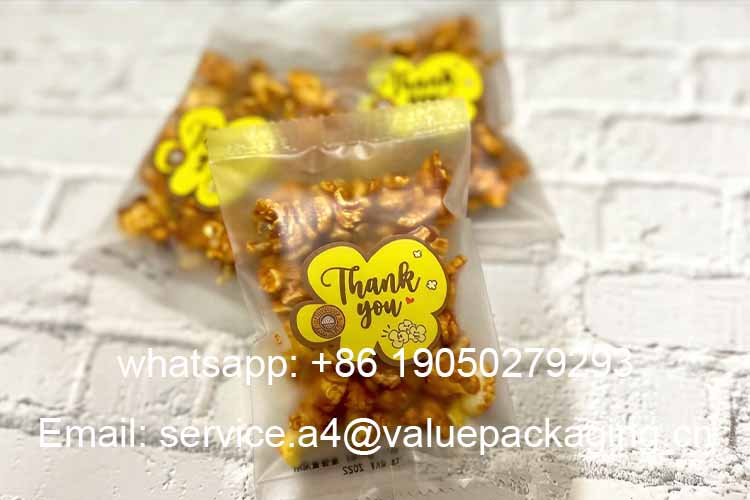
To address recycling challenges, the snack industry is increasingly exploring mono-material flexible packaging solutions for popcorn. By using films from the same polymer family, such as polyethylene (PE) or polypropylene (PP), these pouches are easier to process in recycling streams while still protecting popcorn from moisture, oxygen, grease, and mechanical stress during transport and storage.
Common PE-based materials for popcorn include:
Common PP-based materials include:
By selecting films within the same polymer family and combining them strategically, manufacturers can produce recyclable popcorn pouches that maintain structural integrity, reliable heat sealing, and effective barrier performance.
Typical mono-material or recycling-friendly structures for popcorn:
- BOPP/VMCPP
- MDOPE/LDPE
- BOPE/LDPE
- MDOPE/BOPE/LDPE
- BOPP/VMCPP
- ABOPP/VMCPP
These structures help preserve popcorn crispness, prevent oil oxidation, and maintain flavor while reducing environmental impact. Innovations such as matte or textured BOPP layers can also enhance shelf appeal without compromising recyclability.
By shifting to these mono-material formats, brands can achieve a practical balance between sustainability, product protection, and consumer experience, responding to the growing demand for eco-friendly popcorn packaging.
5. Compostable Popcorn Packaging
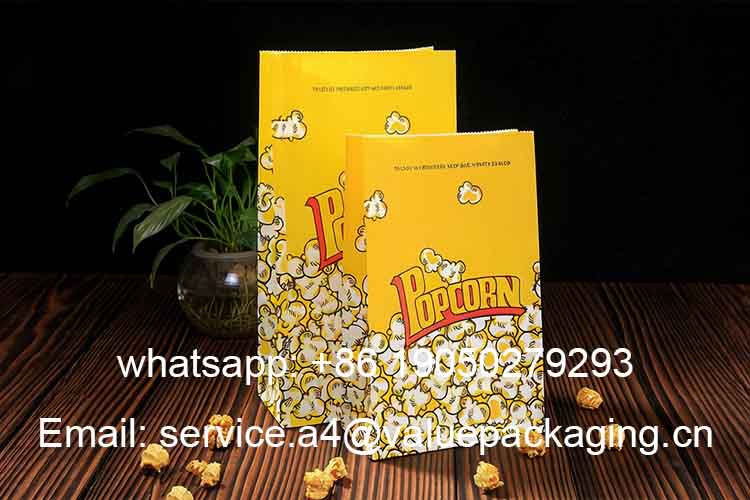
Another emerging direction in sustainable popcorn packaging is the use of compostable flexible materials designed to break down under controlled composting conditions. These materials are typically derived from renewable or bio-based resources and can help reduce long-term environmental impact compared with conventional plastic laminates.
Common compostable materials used for popcorn flexible packaging include:
In practical applications, these materials are often laminated to improve mechanical strength, sealing performance, and moisture/oxygen barrier properties. This is particularly important for popcorn, as it is sensitive to moisture, which can cause it to lose crispness or become stale, and oxygen, which can lead to rancidity in flavored or buttered varieties. Some laminates may also include thin protective coatings to reduce oil migration or clumping.
Typical compostable pouch structures for popcorn include:
- Kraft Paper/PLA+PBAT Membrane
- Cellulose/PLA+PBAT Membrane
- Metallized Paper/PLA+PBAT Membrane
- Cellulose/Metallized Cellulose/PLA+PBAT Membrane
- Kraft Paper/Metallized Cellulose/PLA+PBAT Membrane
For popcorn, compostable packaging must provide sufficient barrier performance to preserve crispness, flavor, and shelf appeal throughout storage and transport. Properly designed compostable structures allow brands to offer eco-friendly, fully compostable popcorn packaging without compromising product quality or consumer experience.
These values illustrate that compostable laminates can achieve moisture and oxygen barrier levels comparable to conventional flexible packaging, making them a viable option for high-quality, eco-friendly popcorn.
Barrier Properties of Compostable Laminates
| Biodegradable Foil Laminate | WVTR(g/m2/24hr) | OTR (cc/m2/24hr) |
| Cellulose20/Metallized Cellulose20/PLA+PBAT60 | 18 | 2.1 |
| Cellulose20/Metallized Cellulose20/BOPLA40 | 19 | 2.2 |
| K-Cellulose22/Metallized Cellulose20/PLA+PBAT60 | 8 | 0.5 |
| Metallized Paper 69g/Cellulose30/PLA+PBAT60 | 5.6 | 1.12 |
| Cellulose30/Metallized Paper69g/PLA+PBAT60 | 8.9 | 1.1 |
6. Conclusion
As sustainability becomes increasingly important, popcorn packaging is evolving toward more environmentally responsible solutions. Recyclable popcorn pouches improve compatibility with recycling systems, while compostable popcorn bags provide an alternative approach to reducing packaging waste.
At the same time, packaging must continue to protect popcorn from oxygen, moisture, grease, and physical damage to maintain its crisp texture and flavor. By balancing sustainability with performance, brands can deliver high-quality popcorn while meeting modern consumer expectations.