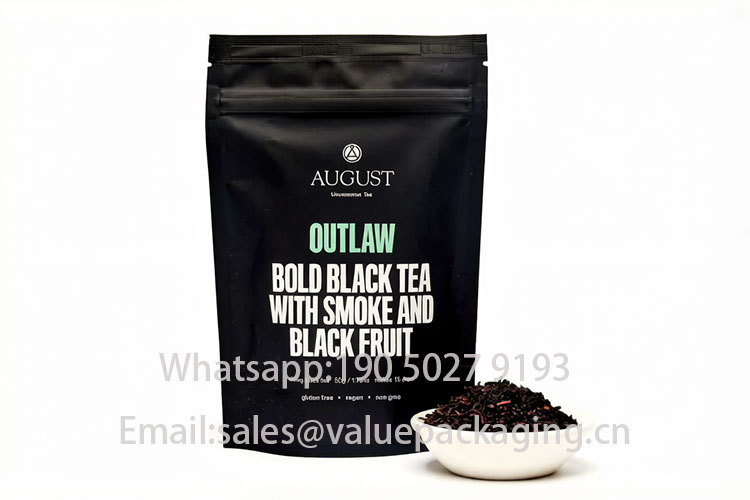
As sustainability becomes a defining factor in consumer purchasing decisions, tea brands are rapidly transitioning toward environmentally responsible solutions. From premium loose-leaf blends to convenient single-serve sachets, packaging now plays a critical role not only in product protection but also in brand perception and environmental impact.
Today, sustainable tea packaging is no longer a niche concept,it is a competitive necessity. Consumers expect brands to reduce waste, use eco-conscious materials, and offer packaging formats such as pouch, doypack, bag, sachet, pack, and packet that align with both convenience and sustainability.
1. Conventional Materials in Tea Packaging
Despite the rise of eco-friendly innovations, conventional materials still dominate the tea packaging market due to their excellent barrier properties and cost efficiency. Tea is highly sensitive to moisture, oxygen, and light, making high-performance packaging essential.
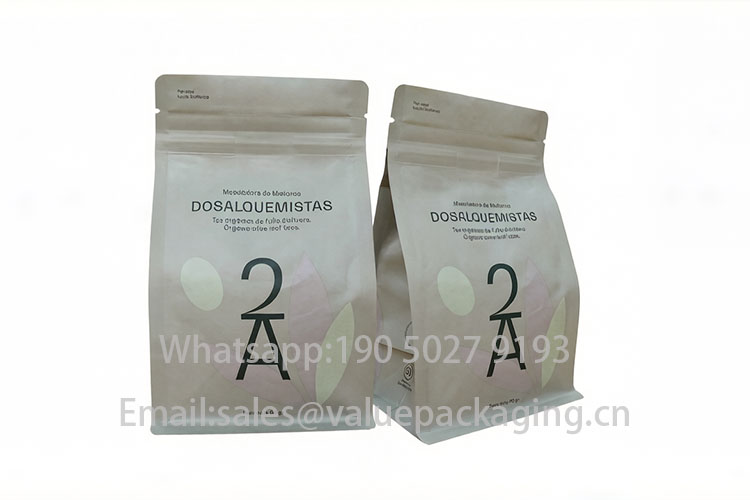
Common Structures
Typical conventional tea packaging structures include:
- PET / AL / LDPE
- BOPP / VMPET / LDPE
- Kraft Paper / AL / LDPE
These laminates are widely used in various formats such as stand-up pouch (doypack), flat bag, tea packet, and bulk pack.
Comparison of differences between AL and VMPET
| AL | VMPET | |
| definition | Pure aluminum metal foil | A vacuum-deposited ultra-thin aluminum layer (approximately 0.02–0.04 μm) is applied onto the PET substrate film |
| Aluminum layer thickness | Thick | Ultra-thin |
| photophobia | Totally opaque | Semitransparent/opaque (depending on thickness) |
| Flexibility | Relatively hard, prone to dead creases or pinholes after bending | Good flexibility, resistance to bending, and low tendency to develop pinholes |
| Anti-puncture | Poor quality, prone to damage | Good, the PET base film provides excellent puncture resistance. |
| Cost | Higher | Lower than AL |
Why Conventional Materials Are Still Used
Conventional laminated films offer:
Excellent oxygen and moisture barrier to preserve aroma and freshness;Strong sealing performance for long shelf life;High-speed production compatibility for large-scale tea brands;Premium printing quality for branding and shelf appeal
For example, premium loose-leaf tea is often packed in a resealable doypack pouch with a zipper, while tea bags are grouped into an outer packet or pack for retail sale.
2. Compostable Tea Packaging Materials
One of the fastest-growing trends in sustainable tea packaging is the use of compostable materials, especially among organic and premium tea brands.
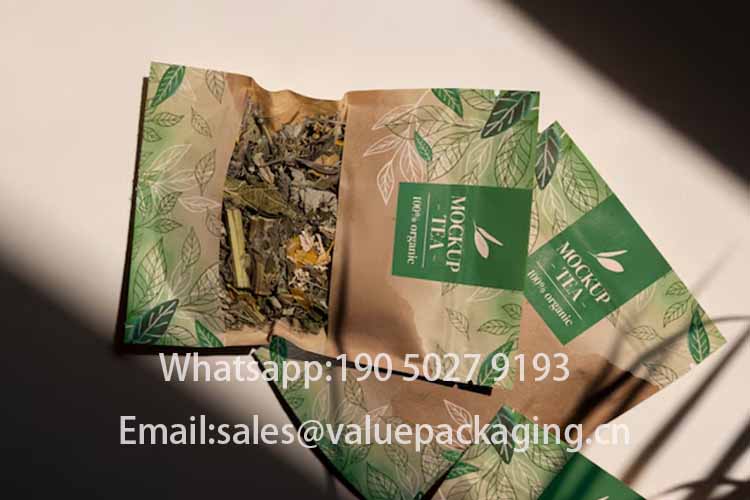
What Makes Packaging Compostable?
Compostable packaging is made from plant-based materials that can break down into natural elements under industrial composting conditions.
Compostable Substrates
PLA+PBAT Film
Kraft Paper
PBS Film
Cellulose Film
Common Compostable Structures
- Kraft Paper / PLA+PBAT
- Cellulose/PLA +PBAT
- Kraft Paper/Cellulose/PBS Membrane
Comparison of differences between PBS and PLA+PBAT
| PBS | PLA+PBAT | ||
| Tensile Strength | 32-55 MPa | 40-45 MPa | PBS better than PLA+PBAT |
| WVTR | 约1.5 g·mm/m²·d·kPa | 约3 g·mm/m²·d·kPa | PBS better than PLA+PBAT |
| OTR | 约30 cm²·mm/m²·d·atm | 约60 cm²·mm/m²·d·atm | PBS better than PLA+PBAT |
3. Recyclable Tea Packaging Materials
Recyclable packaging represents one of the most scalable and practical solutions for sustainable tea packaging today.
What Is Recyclable Packaging?
Recyclable packaging typically uses mono-material structures, meaning all layers are made from the same polymer family, such as polyethylene (PE).
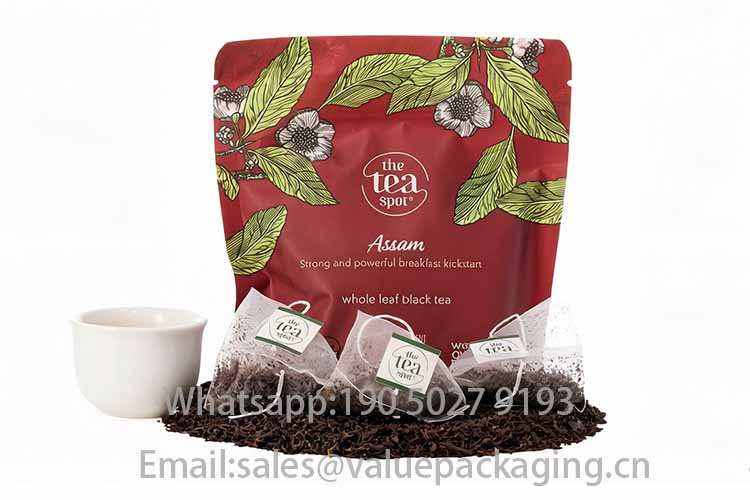
PE Mono Materials
Common Recyclable Structures
- MDO-PE / LDPE
- BOPE / LDPE
These materials are suitable for various formats, including pouch, doypack, bag, and packet applications.
Choosing the Right Sustainable Tea Packaging
Selecting the right packaging solution depends on multiple factors:
- Compostable packaging for natural and organic brands
- Recyclable packaging for large-scale retail distribution
- Optimized conventional packaging for cost-sensitive markets
Future Trends in Sustainable Tea Packaging
The future of sustainable packaging is being shaped by several key trends. High-barrier recyclable films are emerging as new technologies help close the performance gap between recyclable and traditional materials, making them more suitable for a wider range of applications. At the same time, advanced compostable solutions are evolving, with next-generation pouches and sachets offering improved durability and extended shelf life. In addition, minimalist packaging design is gaining traction, as brands focus on reducing material usage in bags, packs, and packets to enhance sustainability. Meanwhile, circular packaging systems are becoming a priority, with companies increasingly adopting recyclable materials combined with post-consumer recycled (PCR) content to support a closed-loop economy.
Conclusion
Sustainable tea packaging is transforming the industry, offering brands multiple pathways to reduce environmental impact while maintaining product quality.
The three main categories include:Conventional materials 、Compostable materials 、Recyclable materials
By integrating eco-friendly materials into formats like pouch, doypack, bag, sachet, pack, and packet, tea brands can meet evolving consumer expectations and strengthen their market position.
As sustainability continues to shape the future, investing in eco-frieandly tea packaging is not just a responsible choice,it is a strategic advantage for long-term growth.