
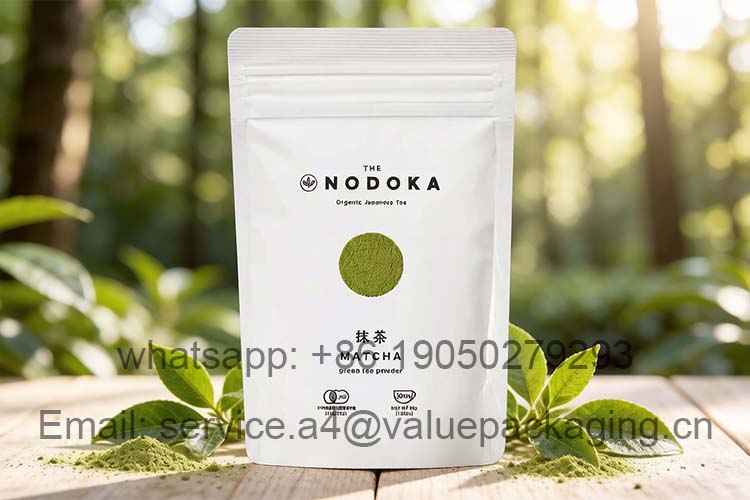
As demand for natural and functional ingredients continues to grow, matcha powder has become increasingly popular worldwide. Made from finely ground green tea leaves, matcha is widely used in beverages, baked goods, and health products. Because matcha is sensitive to moisture, light, and oxygen, matcha powder packaging plays a crucial role in preserving its vibrant color, flavor, and antioxidant content. At the same time, consumers are increasingly seeking eco-friendly matcha bags and sustainable matcha packaging solutions that reduce environmental impact while maintaining product quality.
1. Common Matcha Powder Packaging Solutions
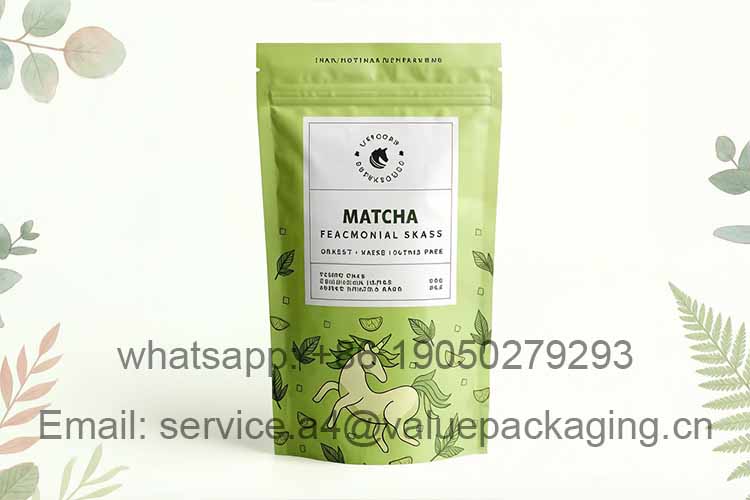
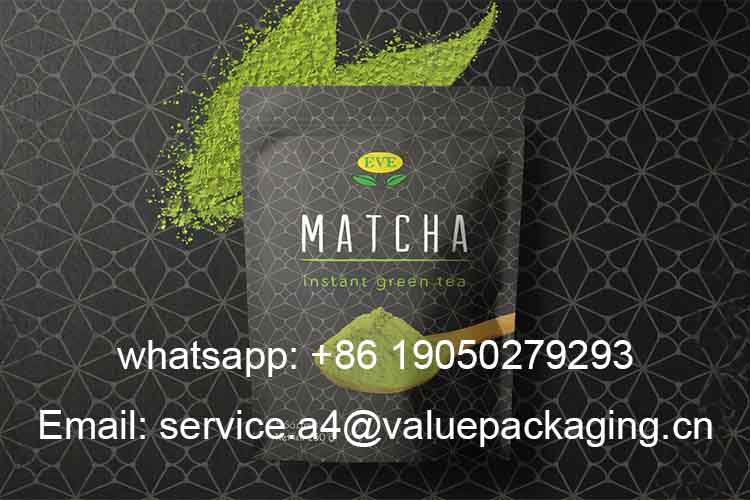
Stand-up pouches with resealable zippers
These matcha pouches are widely used for convenience. The resealable zipper allows repeated opening and closing while maintaining freshness. The upright design provides excellent shelf presentation and efficient storage for both retail and home use. Many pouches feature hang holes or perforations to improve shelf visibility and make products easy to display in retail settings.
Some matcha pouches also incorporate dust-proof zippers, which are designed with an additional protective groove or cover to reduce powder accumulation in the zipper area. This design helps prevent fine matcha powder from interfering with the closure, ensuring smoother opening and sealing while keeping the package clean and hygienic during repeated use.
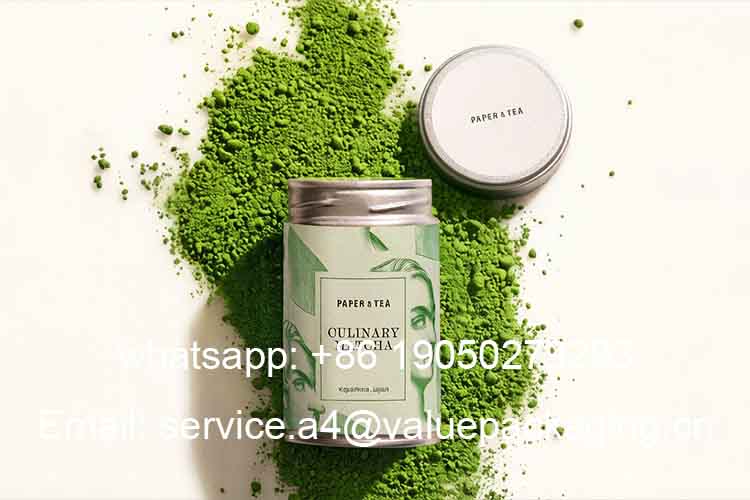
Tin cans or paperboard jars
These containers are commonly used for premium matcha powder packaging. Their rigid structure helps protect the powder from light and external pressure during storage and transportation. The airtight design also helps limit exposure to oxygen and moisture, which is important for preserving the color, aroma, and quality of matcha. In addition, the solid container provides a premium appearance that enhances brand presentation.
Single-serve sachets
These matcha sachets are widely used for portion control and convenience. Each sachet contains a pre-measured amount of matcha powder, making it easy for consumers to prepare beverages without additional measuring. The compact format is suitable for travel, cafes, and food service applications, while the sealed structure helps protect the powder from moisture and oxygen until use.
2. Materials Used in Matcha Powder Packaging
Matcha powder is delicate and highly sensitive to environmental factors. Proper packaging is essential to preserve its color, flavor, and nutritional quality throughout storage and transportation. Key Considerations:
- Oxygen Barrier: Prevents oxidation of chlorophyll and catechins to maintain vibrant color and fresh aroma.
- Moisture Protection: Keeps the powder dry and prevents clumping, preserving texture and usability.
- Light Protection: Shields from UV and visible light to avoid degradation of color and antioxidants.
- Sealing Performance: Ensures airtight closure for freshness after opening, using zippers, tins, or sachets.
- Odor Protection: Prevents absorption of external odors during storage and transport.
To maintain quality, matcha powder packaging materials must provide excellent protection against moisture, oxygen, and light.
Common materials include:
- PET film
- VMPET film
- Aluminum foil
- LDPE film
- BOPP film
- Kraft paper
- Metallized PET film
- AlOx and SiOx coated PET film
To achieve the required protection, matcha powder packaging often uses multilayer laminate structures that combine different materials to balance barrier performance, durability, and cost. By layering films with complementary properties, manufacturers can create packages that effectively protect matcha powder from oxygen, moisture, and light while maintaining good sealing performance and shelf appearance.
3. Sustainability Challenges in Traditional Matcha Powder Pouch
| Packaging Structure | Key Advantages | Typical Applications |
|---|---|---|
| PET / AL / PE | Very high oxygen, moisture, and light barrier | Premium matcha powder packaging |
| PET / VMPET / PE | Good barrier performance with lower cost | Standard retail matcha powder pouches |
| PET / AlOx-PET / PE | Transparent barrier film allowing partial visibility | Matcha powder packaging with product window |
| Kraft Paper / AL / PE | Natural appearance with strong barrier protection | Organic or specialty matcha powder packaging |
In addition, the materials used for matcha powder packaging may vary depending on the product’s positioning and market segment. Premium matcha products often use packaging with higher protective performance to better preserve quality and freshness, while standard retail products may focus on balancing protection with cost efficiency. For organic or specialty matcha, packaging may also emphasize natural appearance and brand image to align with consumer expectations.
Premium Matcha Packaging with Aluminum Foil:
Aluminum foil provides one of the highest barrier levels among flexible packaging materials. It offers excellent protection against oxygen, moisture, and light, making it ideal for premium matcha powder that requires long shelf life and preservation of color, flavor, and antioxidants. Foil-based laminates help prevent moisture absorption and protect the delicate powder from clumping during storage and transportation.
Standard Retail Packaging:
Metallized films such as VMPET offer reliable barrier performance while being more cost-efficient than aluminum foil, making them suitable for everyday retail matcha powder pouches. They effectively protect the powder while keeping production costs manageable.
Transparent Barrier Packaging:
- PET / AlOx-PET / PE
- PET / SiOx-PET / PE
For brands that want a product window to showcase the vibrant green color of matcha, transparent coated films like AlOx-PET or SiOx-PET are a practical choice. These films provide similar oxygen and moisture barrier protection to metallized PET while allowing partial product visibility, enhancing shelf appeal.
Kraft Paper Laminates:
Kraft paper laminated structures give matcha powder a natural, premium look while improving stiffness for better shelf presentation. When combined with aluminum foil, metallized PET, or coated films, kraft paper laminates offer both strong protection and a visually appealing package.
Recycling Considerations:
Because these multilayer laminates are permanently bonded, they are challenging to recycle. As a result, many conventional matcha powder pouches are not easily processed in standard recycling streams and are often treated as mixed plastic waste after disposal.
4. Recyclable Mono-Material Matcha Pouches
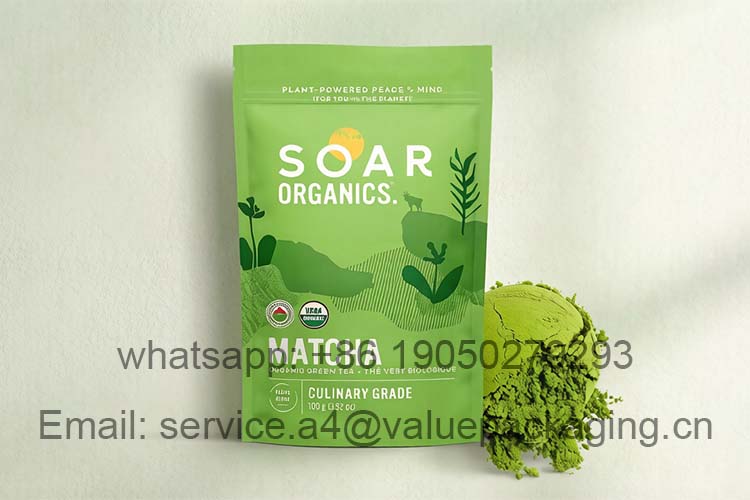
To improve sustainability, mono-material flexible matcha powder pouches are gaining popularity. Using films from a single polymer family, such as polyethylene (PE), allows pouches to be more compatible with recycling streams while still providing strong moisture and oxygen protection.
Common PE-based materials include:
In practical applications, these materials are usually laminated together to enhance strength, sealing performance, and barrier properties.
Typical recyclable matcha pouch structures:
- MDOPE/LDPE
- MDOPE/EVOH-LDPE
- MDOPE/BOPE/LDPE
- MDOPE/BOPE/EVOH-LDPE
These structures help preserve freshness and quality while improving recyclability compared with conventional multilayer laminates.
5. Compostable Matcha Sachets
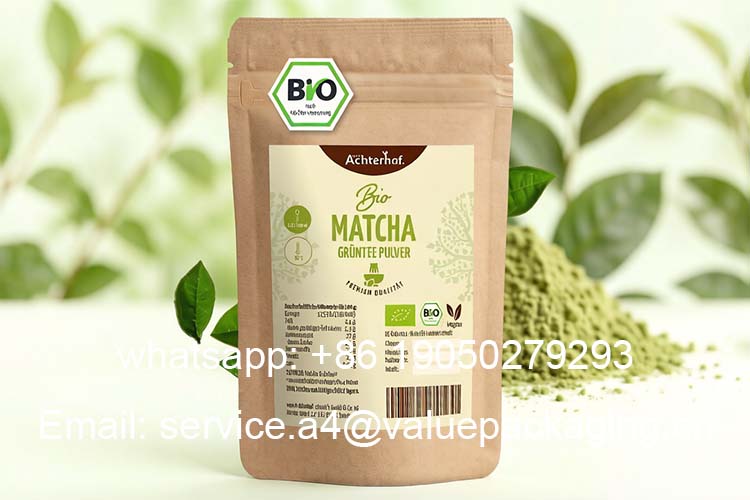
Another emerging direction in sustainable packaging is the use of compostable flexible materials designed to break down under controlled composting conditions. These materials are typically derived from renewable or bio based resources and can help reduce long term environmental impact compared with conventional plastic packaging.
Common compostable materials used in flexible packaging include:
In practical applications, these materials are often laminated together to improve mechanical strength, sealing performance, and barrier properties required for powder products.
Typical compostable structures include:
- Kraft Paper/PLA+PBAT Membrane
- Cellulose/PLA+PBAT Membrane
- Metallized Paper/PLA+PBAT Membrane
- Cellulose/Metallized Cellulose/PLA+PBAT Membrane
- Kraft Paper/Metallized Cellulose/PLA+PBAT Membrane
- Kraft Paper/Cellulose/PLA+PBAT Membrane
- Kraft Paper/Cellulose/PBS Membrane
- Metallized Paper/Cellulose/PLA+PBAT Membrane
For fine powders such as matcha, compostable packaging must provide sufficient moisture and oxygen barrier performance to protect the powder from humidity and oxidation. This is important for maintaining the bright green color, aroma, and nutritional properties of matcha during storage and transportation.
Barrier Properties of Compostable Laminates
| Biodegradable Foil Laminate | WVTR(g/m2/24hr) | OTR (cc/m2/24hr) |
| Cellulose20/Metallized Cellulose20/PLA+PBAT60 | 18 | 2.1 |
| Cellulose20/Metallized Cellulose20/BOPLA40 | 19 | 2.2 |
| K-Cellulose22/Metallized Cellulose20/PLA+PBAT60 | 8 | 0.5 |
| Metallized Paper 69g/Cellulose30/PLA+PBAT60 | 5.6 | 1.12 |
| Cellulose30/Metallized Paper69g/PLA+PBAT60 | 8.9 | 1.1 |
These WVTR and OTR values illustrate how multilayer compostable laminates can improve barrier performance while still supporting more environmentally responsible packaging solutions for matcha powder.
6. Conclusion
As consumer demand for sustainable products grows, matcha powder packaging is evolving toward greener, functional solutions. Recyclable mono-material matcha pouches offer improved recyclability and excellent barrier protection, while compostable matcha sachets provide a renewable option for reducing packaging waste. By combining sustainability with effective moisture and oxygen protection, brands can ensure that matcha powder remains fresh, flavorful, and high quality while meeting the expectations of environmentally conscious consumers.