
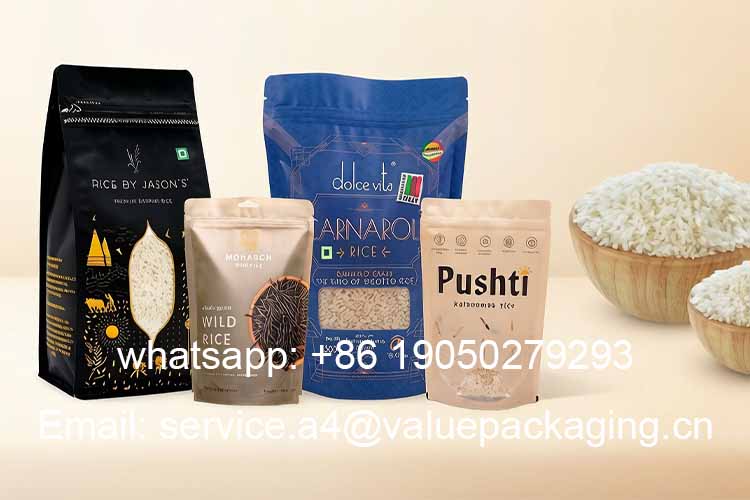
As global demand for staple foods continues to grow, rice remains one of the most widely consumed grains in the world. It is distributed across global supply chains and sold in a wide range of retail formats, from small household packs to large food service bags. Because rice is often stored for extended periods and transported over long distances, packaging plays an important role in protecting product quality.
At the same time, increasing environmental awareness is pushing food brands to adopt more sustainable packaging solutions. As a result, rice packaging is gradually evolving toward materials and structures that can reduce environmental impact while still maintaining product protection.
1. Common Packaging Solutions for Rice
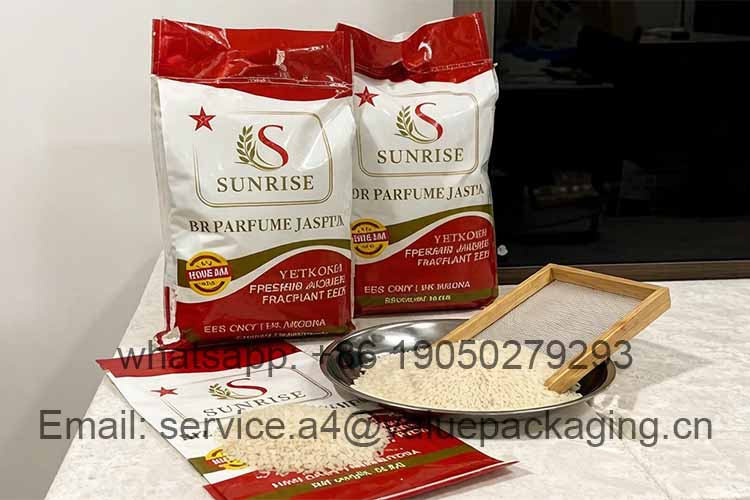
Rice requires packaging that can protect it from moisture, contamination, and physical damage during transportation and storage. Because rice is typically sold in relatively large volumes compared with other food products, packaging must also provide sufficient mechanical strength to support heavier product weights.
Common materials used in rice packaging include:
- PET film
- LDPE film
- PA film
- Kraft paper
- Metallized PET film
Rice packaging structures often vary depending on product weight and market positioning.
Typical Rice Packaging by Product Weight
For larger formats such as 5 kg to 10 kg rice bags, packaging must provide higher mechanical strength. Reinforced flexible packaging or woven bags are often used to ensure durability during transportation and handling.
Medium size packages, usually 2 kg to 5 kg, commonly use stronger laminated pouches or bags with reinforced seals. Some packages also include carry handles to improve convenience for consumers.
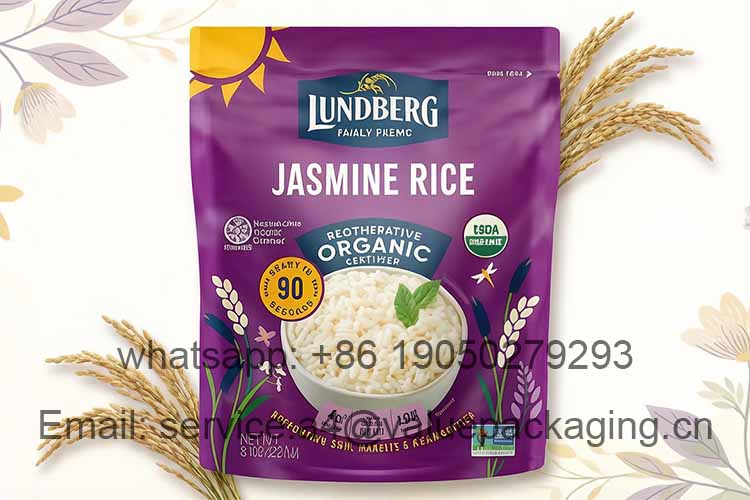
Small retail packs, typically ranging from 500 g to 1 kg, often use pillow bags or small stand up pouches made from laminated plastic films. These structures provide good sealing performance and clear product presentation.
2. Barrier Performance and Product Protection
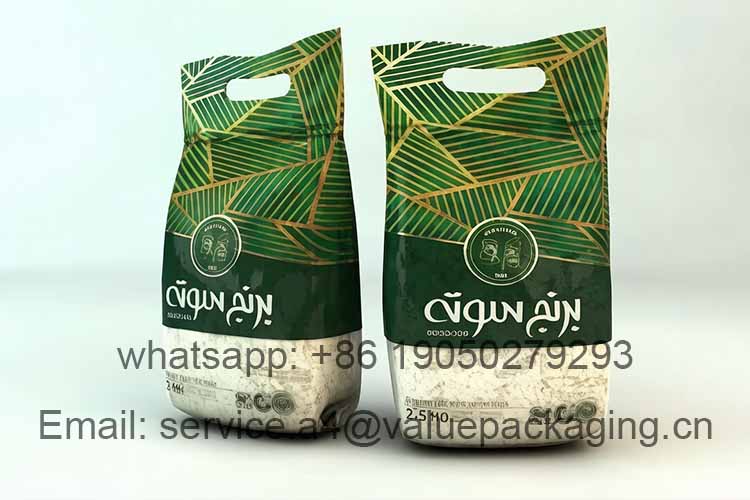
Although rice has relatively low moisture content, exposure to humidity can affect grain quality and lead to mold growth during long term storage. In addition, rice products can sometimes be vulnerable to insect contamination during storage and transportation.
To address these challenges, many rice packages use multilayer laminated materials that provide strong moisture barrier performance and reliable product protection.
Typical barrier structures include:
For premium rice products, vacuum packaging is another widely used solution. By removing air from the package, vacuum sealing helps reduce oxidation and inhibit insect activity while extending shelf life and maintaining grain freshness during transportation.
In many vacuum rice packaging structures, PA film is commonly used as an important functional layer due to its unique performance advantages.
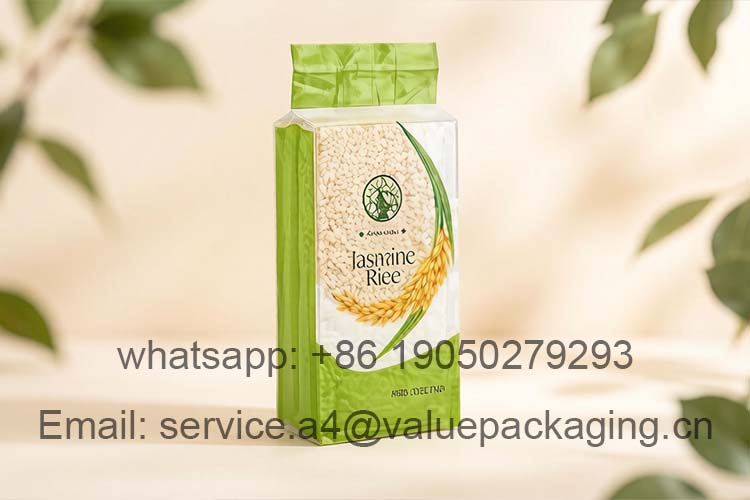
Key benefits of PA film include:
- Excellent puncture resistanc
Rice grains have relatively hard edges, which can place stress on the packaging during transportation and stacking. PA film provides strong puncture resistance that helps prevent package damage and vacuum leakage. - High mechanical strength
PA improves the overall durability of the package, helping it withstand compression and handling during storage and distribution. - Good oxygen barrier performance
PA helps reduce oxygen transmission, which contributes to maintaining product freshness and extending the shelf life of vacuum packed rice.
While multilayer laminates provide reliable protection and strong mechanical strength, they also present challenges from a sustainability perspective. Traditional rice packaging structures often combine several different materials that are permanently bonded together. Because these layers are difficult to separate during recycling, many flexible rice packages cannot be efficiently processed within existing recycling systems and are often treated as mixed plastic waste after disposal.
3. Mono-Material Rice Bag: Recyclable and Practical
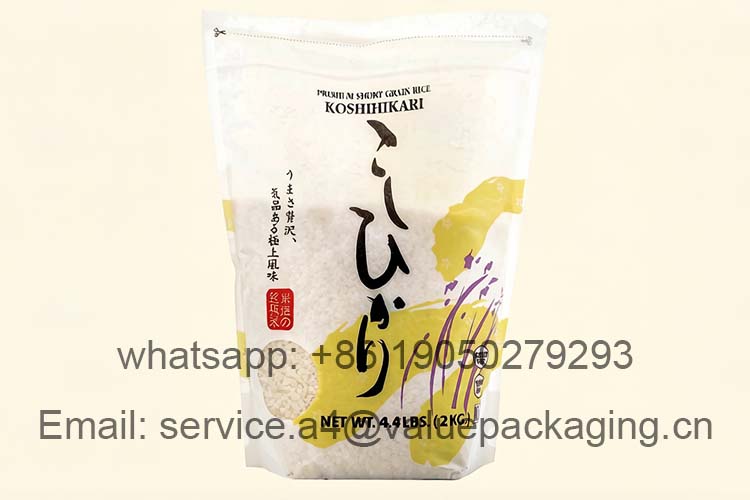
When choosing a single-material packaging solution, both Polypropylene (PP) and Polyethylene (PE) are commonly considered. However, PE is often the preferred choice, especially for moisture-sensitive products like rice.
PE offers superior moisture resistance compared to PP, making it ideal for packaging moisture-sensitive products like rice. It helps prevent mold growth and deterioration by blocking water absorption, whereas PP provides lower moisture protection, making it less suitable for long-term storage.
Beside, PE films, particularly LDPE and LLDPE, provide excellent sealing properties and flexibility, ensuring strong, reliable seals for large rice packages. This helps maintain package integrity during transportation. In contrast, PP is stiffer and requires additional layers to achieve similar sealing performance, adding complexity and increasing costs.
Common polyethylene based materials include:
Compared with polypropylene based materials, polyethylene generally provides better moisture barrier performance, which makes PE based mono material structures particularly suitable for moisture sensitive products such as rice. Maintaining stable moisture levels is important for preserving grain quality and preventing issues such as mold growth or product deterioration during storage.
Typical recyclable pouch structures include:
5. Compostable Packaging for Rice
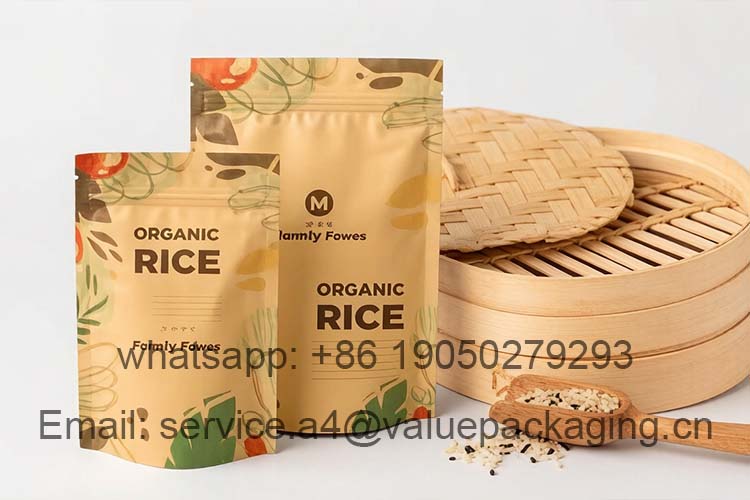
Compostable packaging is designed to break down naturally in composting environments, reducing landfill waste. Unlike traditional plastic, which can take hundreds of years to decompose, compostable materials decompose much faster, contributing to a reduced environmental footprint.
In addition, many compostable materials are derived from plant based resources and typically have a lower carbon footprint during production and disposal compared with conventional plastics. When processed through composting systems, these materials can further reduce greenhouse gas emissions, contributing to a more sustainable packaging lifecycle.
Common compostable materials used in flexible packaging include:
- PBS Film
- PLA (polylactic acid)
- BOPLA Film
- Metallized BOPLA Membrane
- PBAT (bio-blend polymers)
- Cellulose or coated paper structures
- PVDC Coated Cellulose Film
- Metallized Cellulose Paper
- Compostable additive-free inks and adhesives
- Metallized paper
- Kraft-paper
In practical applications, these materials are usually laminated together to enhance strength, sealing performance, and barrier properties.
Typical compostable structures include:
- Kraft Paper/PLA+PBAT Membrane
- Cellulose/PLA+PBAT Membrane
- Metallized Paper/PLA+PBAT Membrane
- Cellulose/Metallized Cellulose/PLA+PBAT Membrane
- Kraft Paper/Metallized Cellulose/PLA+PBAT Membrane
- Kraft Paper/Cellulose/PLA+PBAT Membrane
- Kraft Paper/Cellulose/PBS Membrane
- Metallized Paper/Cellulose/PLA+PBAT Membrane
For rice packaging, compostable materials must still provide sufficient moisture protection and mechanical strength to maintain grain quality during storage and transportation.
Conclusion
Rice packaging must balance product protection, durability, and environmental responsibility. While traditional multilayer laminates remain widely used due to their strong barrier performance and mechanical strength, recyclable mono material structures and compostable materials are becoming increasingly important as the food industry moves toward more sustainable packaging solutions.