

In the flexible packaging industry, ensuring packaging quality and durability is crucial. Several performance tests, including seal strength testing, moisture barrier performance, and compression resistance testing, assess the pouch’s overall reliability. However, before these tests can offer accurate results, impact resistance is the first factor to evaluate. In barley packaging, particularly for four-side seal pouches, drop testing plays a vital role in verifying packaging integrity and ensuring structural reliability.
Barley products, often packaged in heavy weights, place significant mechanical stress on packaging during filling, stacking, warehousing, and logistics operations. During transportation and distribution, pouches may be dropped, pallets shifted, or subjected to sudden impacts. If the packaging is not impact-resistant, failure modes such as seal breakage, corner cracking, or film tearing can occur, leading to product loss, reduced shelf life, and damage to brand credibility.
1.Understanding Impact Resistance in Four-Side Seal Barley Packaging
Unlike stand-up pouches, four-side seal pouches rely on the strength of the seal and film structure for load support. This makes impact resistance particularly important.
Seal Stress Along All Four Edges
Dropping a filled pouch shifts the barley mass, transferring force to the perimeter seals. Any inconsistencies in seal width, temperature, or pressure can cause weak spots, especially at seal intersections and corners.
Corner Impact Sensitivity
The corners of four-side seal pouches experience concentrated stress during drops. Repeated corner impacts can lead to seal fatigue or microcracks, weakening the package over time.
Film Rigidity and Flexibility Balance
Barley packaging films need to balance rigidity to support product weight and flexibility to absorb impacts. Too stiff films may crack, while overly soft films may stretch and weaken seals.
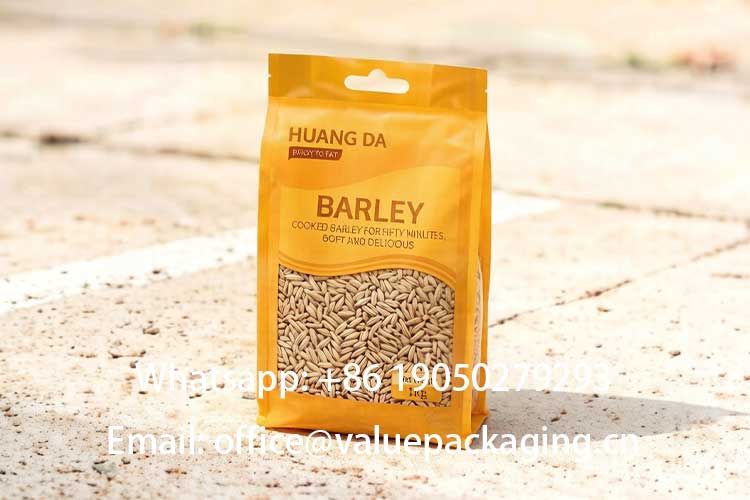
2.Applying Drop Testing to Four-Side Seal Barley Pouches
For this 1 kg barley packaging, a PA/LDPE laminated structure is commonly used to provide reliable puncture resistance, sealing performance, and moisture protection for standard handling and transportation. For applications requiring higher strength, a PA/PET/LDPE structure can be selected, as the added PET layer improves overall rigidity and impact resistance, making the pouch more suitable for repeated drops, stacking, and demanding logistics conditions.
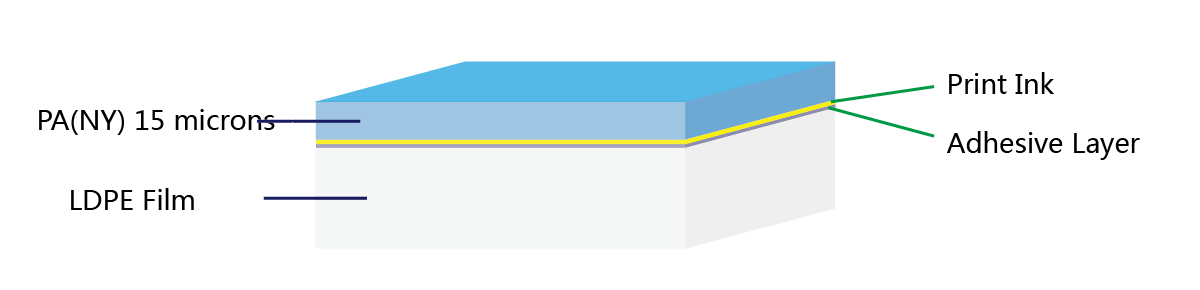
To verify whether these material structures can perform as intended under actual distribution stress, drop testing is applied to simulate real-world logistics conditions rather than idealized laboratory scenarios. Test samples are randomly selected from production batches and filled with actual barley or equivalent weight materials to accurately replicate internal load behavior and product movement during handling and transportation.
Drop testing for barley packaging adheres to ASTM and ISTA standards to ensure robust performance under real-world conditions.
- ASTM D5276 outlines drop heights for free-fall tests to simulate the conditions encountered during manual handling, warehouse operations, and packing line transfer.
- ISTA 1A (for small parcels) and ISTA 3A (for larger packages) provide protocols for multiple drop orientations—flat, edge, and corner impacts—to replicate typical shipping and distribution scenarios.
These standards ensure that four-side seal pouches can endure cumulative impact stresses, maintaining their integrity and reliability throughout the supply chain.
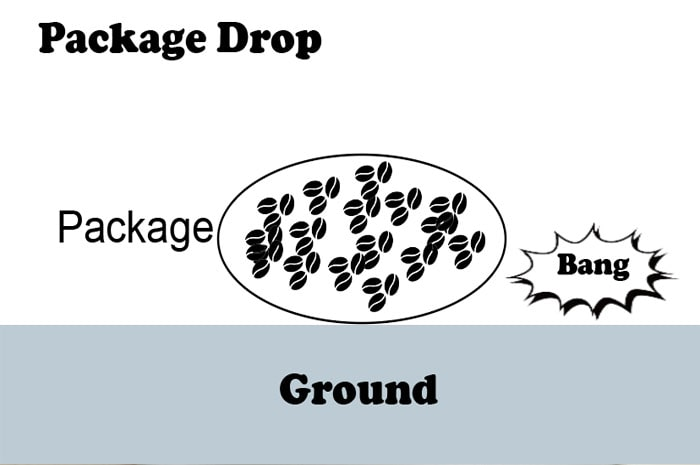
3.Our Drop Testing Methodology
Sample Selection
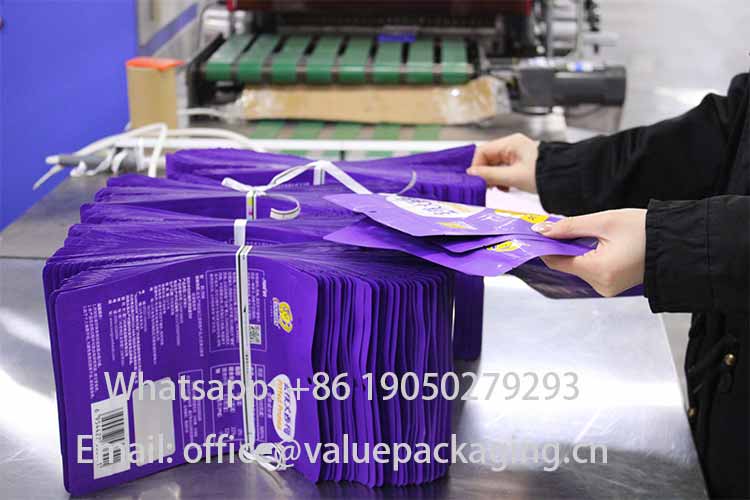
Pouches are randomly taken from production runs to ensure consistency in results that reflect the actual manufacturing process.
Drop Height Definition
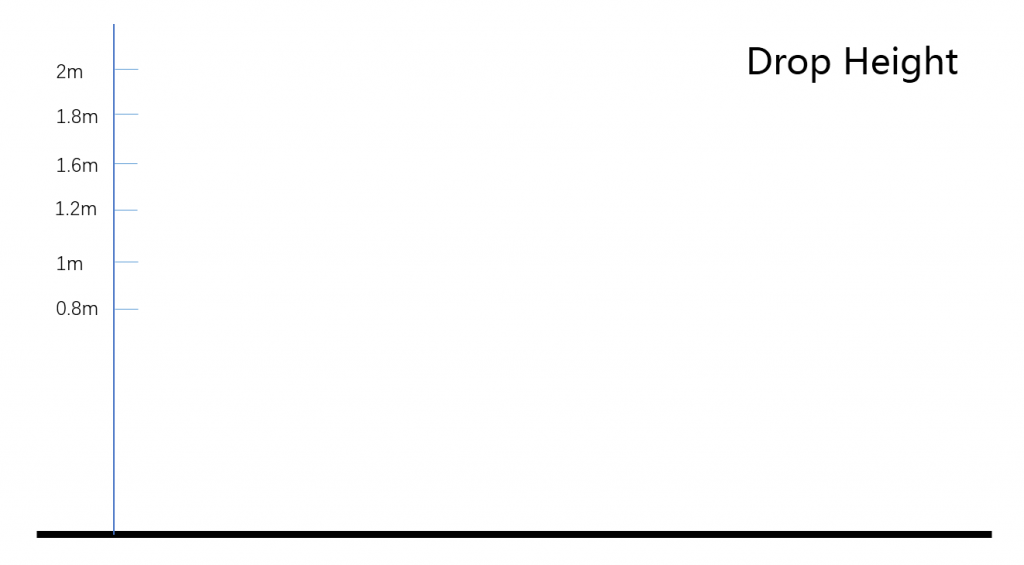
Standard barley pouches are tested at drop heights that simulate packing line handling and shelf replenishment. Larger or heavier packs are tested at higher drops to reflect pallet movement and warehouse handling.
Orientation and Repetition
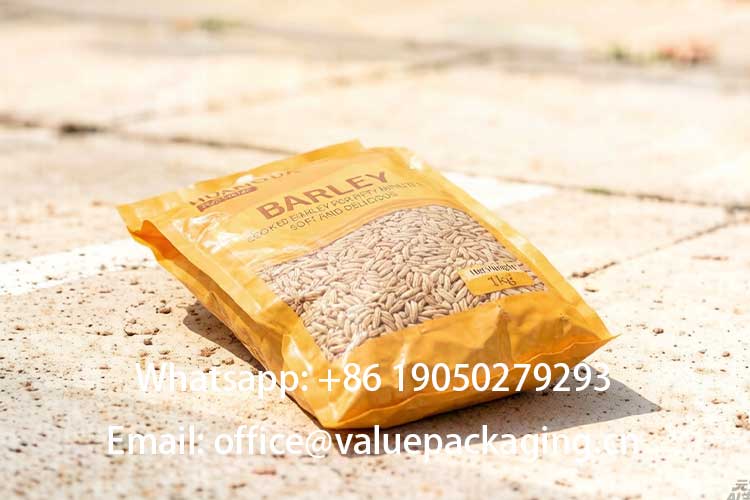
Pouches undergo multiple drops in various orientations, focusing on seal edges and corners, the key stress zones for four-side seal structures.
Post-Test Inspection
After the tests, pouches are examined for seal splitting, corner damage, pinholes, film cracking, and structural deformation. Only pouches that remain fully sealed and functional pass the test.
4.Drop Testing Is Not Optional in Barley Packaging
Drop testing verifies whether four-side seal packaging can physically protect barley products throughout the supply chain.
Seal Failure Risk
Impact-induced damage can lead to gradual leakage or sudden rupture, particularly under the weight of the product.
Moisture Ingress
Minor seal defects can lead to moisture penetration, compromising the barley’s quality during storage.
Handling and Distribution Stability
Packaging failures during transportation or distribution increase costs and customer complaints.
By verifying impact resistance first, barley packaging can be subjected to further evaluations for barrier performance and shelf life, ensuring structural integrity from the start.

5.What Reliable Packaging Actually Delivers to Barley Brands
The primary purpose of drop testing is to ensure that packaging distributes impact forces evenly across all four seals instead of concentrating stress at specific points.
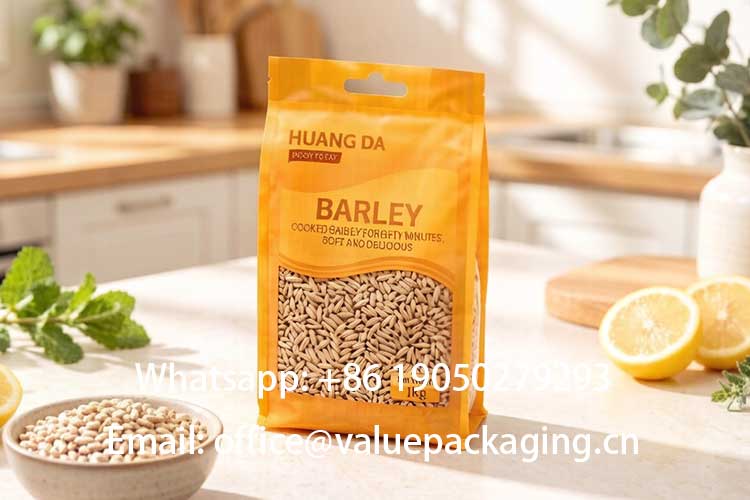
Well-designed four-side seal packaging maintains seal integrity after repeated impacts, supports stable product containment, and preserves a clean appearance throughout distribution. Reliable packaging reduces product loss, improves handling efficiency, and strengthens brand confidence at both retail and bulk distribution levels.
6.Building Impact Reliability Into Barley Packaging Quality Control
Drop testing is part of routine quality control for barley packaging. By applying standardized conditions across production batches, seal strength and structural reliability can be verified over time. Regular evaluations ensure every four-side seal pouch meets the requirements for durability, moisture protection, and overall performance.
7.Conclusion
Drop testing exposes the hidden weak points that standard inspections may miss. For four-side seal barley packaging, it confirms whether the pouch can endure cumulative impact, maintain seal integrity, and protect product quality from filling through final delivery.
By validating impact resistance first, barley packaging performance is assessed where it matters most: under real handling conditions, not controlled assumptions.