
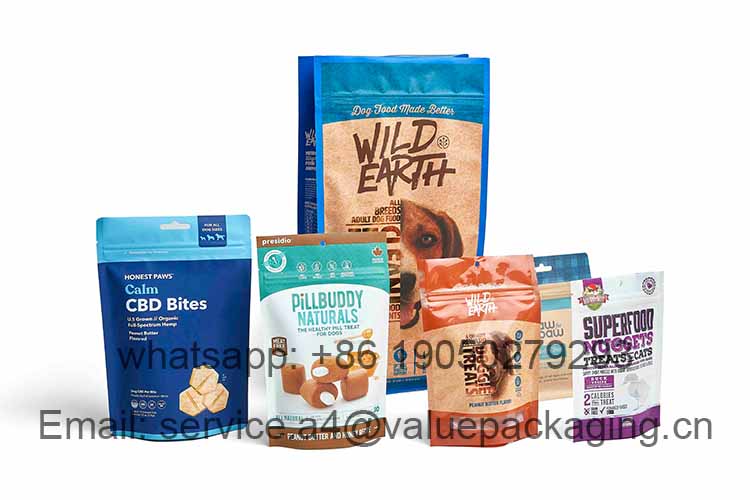
As more pet owners seek eco-friendly options, the demand for sustainable packaging in the pet treat market is growing rapidly. Manufacturers are focusing on pet treat packaging that keeps snacks fresh, safe, and visually appealing while minimizing environmental impact. Using eco-friendly, sustainable materials allows brands to protect the product while supporting responsible packaging practices.
1. Common Packaging Solutions for Pet Treats
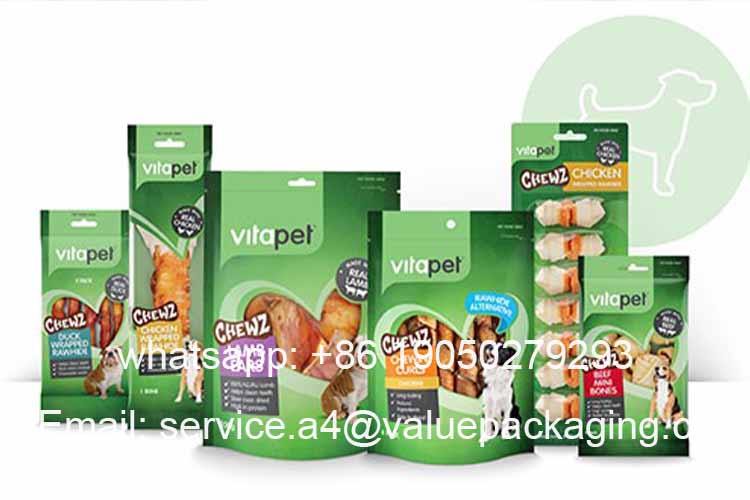
Pet treat pouches and bags must balance product protection, moisture control, and convenience while ensuring visibility for consumers. The most common pet treat packaging formats include:
Stand-up pouches with resealable zippers
These are widely used for dry pet treats due to their convenience. The resealable zipper allows consumers to open and close the package multiple times, keeping treats fresh. The stand-up design provides excellent shelf presentation, maximizes storage efficiency, and maintains product integrity during storage and transport.
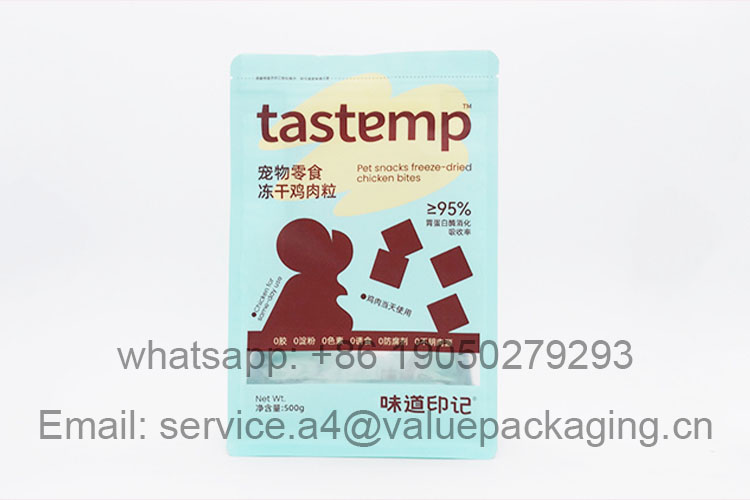
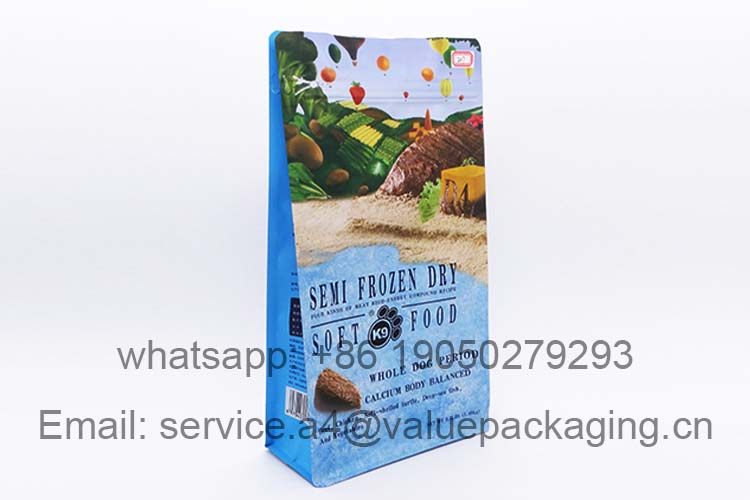
Flat bottom pouches
Often used for larger volumes or bulk packaging, these pouches offer strong barrier protection to maintain treat freshness. The flat bottom design allows pouches to stand upright, creating an appealing display and saving shelf space.
To enhance presentation, both stand-up and flat bottom pet treat pouches often feature round or airplane punch holes, allowing them to hang on display racks. This design improves product visibility and makes treats more accessible to consumers.
2.Traditional Materials for Pet Treat Packaging
| Common Dry Pet Treat | Typical Ingredients | Packaging Considerations |
|---|---|---|
| Chicken Jerky | Chicken meat, glycerin, salt, and natural flavoring. | Firm texture requires puncture resistant laminates such as PA with VMPET or AL for barrier protection. |
| Freeze Dried Chicken | Freeze dried chicken meat with antioxidants such as vitamin E. | Very moisture sensitive, so high moisture barrier structures and reliable sealing are required. |
| Dental Chew Sticks | Starch, vegetable glycerin, meat powder, and minerals. | Hard texture requires strong packaging with good puncture resistance and stable seals. |
| Dried Sweet Potato Treats | Dried sweet potato slices with natural preservatives. | Needs moisture barrier packaging to prevent softening or mold during storage. |
| Freeze Dried Beef | Freeze dried beef with natural antioxidants. | Requires strong moisture protection to maintain the dry and crispy texture. |
To ensure that pet treats are well-protected and maintain their freshness, packaging materials play a crucial role. Several materials are commonly used in pet treat packaging, each offering specific benefits to protect the product from moisture, oxygen, and light.
The most commonly used materials include:
- PET film
- VMPET film
- Aluminum foil
- LDPE film
- BOPP film
- PA film
- Kraft paper
- Metallized PET film
- AlOx and SiOx coated PET film
3.Sustainability Challenges in Conventional Pet Treat Packaging
Different multilayer structures are used in dry pet treat packaging depending on product type, barrier requirements, and brand positioning. Products such as jerky, freeze dried meat, and dental chews may have different requirements for moisture protection, oxygen barrier performance, and puncture resistance. As a result, manufacturers often select specific laminate structures that balance product protection, shelf life, and packaging cost.
Common types of composite foil include:
To maintain freshness, VMPET is commonly used in pet treat packaging. Since dry pet food is easier to store than wet food, VMPET’s barrier properties are often sufficient to preserve product quality. It protects the treats from moisture, oxygen, and light—key factors affecting shelf life. For customers seeking maximum barrier protection, adding an additional layer of AL is a popular choice. This enhances the package’s defense against environmental factors, helping the product stay fresh for an extended period, especially during long-term storage or transport.
- PA/LDPE
- PET/PA/LDPE
- PA/VMPET/LDPE
For dry pet treats like jerky or chew sticks, which may not be heavy but have a hard texture or sharp edges, packaging must be puncture-resistant to prevent damage during transportation and storage. Nylon (PA) plays a crucial role here due to its excellent mechanical strength and puncture resistance. Often used in multi-layer laminates with materials like PET and LDPE, nylon helps protect the treats from external damage while maintaining the integrity of the packaging.
4. Recyclable Mono Material Pet Treat Pouch Packaging
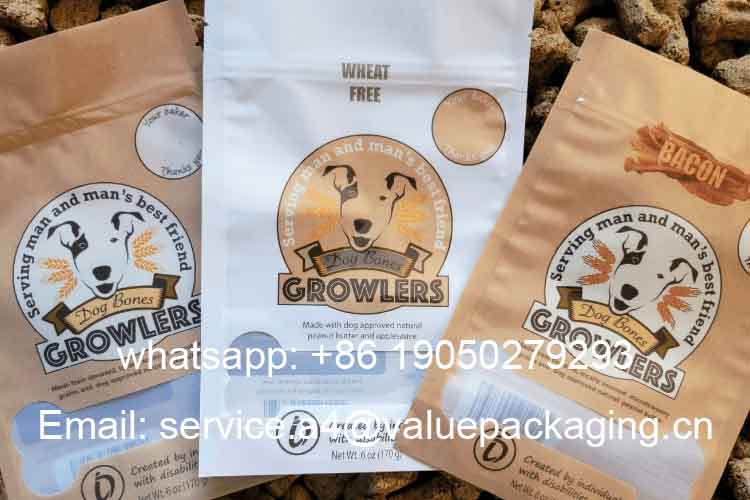
As sustainability becomes an increasing focus in the pet food industry, mono material flexible packaging is gaining attention as a more recyclable alternative to traditional multi layer laminates. By designing packaging within a single polymer family, these structures are more compatible with existing recycling systems while still providing the functional performance required for dry pet treat packaging.
Common polyethylene based materials include:
Compared with PP-based materials, PE offers superior moisture barrier performance, making PE-based mono material pet treat pouches ideal for dry pet treats like jerky, chew sticks, and freeze-dried snacks. PE films also provide strong heat sealing and flexibility, especially important for larger pet treat bags requiring reliable seals.
Typical recyclable pouch structures include:
- MDOPE/LDPE
- MDOPE/EVOH-LDPE
- MDOPE/BOPE/LDPE
- MDOPE/BOPE/EVOH-LDPE
By combining different PE films within the same material family, these pouches can achieve the required strength, sealing performance, and moisture protection while remaining compatible with existing polyethylene recycling streams.
5.Compostable Sachet for Pet Snack
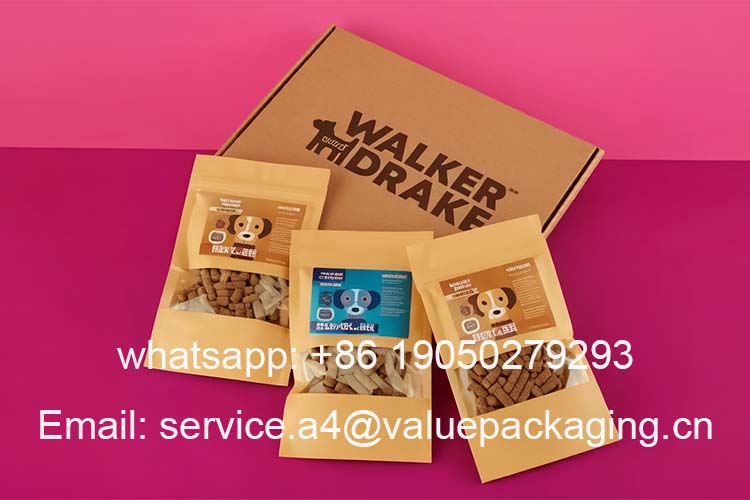
A growing trend in sustainable packaging for dry pet treats is the use of compostable flexible materials that break down naturally under industrial or home composting conditions. Sourced from renewable or plant-based materials, these films offer an eco-conscious alternative to conventional plastics while helping reduce long-term environmental impact.
Popular compostable materials for pet treat packaging include:
- Metallized BOPLA Membrane
- PBAT (bio-blend polymers)
- Cellulose or coated paper structures
- PVDC Coated Cellulose Film
- Metallized Cellulose Paper
- Compostable additive-free inks and adhesives
- Metallized paper
- Kraft-paper
To meet the durability and barrier needs of dry treats, or freeze-dried snacks, these materials are often laminated to combine flexibility, strength, and moisture protection.
Typical compostable structures include:
- Kraft Paper/PLA+PBAT Membrane
- Cellulose/PLA+PBAT Membrane
- Metallized Paper/PLA+PBAT Membrane
- Cellulose/Metallized Cellulose/PLA+PBAT Membrane
- Kraft Paper/Metallized Cellulose/PLA+PBAT Membrane
- Kraft Paper/Cellulose/PLA+PBAT Membrane
- Kraft Paper/Cellulose/PBS Membrane
- Metallized Paper/Cellulose/PLA+PBAT Membrane
While fully compostable, these laminates are engineered to maintain the crispness and shelf stability of dry pet treats, shielding them from humidity and environmental factors. This approach allows brands to deliver eco-friendly packaging without compromising product quality or consumer convenience.
Barrier Properties of Compostable Laminates
| Biodegradable Foil Laminate | WVTR(g/m2/24hr) | OTR (cc/m2/24hr) |
| Cellulose20/Metallized Cellulose20/PLA+PBAT60 | 18 | 2.1 |
| Cellulose20/Metallized Cellulose20/BOPLA40 | 19 | 2.2 |
| K-Cellulose22/Metallized Cellulose20/PLA+PBAT60 | 8 | 0.5 |
| Metallized Paper 69g/Cellulose30/PLA+PBAT60 | 5.6 | 1.12 |
| Cellulose30/Metallized Paper69g/PLA+PBAT60 | 8.9 | 1.1 |
6. Conclusion
As sustainability becomes a growing priority in the pet food industry, packaging for dry pet treats is gradually evolving toward more environmentally responsible solutions. Options such as mono material PE structures offer improved recyclability while still providing the moisture protection and reliable sealing performance required for products like jerky and chew sticks. At the same time, compostable materials made from plant based resources present another promising direction for reducing packaging waste and environmental impact.
However, when adopting these sustainable alternatives, it is important to ensure that packaging still provides adequate moisture and oxygen barrier performance, as well as sufficient strength and sealing reliability to protect the product throughout storage and transportation. By carefully balancing sustainability and functional performance, pet treat brands can move toward more eco friendly packaging while continuing to maintain product freshness, safety, and quality.