
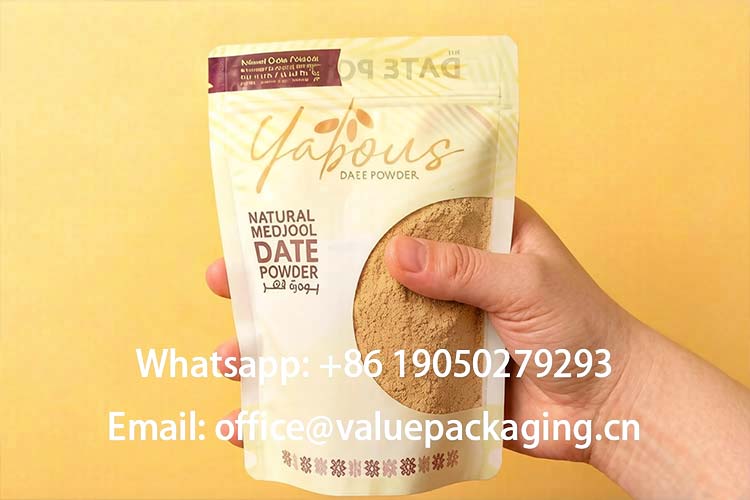
As demand for natural sweeteners and functional food ingredients continues to grow, date powder has become an increasingly popular product in global food markets. Produced from dehydrated and finely ground dates, date powder is widely used in baking, beverages, snack foods, and health products as a natural alternative to refined sugar.
Because date powder is often distributed globally and stored for extended periods, packaging plays an important role in maintaining product quality. At the same time, the food industry is placing greater emphasis on sustainable packaging solutions that reduce environmental impact while ensuring product protection.
1. Common Packaging Solutions for Date Powder
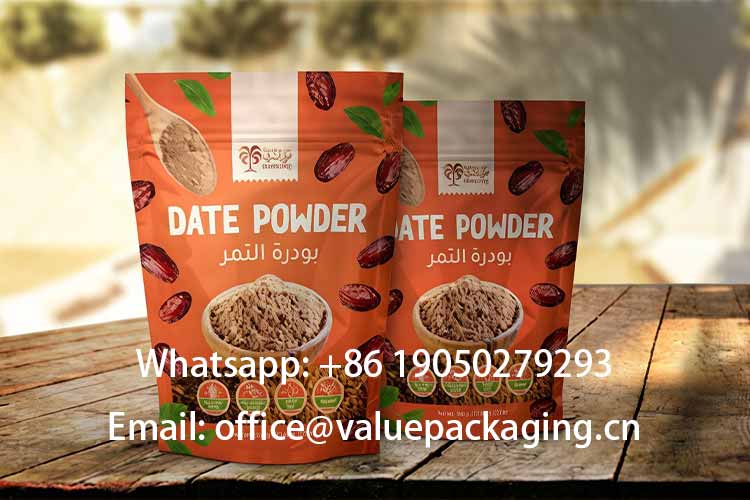
As a fine powdered product, date powder requires packaging that can effectively protect it from moisture, contamination, and physical damage during storage and transportation.
Common materials used in date powder packaging include:
- PET film
- VMPET film
- Aluminum foil
- LDPE film
- BOPP film
- PA film
- Kraft paper
- Metallized PET film
- AlOx and SiOx coated PET film
Because date powder is typically used gradually rather than consumed all at once, packaging that allows repeated opening and resealing is particularly important. For this reason, stand up pouches with zipper closures are one of the most common packaging formats for date powder. The resealable zipper allows consumers to open and close the package multiple times while helping protect the powder from external contamination during daily use. At the same time, the stand up structure offers good shelf presentation and efficient storage, making it suitable for both retail display and transportation.
2.Sustainability Challenges in Traditional Date Powder Bags
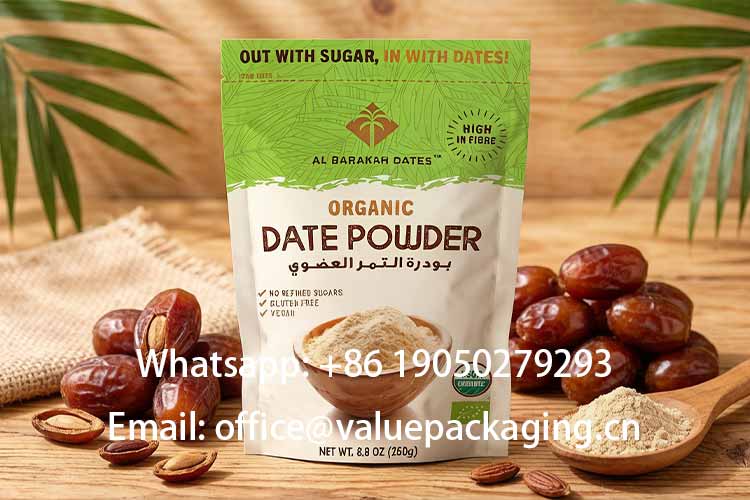
Another important consideration is moisture protection. Date powder is hygroscopic and can easily absorb moisture from the surrounding air, which may lead to clumping and reduced flowability. To address this challenge, packaging structures with strong moisture and oxygen barrier performance are often used.
Premium Structures with Aluminum Foil:
Aluminum foil provides one of the highest barrier levels among flexible packaging materials. It offers excellent protection against oxygen, moisture, and light, making it suitable for products that require long shelf life and strong product stability. For date powder, aluminum foil laminates can effectively prevent moisture absorption and help maintain powder flowability during storage.
Cost-Oriented Structures with Metallized Films:
Metallized films such as VMPET offer good barrier performance while being more cost efficient than aluminum foil, making them a common choice for many flexible pouch structures.
In addition, transparent barrier films such as AlOx-PET and SiOx-PET are sometimes used when brands want to incorporate a clear window into the package design.These coated films provide barrier performance similar to metallized PET while allowing partial product visibility, which can enhance shelf appeal while still maintaining protection against moisture and oxygen.
- PET / AlOx-PET / PE
- PET / SiOx-PET / PE
Compared with aluminum foil, these materials are generally lighter, more flexible, and more cost efficient while still offering good protection against moisture and oxygen.
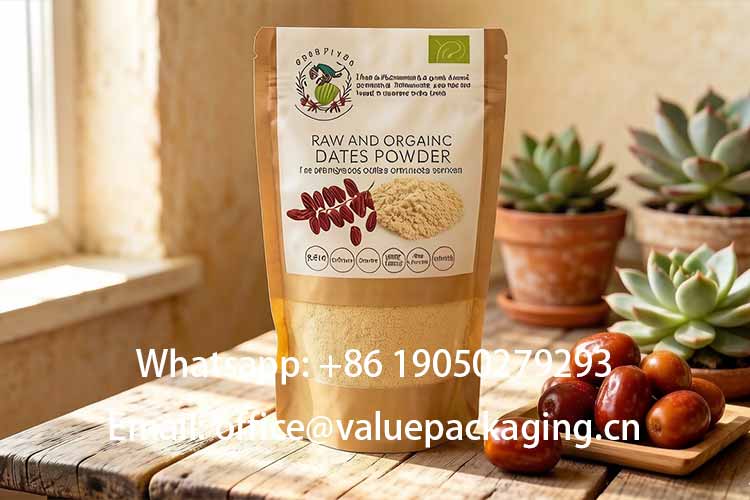
Beside plastic based laminates, kraft paper laminated structures are also used in some date powder packaging applications. Kraft paper provides a natural appearance and improved stiffness, which can enhance shelf appeal and create a more eco friendly visual impression for consumers. It also offers good printability and a premium look that is often preferred for natural or organic food products.
When combined with barrier layers such as aluminum foil, metallized PET, or coated films like AlOx PET, kraft paper laminates can provide both strong protection and attractive packaging design.
However, because these layers are permanently bonded together, they are difficult to separate during recycling. As a result, many traditional flexible pouches cannot be efficiently processed in existing recycling systems and are often treated as mixed plastic waste after disposal.
3. Recyclable Mono Material Powder Pouch Packaging
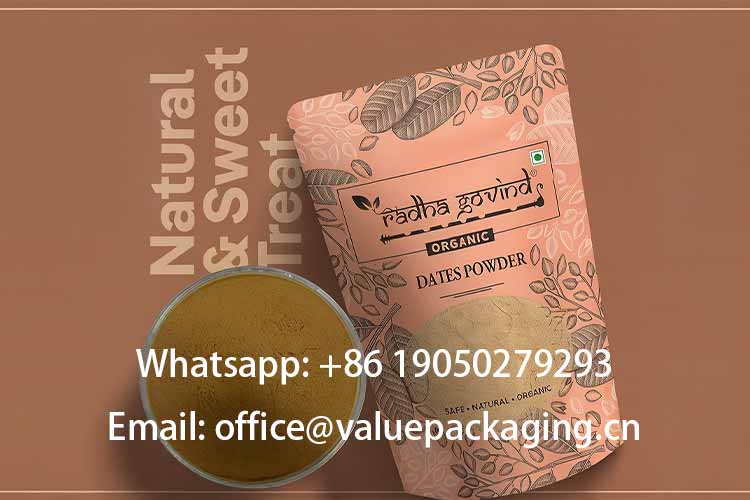
One of the most promising solutions is mono material flexible packaging based on polyethylene structures. By designing pouches within a single polymer family, these packaging systems are more compatible with existing recycling streams and easier to process after disposal, helping improve the overall recyclability of flexible packaging.
Common polyethylene based materials include:
Compared with PP based materials, PE generally provides better moisture barrier performance, which makes PE based mono material structures particularly suitable for moisture sensitive products such as date powder. By combining different PE films within the same material family, these pouches can deliver the required protection while remaining compatible with polyethylene recycling streams.
Typical recyclable pouch structures include:
- MDOPE/LDPE
- MDOPE/EVOH-LDPE
- MDOPE/BOPE/LDPE
- MDOPE/BOPE/EVOH-LDPE
By combining these functional layers within a polyethylene based system, mono material pouches can provide the moisture protection and structural strength required for powdered products such as date powder, while also supporting more sustainable packaging solutions.
4. Compostable Sachet for Date Powders
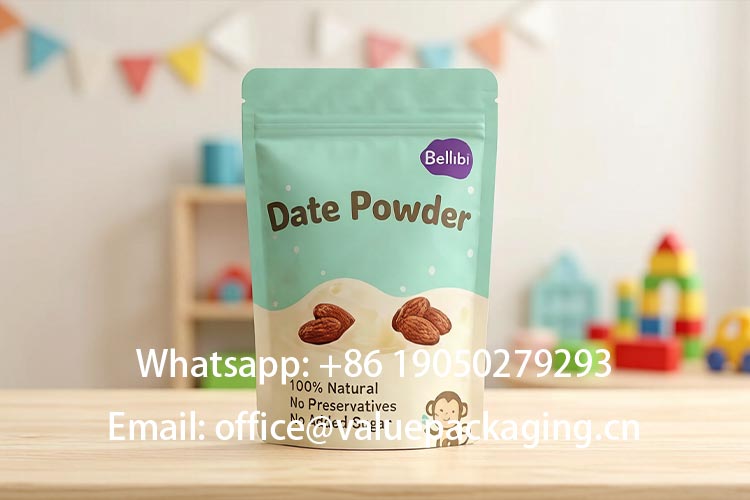
Another emerging direction in sustainable packaging is compostable flexible materials designed to break down under controlled composting conditions. These materials are typically derived from renewable or bio based resources and can help reduce long term environmental impact compared with conventional plastics.
Common compostable materials used in flexible packaging include:
In practical applications, these materials are usually laminated together to enhance strength, sealing performance, and barrier properties.
Typical compostable structures include:
For powdered products such as date powder, compostable packaging must still provide sufficient moisture barrier performance to protect the powder from humidity and maintain product quality during storage.
Barrier Properties of Compostable Laminates
| Biodegradable Foil Laminate | WVTR(g/m2/24hr) | OTR (cc/m2/24hr) |
| Cellulose30/PLA+PBAT60 | 131.5 | 5.6 |
| Cellulose20/Metallized Cellulose20/PLA+PBAT60 | 18 | 2.1 |
5.Conclusion
Overall, packaging for date powder must balance product protection, consumer convenience, and environmental responsibility. Traditional multilayer laminates such as aluminum foil and metallized films provide strong moisture barrier performance to prevent clumping and maintain powder quality during storage. At the same time, the industry is increasingly exploring more sustainable solutions, including recyclable mono material polyethylene pouches and compostable flexible materials. By combining effective barrier performance with more sustainable material structures, future date powder packaging can better meet both product requirements and environmental expectations.