
If your acai berry powder is marketed as clean, organic, or environmentally responsible, the packaging must support that promise. Sustainable packaging is no longer optional, it is a strategic necessity that protects product quality, strengthens brand credibility, and meets growing regulatory and consumer expectations.
Current Packaging Materials Used for Berry Powder
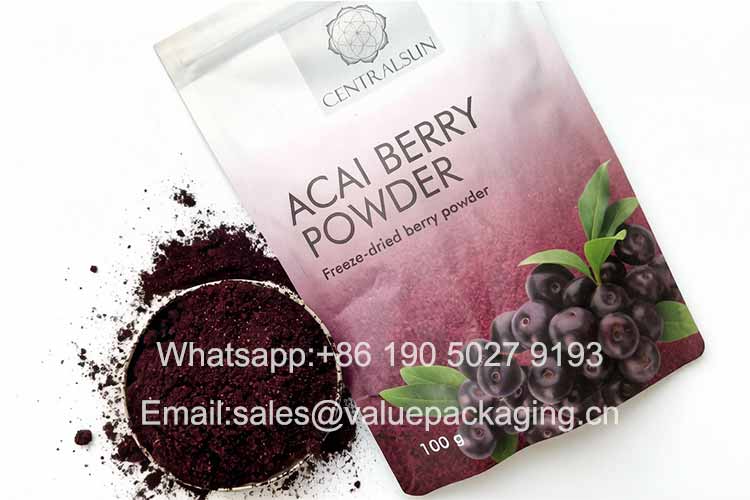
Acai berry powder is rich in anthocyanins (an antioxidant) and unsaturated fatty acids, making it highly susceptible to oxidation, which can cause discoloration, changes in flavor, and nutrient loss. Most plum powder products, especially high-quality, additive-free pure plum powder, are prone to oxidation.
Not all products labeled “Meifen” carry the same risk of oxidation, as this primarily depends on the ingredient list. Based on the discussion of acai berry powder, the following will systematically analyze the oxidation characteristics of plum powders and the differences in antioxidant capacity among different types of berry powder.
| category | Ingredient | Antioxidant capacity |
| Pure plum powder (high quality) | Plum, salt, sugar, no additives | Weak |
| Mixing plum powder | Plum, salt, sugar, additives | Moderate |
| Berry powders (acai berry powder, blackberry powder) | Pure berry powder with high anthocyanin content | Strong |
Before moving toward sustainability, it’s important to understand what is commonly used today.
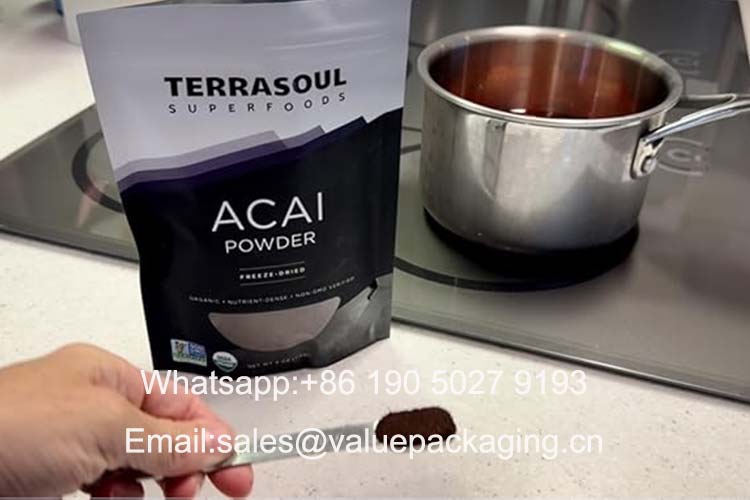
Multilayer Flexible Packaging (Traditional Standard)
Most berry powder packaging currently relies on multilayer laminate structures, such as:(可以具体分析一下)
Why they are popular:
Both VMPET and AL offer excellent barrier properties, effectively preventing the effects of air, moisture, light, and other external factors on acai berry powder, helping to maintain product freshness and extend shelf life.
These packaging materials offer excellent moisture and oxygen barriers, keeping the contents fresh and protected. With strong mechanical strength, the packaging can withstand handling and transportation without compromising the product’s integrity. This durability extends the shelf life, preserving the product’s quality longer. Additionally, the materials provide high-quality printability, enabling vibrant branding that enhances the product’s visual appeal on the shelf.
Some brands choose kraft paper laminated with plastic films to create a natural appearance.
There are some commonly used structures include:
- Kraft Paper/VMPET/LDPE
- Kraft Paper/AL/LDPE
- Matte BOPP/Kraft Paper/AL/LDPE
- Matte BOPP/Kraft Paper/VMPET/LDPE
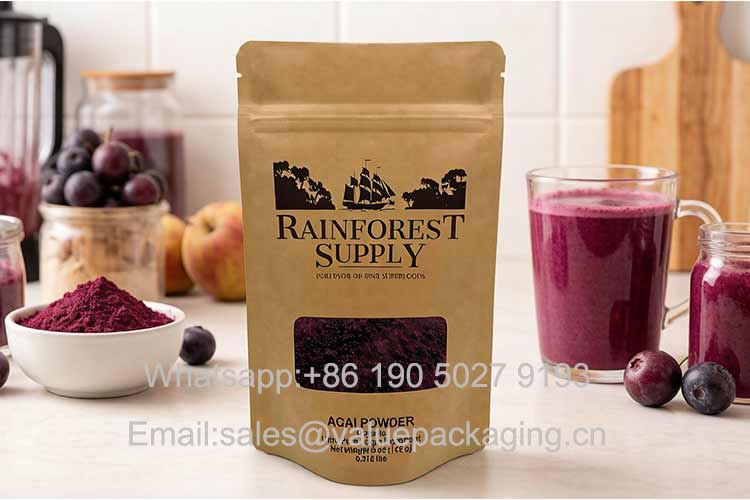
Compostable Packaging
Compostable packaging typically uses bio-based materials like:
- PBS Film
- PLA (polylactic acid)
- BOPLA Film
- Metallized BOPLA Membrane
- PBAT (bio-blend polymers)
- Cellulose or coated paper structures
- PVDC Coated Cellulose Film
- Metallized Cellulose Paper
- Compostable additive-free inks and adhesives
- Metallized paper
- Kraft-paper
Typical compostable structures include:
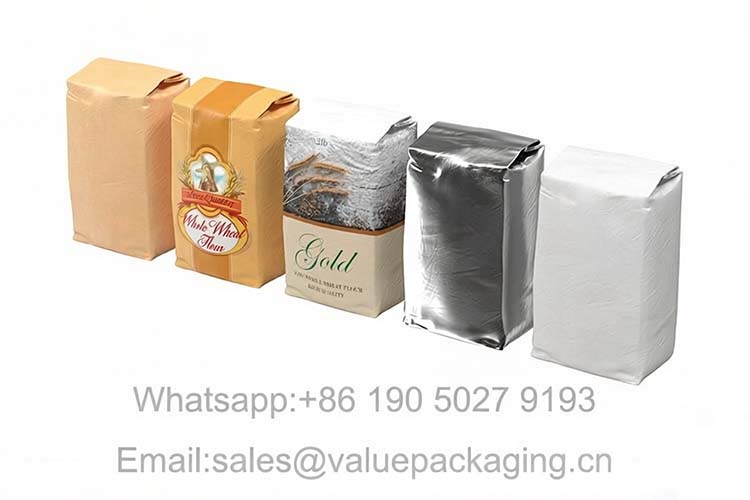
Mono-Material Packaging
What Is Mono-Material Packaging?
Mono-material packaging uses a single polymer family, most commonly polyethylene (PE) and polypropylene (PP), across the entire structure.
The following are common PE materials materials.
a.PE Mono-Materials
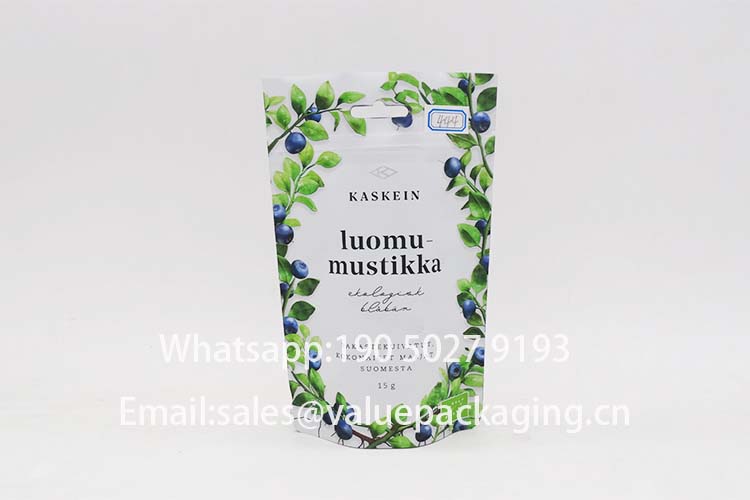
We are now offering some full recyclable laminated based on PE mono materials in the blow list.
Sustainability Is Also About Preventing Waste
Berry powders are expensive and resource-intensive to produce. If packaging fails due to moisture ingress or seal failure, the environmental cost of wasted product can exceed the footprint of the packaging itself.
The packaging is properly tested for moisture barrier performance to ensure effective protection against humidity. It is also verified through seal strength and drop testing, confirming the package’s durability and sealing reliability. In addition, the packaging design is matched to real distribution and storage conditions, helping maintain product quality throughout transportation, handling, and shelf life.
Conclusion: Sustainability as a Competitive Advantage
Brazilian berry powders represent health, vitality, and respect for nature. Packaging should reinforce,not contradict,those values.
By moving away from traditional multilayer laminates and embracing:
Mono-material recyclable packaging uses a single type of polymer structure, making it easier to recycle within existing recycling streams while maintaining reliable barrier performance. In addition, certified compostable solutions made from plant-based materials can naturally break down under industrial composting conditions when appropriate. Together, these sustainable options help reduce environmental impact and support brands in meeting growing sustainability expectations.
brands can reduce environmental impact while protecting product quality and strengthening market positioning.
Sustainable berry powder packaging is no longer a future trend, it is a present-day opportunity to lead with responsibility, transparency, and innovation.
If your brand is ready to embrace sustainability for acai berry powder packaging, the journey starts with smarter material choices,and the right packaging partner to bring them to life.