
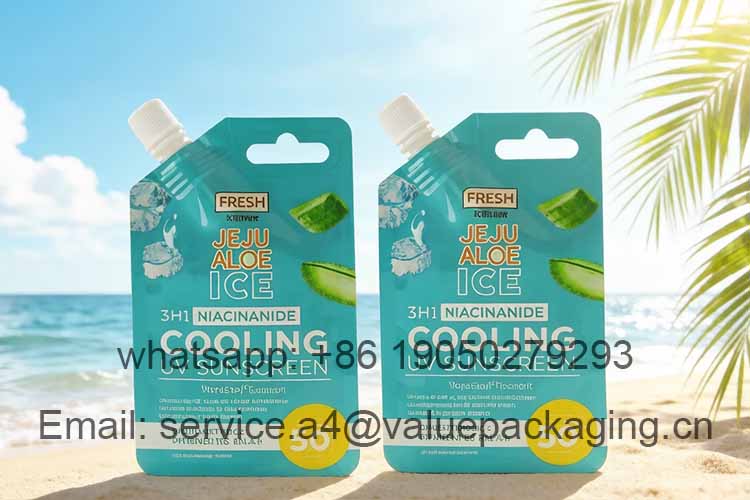
Sunscreen packaging is essential for protecting product stability, ensuring safe application, and extending shelf life. Due to the presence of UV filters, oils, and active ingredients, sunscreen formulations are highly sensitive to light, oxygen, and external contamination, making barrier performance a key requirement in sunscreen packaging design. At the same time, sunscreen packaging must also provide controlled dispensing, strong sealing, and compatibility with complex formulations. With the growing demand for sustainable packaging, sunscreen packaging solutions are increasingly shifting toward recyclable and mono-material structures, creating new challenges in balancing protection, functionality, and environmental impact.
1. Common Sunscreen Packaging Solutions
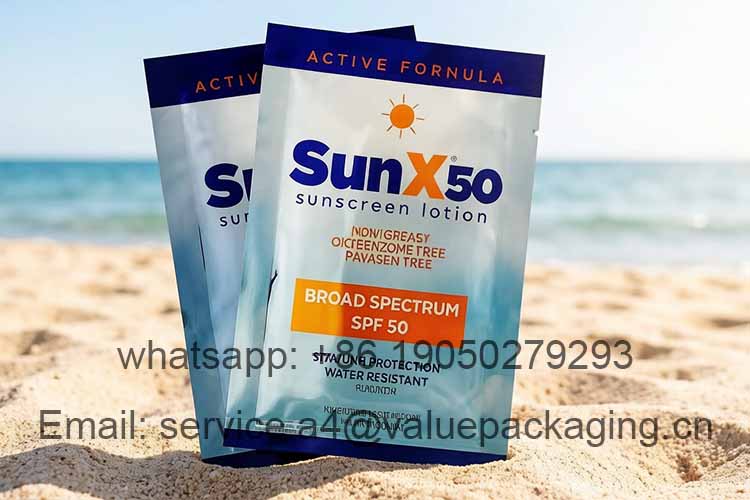
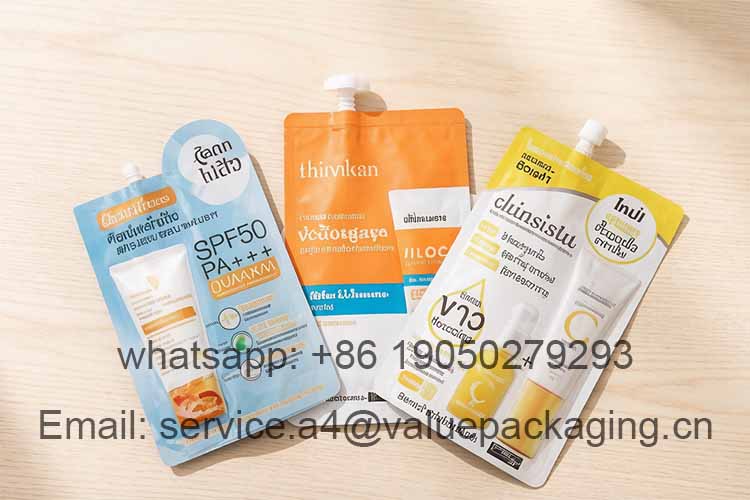
Sunscreen packaging is designed for semi-liquid, oil-based formulations that are sensitive to light, oxygen, and contamination. Compared with dry products, sunscreen requires packaging that ensures product stability, controlled dispensing, and hygienic use. At the same time, sunscreen packaging must balance barrier performance, material compatibility, and cost efficiency for large-scale distribution.
Stand-up pouches with spouts
Spouted sunscreen pouches are increasingly used in refill systems and travel-size products. This sunscreen packaging format allows controlled dispensing, reduces product waste, and uses less material than rigid bottles. It is particularly suitable for eco-refill sunscreen packaging solutions.
Sachet packaging
Sunscreen sachet packaging is widely used for samples, travel kits, and promotional distribution. Common formats include three-side seal sachets and four-side seal sachets. Three-side seal sunscreen sachets are cost-effective and suitable for high-volume production, while four-side seal sachets offer better structural stability and a more premium appearance. These single-use sunscreen packs are lightweight and efficient for distribution, although they generate relatively higher packaging waste per application.
Tube-style flexible packaging
Flexible tube packaging remains one of the most common sunscreen packaging formats. Laminated tubes provide good squeezability, precise dosing, and protection against external contamination, making them ideal for sunscreen creams and lotions.
2. Key Requirements for Sunscreen Packaging
| Key Ingredients | Function | Packaging Considerations |
|---|---|---|
| UV Filters (Avobenzone, Octocrylene, Zinc Oxide, Titanium Dioxide) | Provide UV protection by absorbing or reflecting radiation | Sensitive to light and oxygen, require good light-blocking and oxygen barrier properties |
| Oils and Emollients | Improve spreadability and skin feel | May interact with packaging materials, require good chemical resistance and grease resistance |
| Active Ingredients | Ensure sunscreen efficacy and stability | Can degrade under UV exposure, packaging should provide strong protection |
| Emulsifiers | Stabilize oil and water systems | Require stable packaging environment to prevent formulation separation |
| Antioxidants (Vitamin E) | Improve stability and reduce oxidation | Benefit from reduced oxygen exposure in packaging |
Sunscreen formulations create specific technical requirements for packaging materials due to their chemical composition and exposure conditions.
- Light protection
UV filters and active ingredients in sunscreen are sensitive to light. Effective sunscreen packaging often requires opaque or UV-blocking materials to maintain product stability. - Oxygen barrier
Oxidation can reduce sunscreen efficacy and affect texture and odor. A moderate oxygen barrier is essential to extend shelf life and preserve formulation performance. - Chemical compatibility
Sunscreen formulations typically contain oils, emulsifiers, and UV filters. Packaging materials must provide strong chemical resistance to prevent swelling, migration, or interaction. - Seal integrity
Leak prevention is critical for sunscreen products, especially in high-temperature environments or during transportation. Reliable sealing performance is a key requirement in sunscreen packaging design. - Grease resistance
Oil-based ingredients can penetrate or weaken packaging layers. Sunscreen packaging materials must resist oil permeation while maintaining structural integrity.
3. Material Selection in Sunscreen Packaging
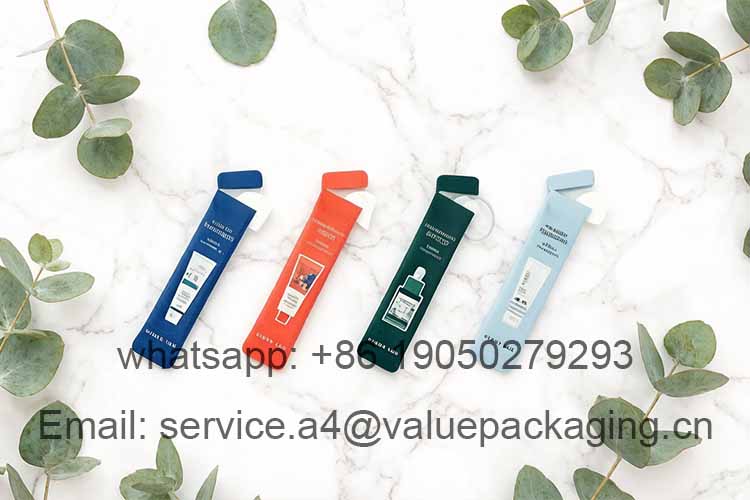
Sunscreen packaging materials focus more on barrier performance and chemical resistance than temperature flexibility. This is mainly due to the presence of UV filters, oils, and active ingredients, which are sensitive to oxidation, light exposure, and environmental factors. As a result, sunscreen flexible packaging typically adopts multi-layer structures, where each material contributes to overall protection and stability.
Common materials used in sunscreen flexible packaging include:
- PET film
Typically used as the outer layer, PET provides strong mechanical strength, dimensional stability, and excellent printability, helping maintain packaging appearance and durability. - LDPE film
LDPE is commonly used as the inner sealing layer. It offers reliable heat seal performance, flexibility, and good chemical resistance, ensuring safe product contact and effective leakage prevention.
- Aluminum foil
Aluminum foil is one of the most effective barrier materials in sunscreen packaging. It provides an almost complete barrier against light, oxygen, and moisture, which is essential for protecting UV filters and active ingredients from degradation. By blocking both UV and visible light, aluminum-based structures help maintain product efficacy and stability over time. In addition, aluminum foil enhances thermal stability, allowing sunscreen products to remain consistent under varying storage conditions, while also supporting a more protective and premium packaging appearance.
Building on these material properties, multi-layer laminated structures are widely used to combine mechanical strength, sealing performance, and high barrier protection within a single packaging solution. Among these, aluminum-based laminates are particularly common in sunscreen applications due to their balanced performance and reliability.
A typical example is the PET / AL / PE structure. In this configuration, PET acts as the outer support and printing layer, aluminum foil provides the core barrier protection, and LDPE serves as the inner sealing layer to ensure product compatibility and seal integrity. This structure is widely used in sunscreen packaging that requires enhanced protection, stable formulation performance, and extended shelf life.
4. Recyclable Mono-Material Sunscreen Packaging
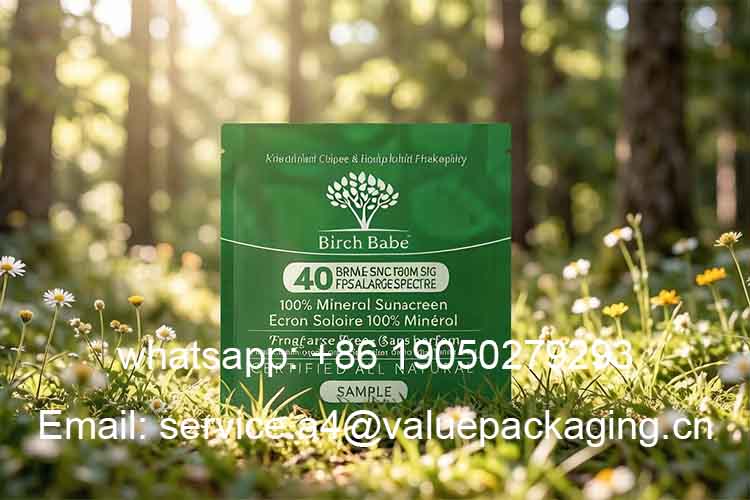
To improve sustainability, mono-material flexible sunscreen packaging is gaining increasing attention. By using films from a single polymer family such as polyethylene (PE), sunscreen pouches can be better aligned with recycling systems while still maintaining good sealing performance and chemical resistance.
Common PE-based materials used in sunscreen packaging include:
In practical applications, these materials are typically co-extruded or laminated to achieve a balance between mechanical strength, sealing reliability, and barrier performance. For sunscreen formulations, material selection must also consider resistance to oils, emulsifiers, and active ingredients to ensure long-term stability.
Typical recyclable sunscreen packaging structures include:
- MDOPE/LDPE
- MDOPE/EVOH-LDPE
- MDOPE/BOPE/LDPE
- MDOPE/BOPE/EVOH-LDPE
These structures are designed to provide reliable sealing and good chemical compatibility with sunscreen formulations, while offering a moderate level of oxygen barrier. EVOH-containing structures are more suitable for formulations that are sensitive to oxidation, while simpler PE-based structures are often used for standard sunscreen products with lower barrier requirements.
5. Compostable Sunscreen Packaging: Challenges and Limitations
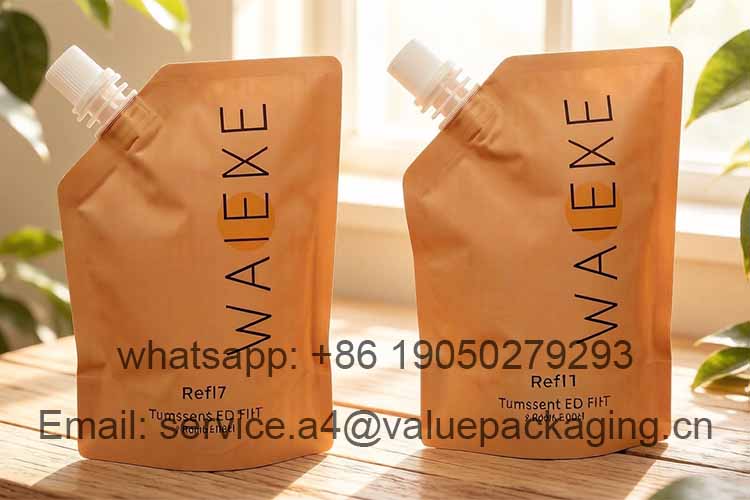
Another emerging direction in sustainable sunscreen packaging is the use of compostable flexible materials designed to break down under controlled composting conditions. These materials are typically derived from renewable or bio-based resources and can help reduce long-term environmental impact compared with conventional plastics.
Common compostable materials used in sunscreen flexible packaging include:
In practical applications, these materials are usually laminated to improve mechanical strength, sealing performance, and overall barrier properties.
Typical compostable sunscreen packaging structures include:
For sunscreen products, packaging must not only provide basic protection but also maintain compatibility with oil-based formulations and active ingredients. This requires a certain level of resistance to oils, as well as sufficient barrier performance against oxygen and light to help preserve product stability during storage. At the same time, sealing reliability and structural integrity remain important to ensure safe use and prevent leakage.
However, when applied to sunscreen packaging, these materials still present several technical challenges. Their resistance to oil-based formulations and active ingredients is generally lower than that of conventional laminates, which may affect product stability over time. Barrier performance against oxygen and light is also relatively limited, making it more difficult to fully protect sensitive formulations. In addition, sealing performance can be less stable, requiring tighter control during production.
6. Conclusion
Sunscreen packaging must balance barrier performance, chemical compatibility, and user convenience to ensure both product protection and ease of use.
Traditional multi-layer laminates continue to dominate sunscreen packaging due to their reliable and high-level protective performance. At the same time, recyclable mono-material solutions are gaining increasing attention as sustainability becomes a key focus across the industry.
Looking ahead, the main challenge for sunscreen packaging lies in maintaining product stability while reducing environmental impact, making material innovation and structure optimization essential for future development.