
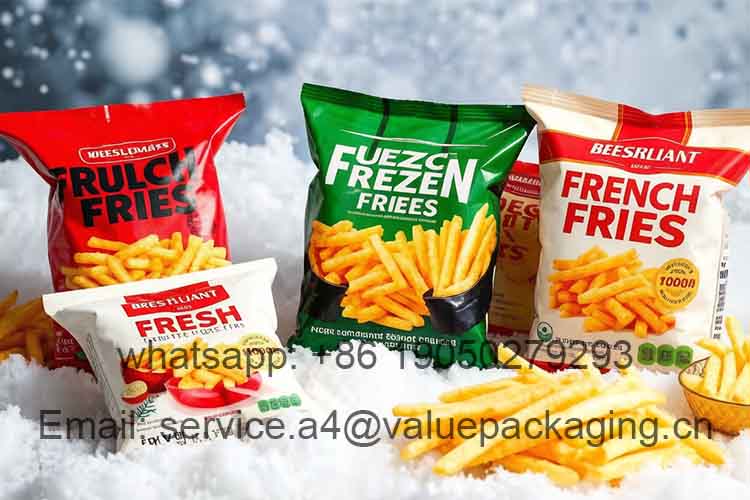
Frozen French fries are a high-moisture, oil-containing product that must be stored and transported under frozen conditions, typically below -18°C. Unlike dry products, frozen fries are highly sensitive to moisture migration, temperature fluctuations, and physical damage during handling. As a result, packaging plays a critical role not only in protecting product quality, but also in maintaining structural integrity throughout the cold chain. At the same time, packaging must balance durability, sealing reliability, and cost efficiency for large-scale distribution.
1. Common Frozen French Fries Packaging Solutions
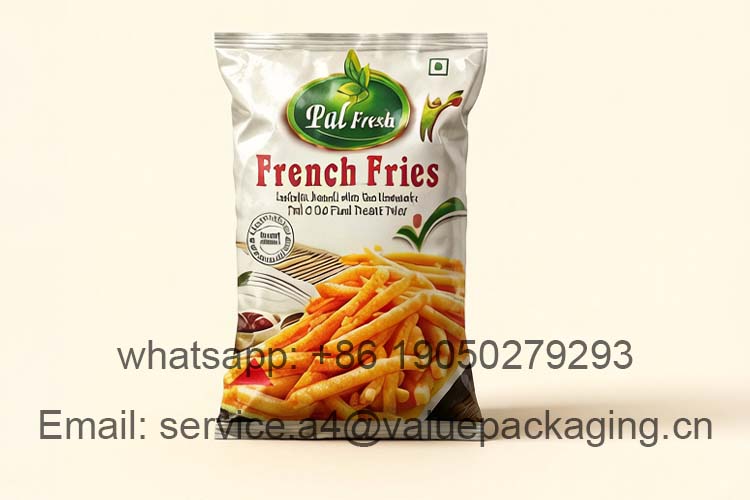
Frozen French fries packaging is designed primarily for strength, low-temperature performance, and moisture control, rather than high oxygen barrier.
Pillow bags
Pillow bags are the most widely used format for frozen fries, especially in retail and food service. They are compatible with high-speed packing lines and offer reliable sealing performance. Their flexible structure allows efficient storage, stacking, and transportation under frozen conditions.
Four-side seal bags (die-cut shapes)
Four-side seal bags with die-cut shapes are typically used for smaller retail packs or branded products. This format provides a more defined shape and better visual presentation in freezer displays. Compared with pillow bags, it offers improved shelf appearance, although at a higher production cost.
Side gusset bags
Side gusset bags are commonly used for medium to large pack sizes, where increased capacity and better space utilization are required. The expandable side panels allow the bag to accommodate bulkier volumes while maintaining a compact form during storage and transportation, making them suitable for family-size or food service packaging.
Bulk bags
Large-capacity bags are mainly used in food service and industrial supply chains. These bags are designed for high load capacity and resistance to tearing during transportation, stacking, and storage, often with a focus on durability rather than appearance.
2. Key Requirements for Frozen French Fries Packaging
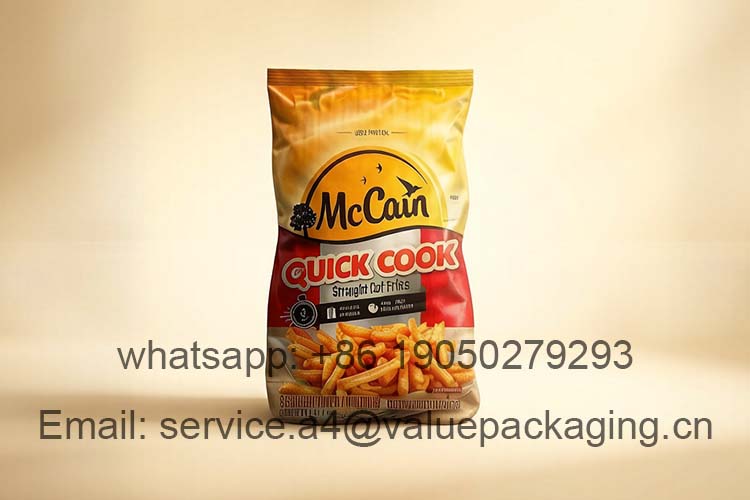
Frozen fries have very different requirements compared with dry snacks or seeds, with a strong focus on physical and environmental resistance.
- Low-temperature flexibility
Packaging materials must remain flexible at freezing temperatures and resist cracking. Brittle films can easily fail during handling or impact. - Moisture and vapor control
Although the product is frozen, moisture migration can still occur, leading to ice buildup and freezer burn. Packaging must limit water vapor transmission to maintain product texture. - Mechanical strength
Frozen fries can exert pressure on the packaging, especially in bulk formats. Strong tensile strength and puncture resistance are essential. - Seal integrity
Seals must remain stable and intact under low temperatures. Poor sealing can lead to air ingress and frost formation inside the pack. - Grease resistance
As a fried product, fries contain oil. Packaging must resist oil migration, especially during temperature fluctuations.
To meet these requirements, frozen fries packaging typically relies on PE-based materials with good low-temperature performance rather than complex high-barrier laminates.
Common materials include:
CPP film is less commonly used in frozen French fries packaging because its low-temperature resistance is relatively weaker compared with PE-based materials. Under freezing conditions, it may become more brittle and less reliable in terms of seal performance, which makes it less suitable for applications requiring high flexibility and durability.
Compared with dry food packaging, oxygen barrier is less critical, while flexibility, seal strength, and moisture control are the key priorities.
3. Material Selection in Frozen French Fries Packaging
| Pack Size | Key Focus | Typical Applications |
|---|---|---|
| Small Packs (300g – 1kg) | Convenience and seal reliability | Retail frozen food products |
| Medium Packs (1kg – 2.5kg) | Strength and moisture control | Family packs, bulk retail |
| Large Packs (2.5kg+) | Mechanical strength and durability | Food service, industrial supply |
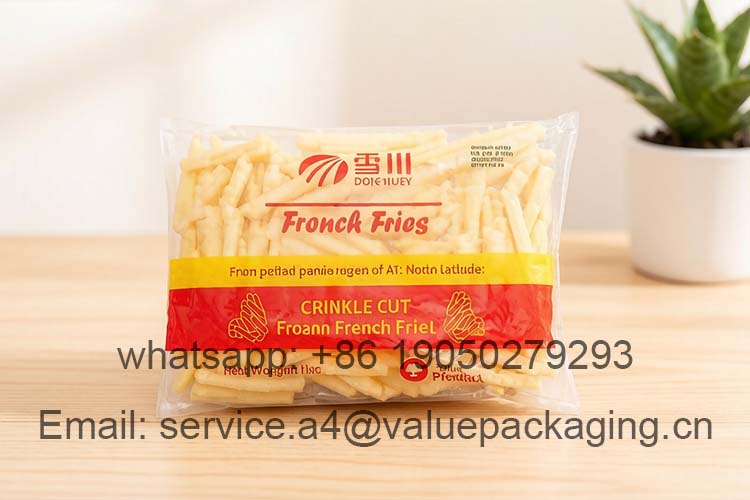
Selecting the right packaging depends heavily on handling conditions and distribution scale, especially in frozen supply chains where products are exposed to low temperatures, stacking pressure, and repeated handling.
Small Pack Sizes (300g – 1kg)
This is the main retail format, typically designed for easy handling, storage in home freezers, and convenient consumer use. Products in this range often require a balance between flexibility and seal reliability, as the packaging needs to perform well both during filling and after opening and resealing.
- PE-based laminates
- BOPP / PE
These structures offer good flexibility and stable sealing performance under low-temperature conditions. They are also cost-effective for high-volume production and compatible with high-speed packaging lines. In addition, their softness helps reduce the risk of cracking or seal failure when the product is handled or dropped in frozen environments.
Medium to Large Pack Sizes (1kg and above)
These packs are more frequently used in bulk retail and food service applications, where they are exposed to greater mechanical stress during transportation, stacking, and storage. As pack size increases, the weight of the product itself also puts more pressure on the packaging structure.
- PE / PE (co-extruded)
- Thick PE films
These structures are designed to prioritize toughness, puncture resistance, and overall durability. Co-extruded PE allows for better control of film properties, improving impact resistance and seal strength. As pack size increases, material thickness and mechanical strength become more critical than barrier performance, especially to prevent tearing or failure during handling in frozen conditions.
4. Recyclable Mono-Material Frozen French Fries Packaging
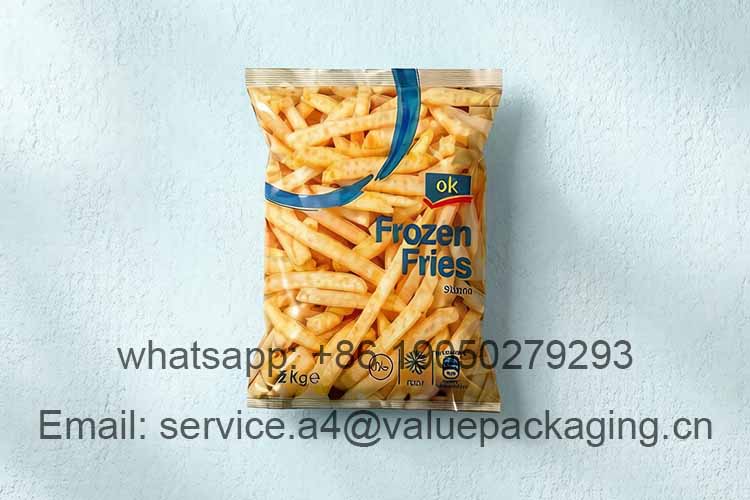
Sustainability is becoming increasingly important in frozen food packaging, especially in retail markets where recyclability and material reduction are under growing pressure. At the same time, frozen applications place strict demands on flexibility and durability, which limits the range of suitable sustainable materials.
PE-based mono material solutions are the most practical option:
These materials are compatible with existing recycling streams and can be designed within a single polymer family, which simplifies waste processing. At the same time, PE-based films maintain good flexibility at low temperatures, reducing the risk of brittleness, cracking, or seal failure during handling and storage in frozen conditions.
MDOPE and BOPE films can also improve stiffness and mechanical strength compared with traditional PE films, making them more suitable for higher-performance applications while still supporting recyclability.
Typical structures include:
- MDOPE / LDPE
- BOPE / LDPE
- PE / PE
These structures combine different PE layers to balance strength, sealability, and flexibility. For example, outer layers can be optimized for stiffness and printability, while inner layers focus on seal strength and impact resistance. This layered design allows mono material packaging to meet the mechanical demands of frozen French fries, even without complex multi-material laminates.
Although these solutions do not provide the same barrier performance as metallized or aluminum-based structures, they are generally sufficient for frozen fries, where moisture control and mechanical durability are more critical than high oxygen barrier. As a result, mono material PE packaging offers a practical balance between performance and sustainability in frozen food applications.
5. Compostable Frozen French Fries Packaging: Challenges and Limitations
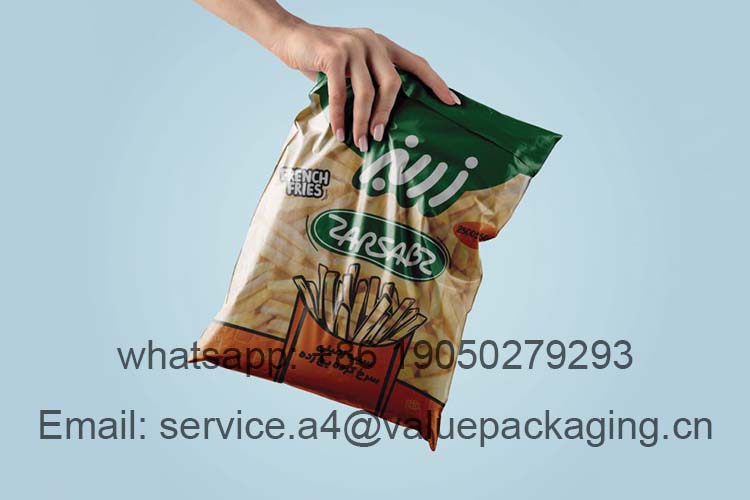
Compostable packaging is still limited in frozen food applications due to performance constraints under low-temperature
Another emerging direction in sustainable frozen French fries packaging is the use of compostable flexible materials designed to degrade under industrial composting conditions. These materials are typically derived from renewable resources and aim to reduce environmental impact compared with conventional plastics.
However, frozen French fries present strict requirements due to low-temperature storage, typically below -18°C. Packaging must maintain flexibility, mechanical strength, and seal integrity under these conditions, which remains a challenge for compostable materials.
Common compostable materials explored for frozen applications include:
In practice, these materials are usually laminated to improve strength and sealing performance. PLA provides stiffness, while PBAT enhances flexibility. However, PLA-based structures tend to become brittle at low temperatures, increasing the risk of cracking during handling and transport.
Seal reliability is also more difficult to maintain, as compostable materials often have narrower sealing windows. In addition, their moisture barrier performance is generally lower than conventional PE-based films, which may lead to frost formation or quality loss over time.
Typical compostable structures include:
Overall, compostable packaging is still limited in frozen French fries applications. It is more suitable for short distribution cycles or controlled conditions, while conventional materials remain the more reliable choice for long-term frozen storage.
6. Conclusion
Frozen French fries packaging is primarily focused on mechanical strength, low-temperature flexibility, and moisture control rather than high barrier performance.
Effective packaging must withstand freezing conditions, prevent physical damage, and maintain seal integrity throughout the supply chain. While sustainable solutions are developing, performance requirements in frozen environments remain a key challenge.
By selecting appropriate PE-based materials and structures, manufacturers can ensure product quality while balancing cost and environmental considerations.