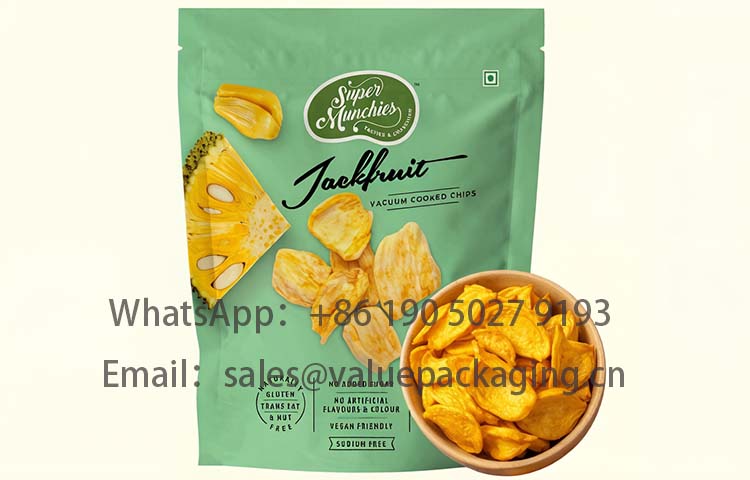
As global demand for healthy snacks continues to rise, jackfruit chips have emerged as a popular plant-based alternative known for their crisp texture and natural sweetness. However, as consumers become more environmentally conscious, packaging is no longer just about protection, it is a powerful branding tool.
Today, adopting sustainable jackfruit chips packaging is essential for brands aiming to stand out in a competitive market. From lightweight pouch and doypack formats to convenient bag, sachet, pack, and packet solutions, eco-friendly materials are reshaping snack packaging.
In this article, we explore how to green your brand with sustainable packaging, focusing on material innovation, barrier requirements, and practical solutions for jackfruit chips.
Conventional High-Barrier Materials
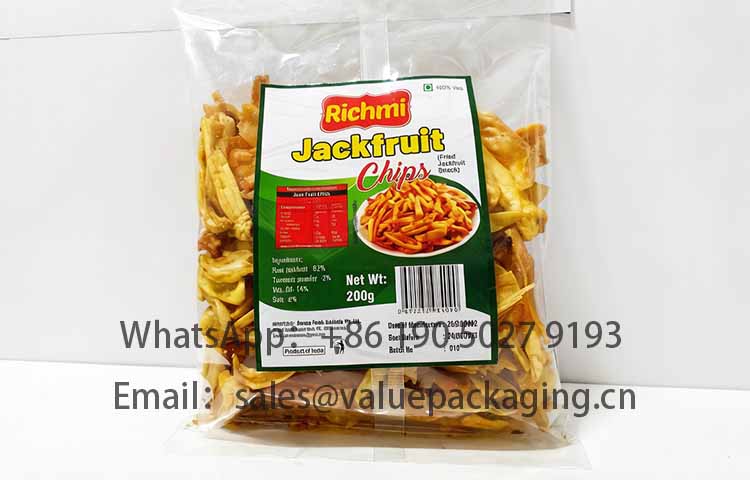
Traditional structures still dominate due to performance:
PET/LDPE
PET/VMPET/LDPE
PET/AL/LDPE
Kraft Paper/PET/LDPE
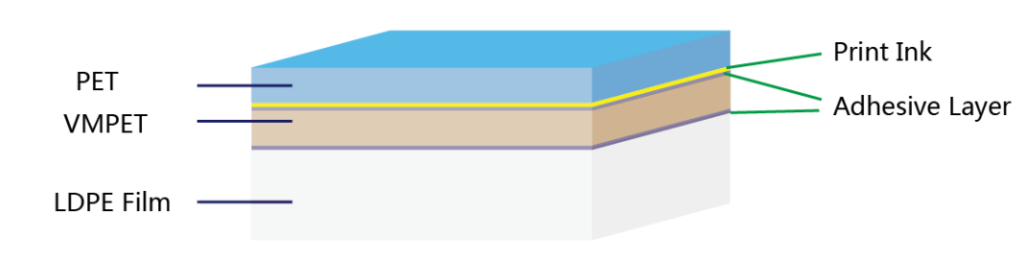
PET/VMPET/LDPE is a widely used multilayer flexible packaging structure designed to provide a strong balance of barrier performance, durability, and cost efficiency. It consists of three functional layers: PET (Polyethylene Terephthalate) as the outer layer, VMPET (Vacuum Metallized PET) as the barrier layer, and LDPE (Low-Density Polyethylene) as the inner sealing layer.
The PET layer offers excellent mechanical strength, heat resistance, and high-quality printability, making it ideal for branding and visual appeal. The VMPET layer, which is coated with a thin layer of aluminum, significantly enhances barrier properties by reducing oxygen and moisture transmission, helping to preserve product freshness and extend shelf life. The LDPE layer provides reliable heat sealing, flexibility, and moisture resistance, ensuring product protection and packaging integrity.
Please watch the video below Tensile Strength and Elongation Test for PET+VMPET+LDPE Transverse Direction
Compare AL with VMPET
| Aluminium | VMPET | |
| Barrier performance | Excellence (near-perfect): Provides the highest level of protection for food and pharmaceuticals | Excellent (high cost-performance ratio): Meeting the majority of conventional packaging requirements |
| Cost and Price | Expensive | Economical benefits |
Compostable Packaging Materials
Compostable Substrates
Compostable Laminates
Metallized Paper/PLA+PBAT
NK/NKME/PBS
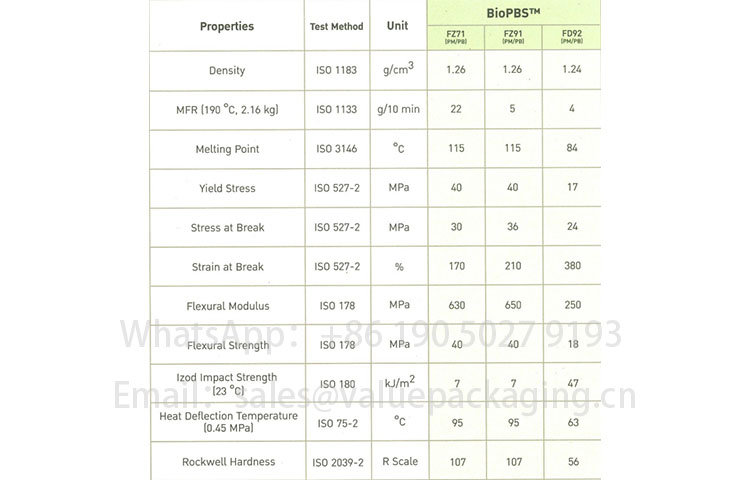
PBS (Polybutylene Succinate) film is a biodegradable and compostable packaging material gaining attention as a sustainable alternative to conventional plastics. It is a bio-based polyester typically produced from renewable resources such as succinic acid and 1,4-butanediol, though it can also be partially fossil-based depending on the formulation.
PBS film offers a well-balanced combination of flexibility, toughness, and thermal stability, making it suitable for various flexible packaging applications. Compared to other biodegradable materials like PLA, PBS has better heat resistance and superior flexibility, which improves its performance in pouch, bag, sachet, pack, and packet formats. It also provides good sealability, allowing efficient processing on standard packaging machines.
Recyclable Mono-Material Packaging
1.MDOPE Film
2.BOPE Film
3.LDPE Film
4.EVOH-LDPE Film
PE Mono-Material Laminate
MDOPE/LDPE
MDOPE/CPE
MDOPE/EVOH-LDPE
BOPE/APE
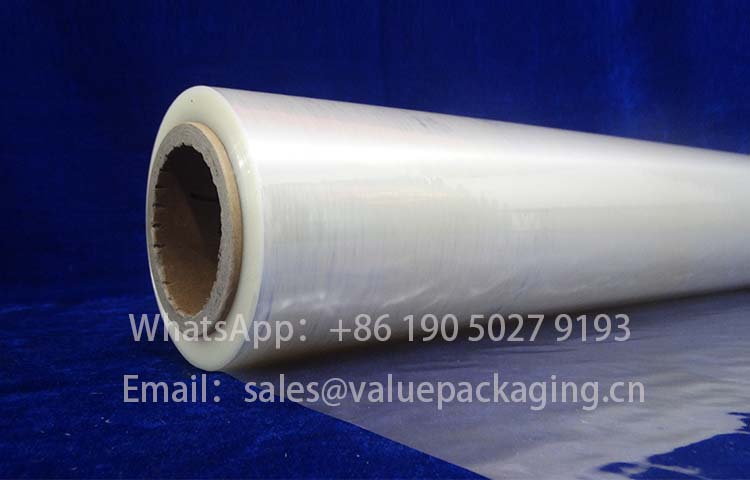
Due to its high stiffness and excellent printability, it is highly suitable as an outer printing film and can replace PET as an outer printing film for recyclable packaging.
Conclusion
Sustainable jackfruit chips packaging is no longer just an option,it is a strategic necessity for brands aiming to compete in today’s eco-conscious market. As consumers increasingly prioritize environmental responsibility, packaging must deliver both performance and sustainability without compromise.
From conventional high-barrier laminates to compostable films and recyclable mono-material solutions, each packaging approach serves a different purpose depending on shelf life, product sensitivity, and brand positioning. For crispy snacks like jackfruit chips, controlling moisture through low WVTR is critical, making high-barrier materials such as aluminum-based or AlOx-coated films highly effective. At the same time, recyclable PE structures and compostable alternatives offer brands new opportunities to align with sustainability goals.