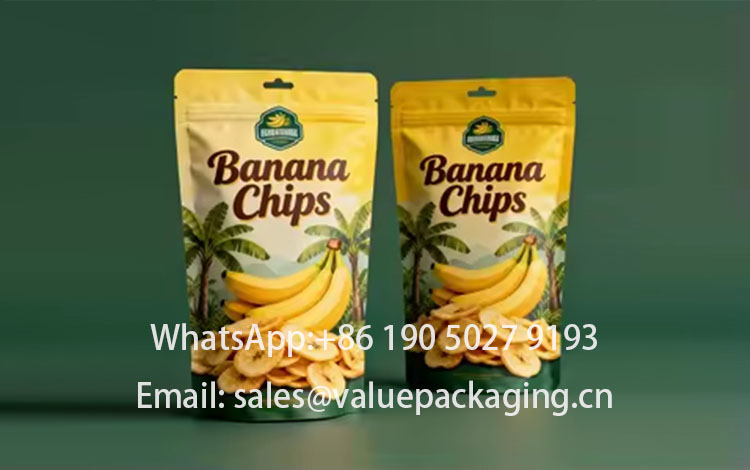
As global consumer demand for healthier, plant-based snacks continues to soar, banana chips have secured a dominant position in the premium snack market. However, delivering that perfect, satisfying crunch to consumers requires highly engineered packaging. Historically, achieving maximum shelf life meant relying on non-recyclable multi-material laminates.
Today, the flexible packaging industry is undergoing a massive shift. Brands no longer have to choose between performance (shelf-life) and responsibility (sustainability). By transitioning to advanced recyclable mono-material structures, snack brands can significantly lower their environmental footprint while keeping products fresh.
Common Packaging Formats
1. Stand-Up Pouch (Doypack)
A stand-up pouch, also called a doypack, is one of the most popular formats for banana chips packaging.
2.Pillow Pouch
Pillow pouches are made using horizontal or vertical form-fill-seal machines.This is one of the most economical snack packaging formats.
3.Side Gusset Pouch
A side gusset bag is a flexible packaging format designed with expandable side panels that increase the internal filling capacity of the package. When filled, the bag forms a stable block shape, making it highly suitable for banana chips packaging, especially for medium and large-volume products.
Traditional Banana Chips Packaging Materials
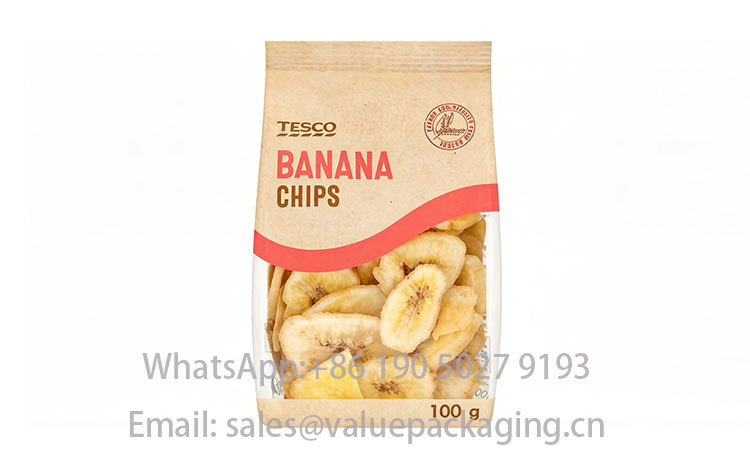
Traditional snack packaging structures focus heavily on high barrier performance and long shelf life.
BOPP/VMCPP
BOPP/CPP
BOPP/LDPE
PET/LDPE
PET/CPP
PET/VMPET/LDPE
OTR & WVTR Comparison for Common Banana Chips Packaging Structures
Banana chips are highly sensitive to: moisture absorption,oxygen exposure,oil oxidation,loss of crispness
Therefore, banana chips packaging requires: strong moisture barrier,good oxygen barrier,aroma retention,grease resistance
The following structures are commonly used in banana chips pouch, bag, sachet, packet, and doypack packaging applications.
Standard testing conditions are commonly:
OTR: 23°C / 0% RH,
WVTR: 38°C / 90% RH
Actual values may vary depending on: film thickness,sealing quality,metallization quality
Barrier Comparison Table
| Structure | WVTR (g/m²·day) | OTR (cc/m²·day) |
| BOPP/VMCPP | 0.5–1.5 | 5–20 |
| BOPP/CPP | 5–8 | 100–300 |
| BOPP/LDPE | 4–7 | 80–250 |
| PET/LDPE | 3–6 | 50–150 |
| PET/CPP | 2–5 | 20–50 |
| PET/VMPET/LDPE | 0.3–1.5 | 0.5–5 |
BOPP/VMCPP offers a more economical solution with good moisture resistance, while PET/CPP and PET/LDPE provide moderate barrier performance suitable for shorter shelf-life applications. Structures such as BOPP/CPP and BOPP/LDPE are more suitable for low-cost or fast-turnover snack packaging due to their relatively limited barrier protection.
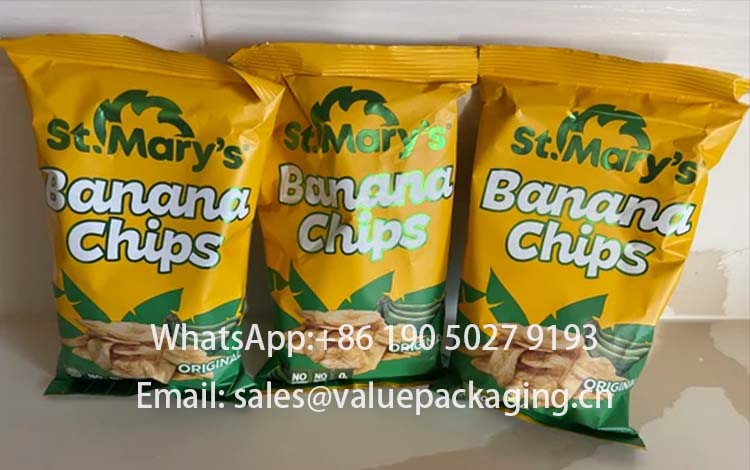
Recyclable Banana Chips Packaging Materials
As sustainable packaging regulations increase globally, many snack brands are transitioning toward recyclable mono-material flexible packaging.
The challenge is maintaining crispness and shelf-life while improving recyclability.
PE Mono Materials
Polyethylene structures are valued for their flexibility and reliable sealing performance. In banana chips applications, they can provide good package integrity and basic moisture protection, while EVOH-containing structures can improve oxygen barrier performance, which is important for preserving flavor, color, and product quality.
- MDOPE/LDPE
- BOPE/LDPE
- MDOPE/BOPE/LDPE
- MDOPE/EVOH-LDPE
- MDOPE / BOPE / APE
Barrier Performance
| Structure | WVTR (g/m²·day) | OTR (cc/m²·day) |
| MDOPE/EVOH-LDPE | 1–3 g/m²·day | 0.5–10 cc/m²·day |
| MDOPE / BOPE / APE | 2–5 g/m²·day | 30–100 cc/m²·day |
| MDOPE / BOPE / EVOH-LDPE | 0.8–2.5 g/m²·day | 0.3–5 cc/m²·day |
Why MDOPE Is Important in Sustainable Snack Packaging?
MDOPE film is gaining increasing importance in sustainable snack packaging because it can replace traditional PET layers in some applications. Its main advantages include: compatibility with recycled PE streams, increased stiffness, a matte paper-like appearance, thinning capabilities, and a reduced carbon footprint. These properties make MDOPE ideal for sustainable flexible packaging applications such as snack bags and banana chip stand-up pouches.
Compostable Banana Chips Packaging Materials
As sustainability becomes a major focus in the global snack industry, compostable banana chips packaging materials are gaining increasing attention from brands and consumers alike. Banana chips require packaging with strong moisture and oxygen barriers to maintain crispness, prevent oil oxidation, and extend shelf life. Compostable flexible packaging offers an eco-friendly alternative to traditional plastic laminates while supporting circular economy goals.
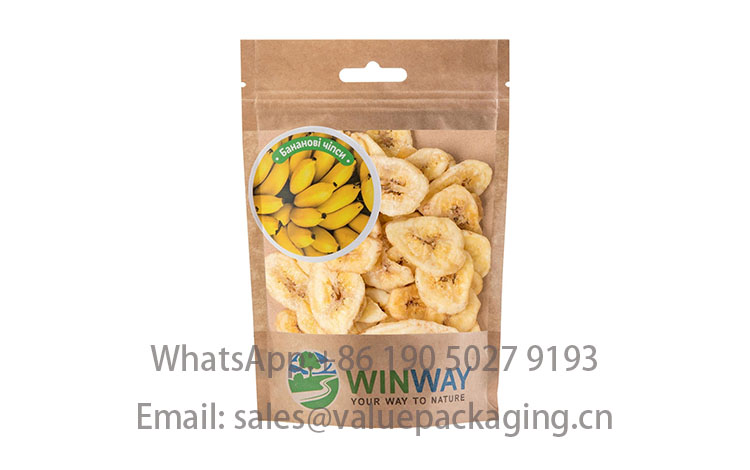
Compostable Substrates
Compostable Laminates
| Compostable Structure | OTR | WVTR | Video |
|---|---|---|---|
| Kraft Paper/PLA+PBAT | 50–150 | 8–15 | https://www.youtube.com/watch?v=boc408ciLSQ |
| BOPLA/PLA+PBAT | 10–30 | 8–15 | https://www.youtube.com/watch?v=EmSPwO8w784 |
| Cellulose/PLA+PBAT | 5–20 | 5–10 | |
| Metallized Cellulose/PLA+PBAT | 0.5–5 | 0.5–2 | |
| Kraft Paper/Metallized Cellulose/PLA+PBAT | 1–10 | 1–3 | https://www.youtube.com/watch?v=4wm4b9ilGa4 |
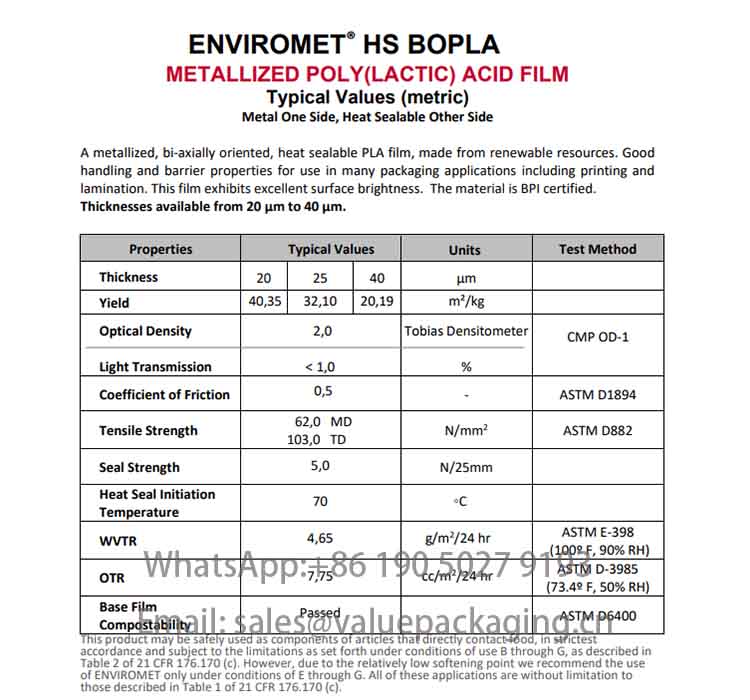
BOPLA (biaxially oriented polylactic acid) film is a biodegradable packaging material made from polylactic acid, which comes from renewable resources like corn starch or sugarcane. It’s a high-quality film that can be used in many industries, including food, pharmaceuticals, electronics, and new energy vehicles.
Conclusion
Sustainable banana chips packaging is becoming increasingly important as brands seek eco-friendly solutions without compromising product freshness and shelf life. Because banana chips are highly sensitive to moisture and oxygen, high-barrier packaging materials remain essential for maintaining crispness, aroma, and flavor stability.
Traditional structures such as PET/VMPET/LDPE still provide excellent protection, while compostable materials like Metallized Cellulose/PLA+PBAT offer a more sustainable alternative with strong barrier performance. Recyclable mono-material PE structures are also emerging as a future packaging trend for snack products.
As flexible packaging technology continues to advance, sustainable banana chips pouch, doypack, bag, sachet, packet, and pack solutions will increasingly combine performance, premium appearance, and environmental responsibility to meet both consumer expectations and global sustainability goals.