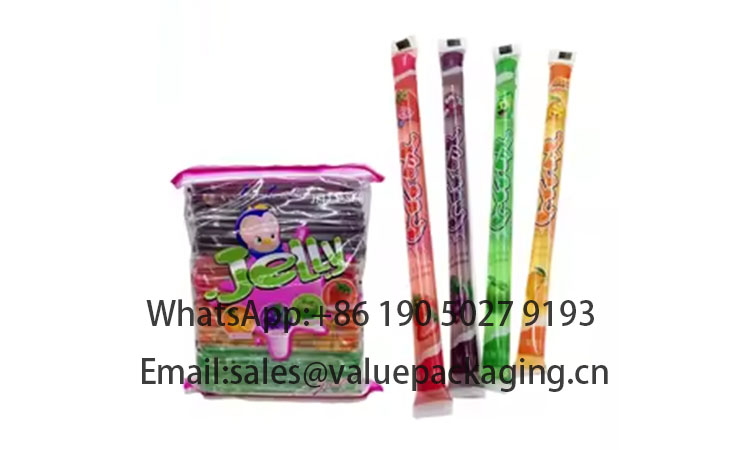
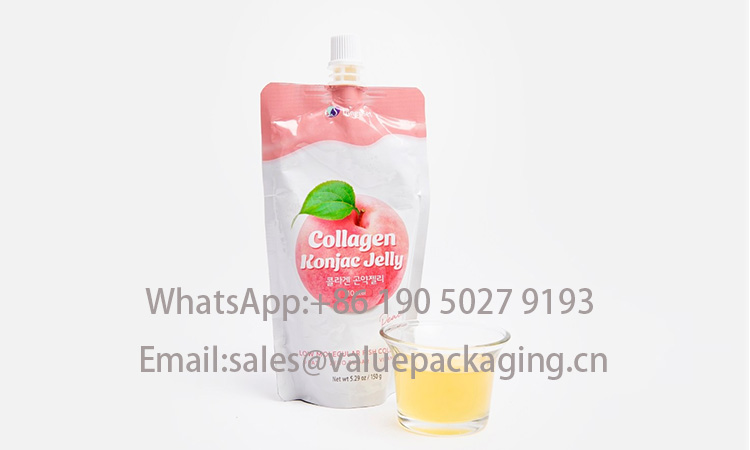
As global consumers pivot toward healthier snacking and conscious consumption, fruit jelly,a beloved treat ranging from kids’ lunchbox snacks to premium functional wellness gels,is undergoing a packaging revolution. For modern brands, the challenge is no longer just about preserving the burst of fruity flavor; it’s about doing so without leaving a lasting footprint on the planet.
Common Packaging Formats
Back seal bags (pillow bags)
Back seal bags, also known as pillow bags, are the most widely used format for small to medium detergent powder packs. The longitudinal seal runs along the back of the package, allowing efficient forming and sealing on high-speed filling lines. This structure offers excellent cost efficiency and is ideal for mass-market products with large production volumes.
Spouted stand-up pouches
Spouted stand-up pouches are used in some detergent powder applications. The integrated spout allows more controlled dispensing, helping reduce powder spillage and improve dosing accuracy during use. The stand-up structure provides good shelf stability, while the resealable cap supports repeated opening and closing. Due to the higher material and production cost, this format is typically positioned for differentiated or higher-value detergent powder products rather than large-scale standard packaging.
Sachet packaging
Sachet packaging is designed for single-use portions or promotional distribution. It is lightweight and cost-effective, making it suitable for sampling and short-term applications, although it is not intended for repeated use.
Conventional High-Barrier Materials
Fruit jelly is a high-moisture product that requires a robust barrier to prevent leakage, spoilage, and texture changes. Traditionally, this meant heavy reliance on multi-layer plastics. Today, we categorize the market into three primary pathways:
Conventional laminates are still the standard for high-speed production and long shelf life. Common structures include:
Typical Structures
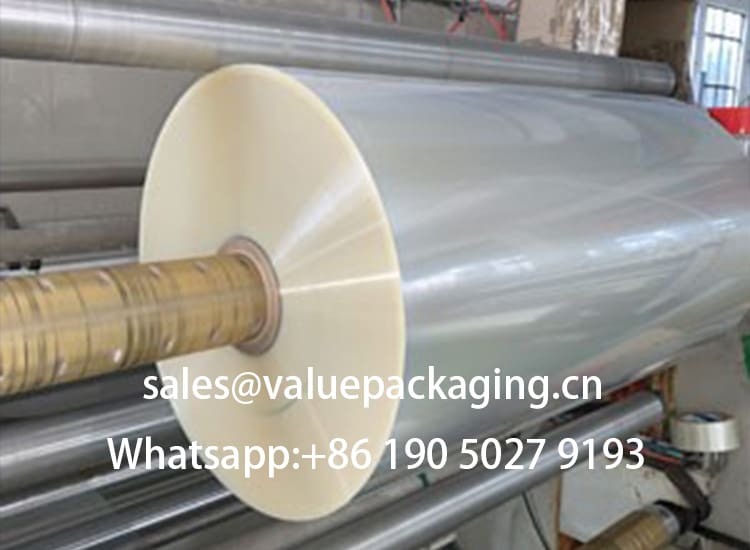
PET film, sometimes BOPET film, is one of the most commonly used print substrates in flexible packaging area. It is of great printability, mechanical strength, processing stability, high temperature resistance and grease resistance.
PET film, or polyethylene terephthalate film, is a thermoplastic polymer resin that is a type of plastic film. It is a versatile material with many uses due to its physical, mechanical, optical, thermal, electrical, and chemical properties. PET film is available in various thicknesses, widths, and transparencies.
PET film has many uses, including:
- Packaging: PET film is used in containers for food and liquids, as well as in flexible packaging.
- Manufacturing: PET film is used in thermoforming.
- Engineering: PET film is combined with glass fiber to create engineering resins.
- Films: PET film is used for antimicrobial and insulation films, surface protection, hard-coats films, protective films, and printable films.
Comparison of WVTR and OTR for Different PET Films
| Film Type | WVTR | OTR |
| Standard PET Film | 10 – 20 g/m²·day | 40 – 80 cc/m²·day |
| VMPET Film (Metallized PET) | 0.5 – 3 g/m²·day | 0.5 – 5 cc/m²·day |
| AlOx-PET Film | 0.5 – 2 g/m²·day | 0.1 – 2 cc/m²·day |
High-barrier structures are especially important for maintaining texture, preventing dehydration, and extending shelf life.
WVTR by Material Structure
| Material Structure | Typical WVTR (g/m²·day) |
| PET / AL / PE | 0.1 – 0.5 |
| PET / VMPET / PE | 0.5 – 1.5 |
| PET / CPP | 2 – 5 |
Compostable Packaging Materials
Compostable packaging is emerging in premium organic jelly products.
Compostable Substrates
PLA+PBAT Film
Cellulose Film
Kraft Paper
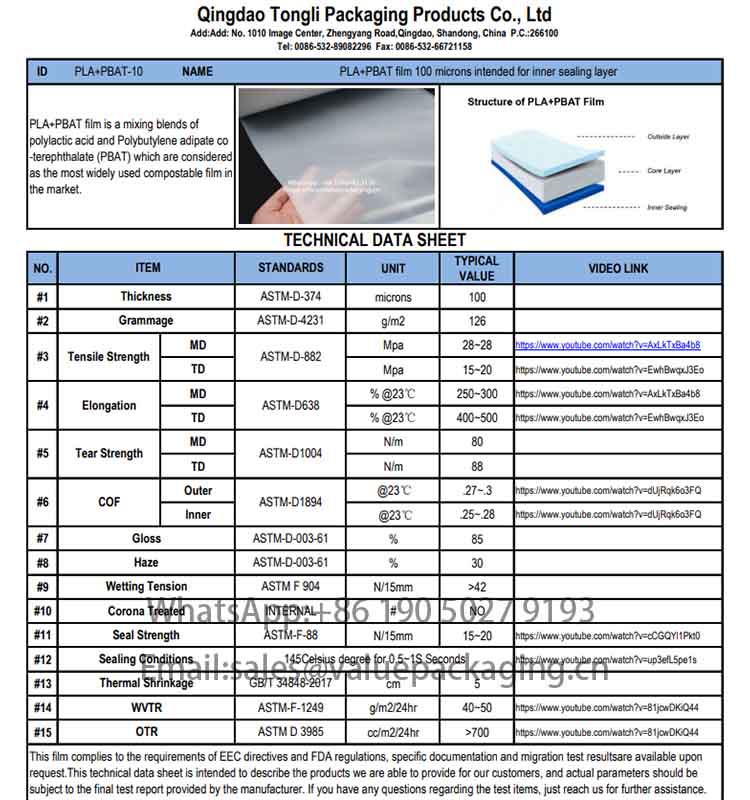
Common Structures
- Kraft Paper/PLA+PBAT
- Cellulose/PLA+PBAT
The OTR of AL (aluminum foil) structure is close to 0, and the WTR is extremely low (0-0.2). VMPET (vacuum-metallized PET) structure has certain OTR and WTR values, but its barrier properties are significantly lower than AL. Key difference: AL provides near-perfect barrier properties (oxygen and moisture), while VMPET, although offering good barrier properties, still allows for trace amounts of permeability.
AL is a “near-perfect” barrier, but it is susceptible to bending; VMPET is a “cost-effective” choice, offering good barrier properties and greater durability. For milk powder packaging, the AL structure is preferred when shelf life and moisture control are extremely critical; for standard shelf-life requirements, the VMPET structure is sufficient.
Recyclable Packaging Solutions
Recyclable mono-material structures are becoming a key trend.
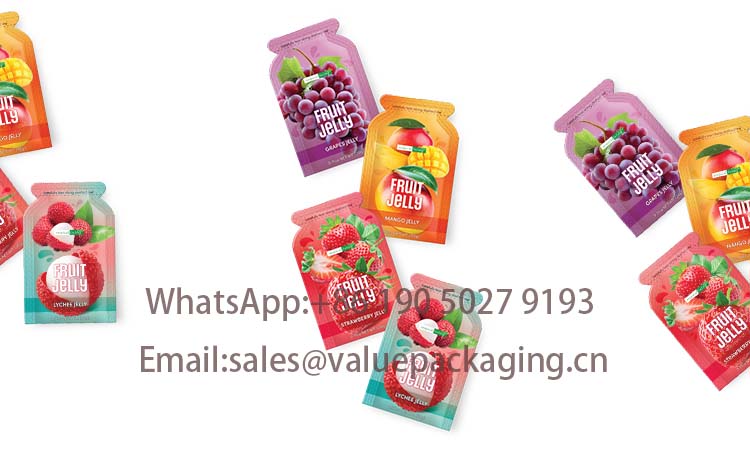
PE Mono Materials
MDOPE film is replacing traditional PET in many recyclable flexible packaging solutions, particularly within mono-material PE recyclable packaging systems.
Why MDOPE film can replace PET film?
In traditional flexible packaging, PET typically serves as:The outer printing layer, providing stiffness, enhancing mechanical strength, and improving heat resistance.
Standard PE is relatively soft:
It lacks stiffness and offers weaker print performance.
In contrast, MDOPE,after stretching,exhibits significantly enhanced rigidity; its tactile feel is closer to that of PET, making it better suited for pouches, doypacks, and bags.
However, PET and PE belong to different material systems:
PET/PE composite structures → Difficult to recycle
They disrupt the PE recycling stream.
In contrast, MDOPE,produced through a longitudinal stretching process,acquires certain properties similar to those of PET; consequently, it is capable of replacing PET in many applications.
Typical Structures
- MDOPE/LDPE
- MDOPE / EVOH-PE
- BOPE / LDPE
Modern recyclable structures now offer significantly improved barrier properties, making them suitable for many fruit jelly products.
Conclusion
Eco-friendly fruit jelly packaging is becoming a key driver of innovation in the modern snack and beverage industry. As consumers increasingly demand sustainable products, brands must balance environmental responsibility with product protection, convenience, and shelf appeal.
Fruit jelly products require packaging with strong moisture resistance, excellent seal integrity, and reliable barrier performance to maintain freshness and prevent leakage. Conventional structures such as PET/LDPE and PET/VMPET/LDPE continue to provide excellent protection, especially for long shelf life applications. At the same time, recyclable mono-material solutions and compostable films are opening new opportunities for sustainable packaging development.