
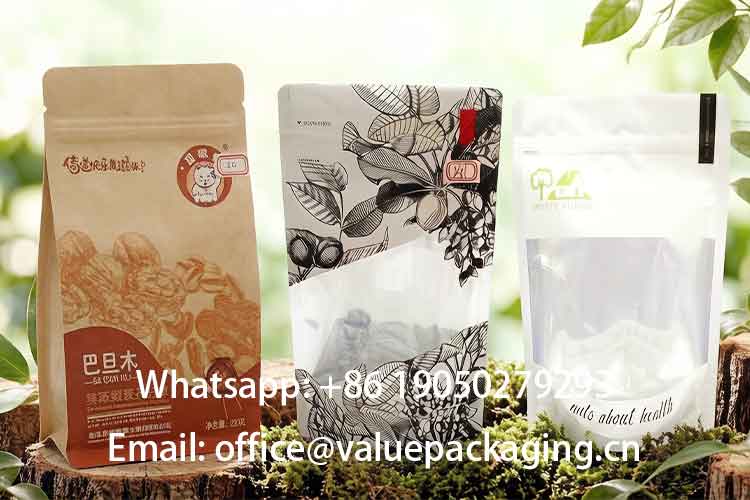
The term “eco-friendly” is widely used in the packaging industry today, but what does it really mean for your dry nut packaging? As sustainable packaging solutions become more common, many brands label their packaging as “green,” but it can be challenging to understand what these claims truly represent without clear standards and transparency.
To truly assess how sustainable your dry nuts packaging is, it’s important to look beyond the label. The environmental impact of packaging depends on the materials used, the structure of the packaging, its performance, and the overall environmental footprint throughout its lifecycle.
In this article, we’ll explore the factors that affect the environmental impact of dry nuts packaging and discuss how businesses can make well-informed decisions to ensure their packaging is as sustainable as possible.
1. Why Dry Nuts Packaging Presents Sustainability Challenges
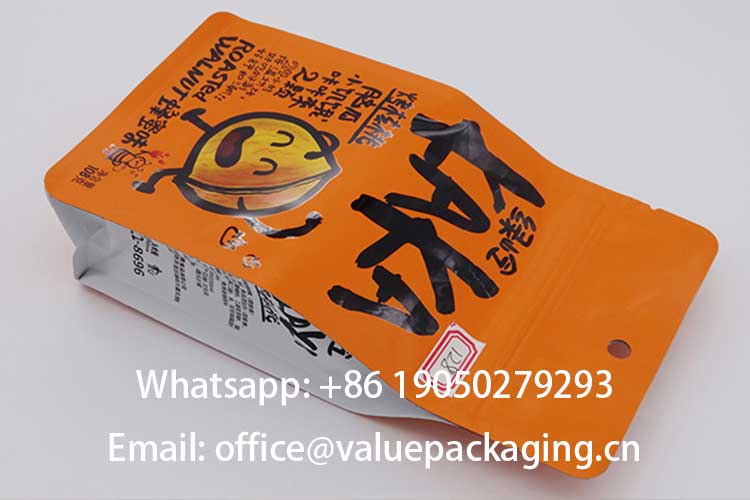
Dry nuts are particularly sensitive to moisture, oxygen, and light, all of which can impact their flavor, texture, and shelf life. To maintain the product’s quality, most dry nut packaging uses multiple layers of materials that provide necessary protection.
However, these multilayered structures often come at an environmental cost. The combination of materials used in dry nuts packaging is generally difficult to recycle or break down naturally in the environment.
Common Packaging Materials for Dry Nuts:
- PET film
- VMPET film
- CPP film
- Aluminum foil
- Metallized PET film
- Kraft paper
- LDPE film
- AlOx and SiOx coated PET film
These materials are essential for keeping the dry nuts fresh, but they also make recycling more complicated. Reducing the use of fossil-based plastics is one way to make packaging more sustainable, but finding the right balance between performance and eco-friendliness is key.
2. Typical Laminates in Dry Nuts Packaging
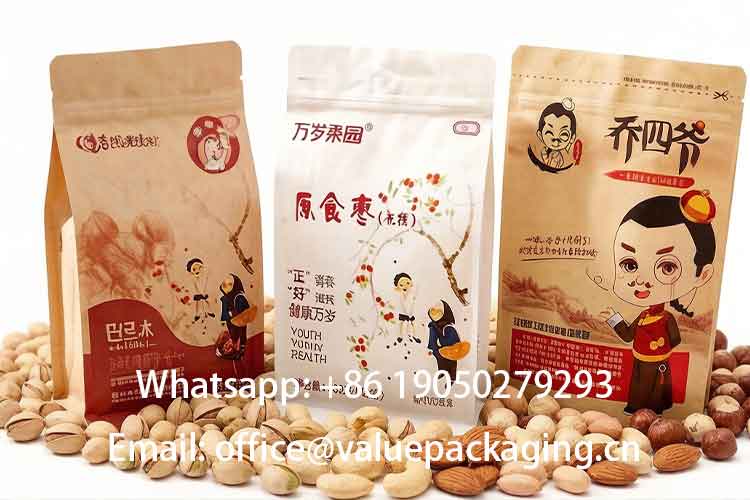
To better understand the sustainability of a dry nut’s packaging, let’s look at the most commonly used packaging structures:
Traditional Laminates Used in Dry Nuts Packaging:
- PET / AL / PE
- BOPP / VMPET / PE
- PET / VMPET / PE
- Matte BOPP/VMPET/PE
- PET / AlOx-PET / PE
- PET / SiOx-PET / PE
These multilayer structures provide excellent moisture and oxygen barriers, crucial for preserving the quality of the dry nuts. Unfortunately, most of these materials are not recyclable in current waste management systems, limiting their sustainability.
3. Kraft Paper: A Popular but Limited Sustainable Option
Why Kraft Paper is Chosen for Packaging
Kraft paper is often viewed as a more eco-friendly option due to its renewable wood fiber content and biodegradability. It’s commonly used in premium dry nuts packaging or products marketed as eco-friendly.
Benefits of Kraft Paper in Dry Nuts Packaging:
- Made from renewable resources
- Contains less plastic than other materials
- Positive consumer perception of sustainability
- Good print surface with minimal ink coverage
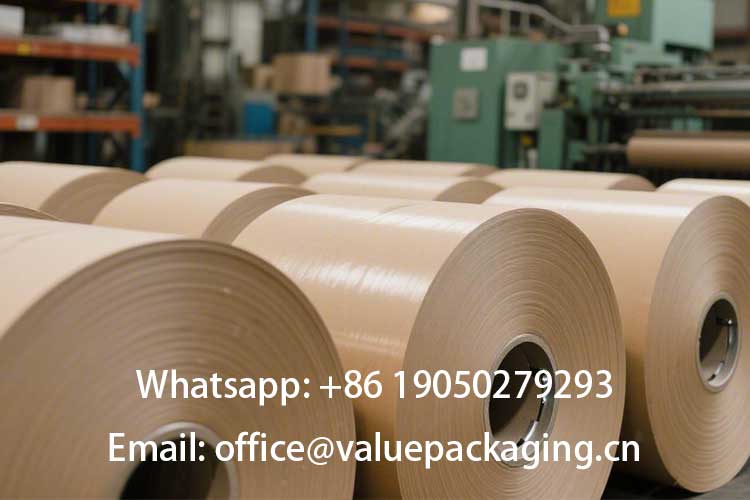
While kraft paper has its benefits, it isn’t a perfect solution. It doesn’t provide enough protection from moisture and oxygen on its own. To meet these needs, kraft paper is typically combined with plastic films or aluminum foils, which significantly reduces its recyclability.
Common Kraft Paper Laminates:
- Kraft Paper / AL / PE
- Kraft Paper / VMPET / PE
- Kraft Paper / AlOx-PET / PE
- Matte BOPP / Kraft Paper / PE
- Kraft Paper / SiOx-PET / PE
- Matte BOPP / Kraft Paper / VMPET / PE
- BOPP / Kraft Paper / PE
Despite the advantages of kraft paper, it alone doesn’t automatically make packaging sustainable. The full structure of the packaging needs to be taken into account to determine its environmental friendliness.
4. Mono-Material Packaging for Dry Nuts: Is It the Future?
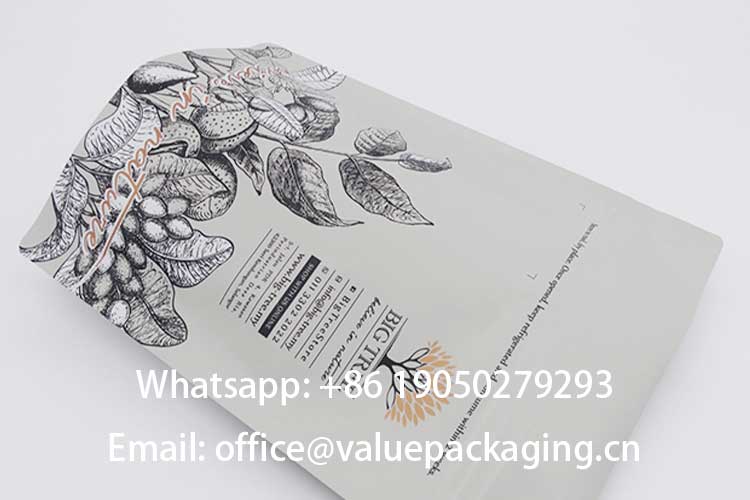
The Shift Towards Mono-Material Packaging
Mono-material packaging, typically made from all-PE or all-PP structures, has become an increasingly popular solution for sustainable packaging. For dry nuts, mono-material PE bags are gaining popularity due to their recyclability in existing plastic streams.
Mono-Material Used in Dry Nuts Packaging:
- MDOPE film
- BOPE film
- HDPE film
- LLDPE film
- PVA-coated PE film
Modern mono-material films for nuts packaging, such as high-barrier PE, BOPE, and MDOPE, have achieved performance levels that closely match traditional multilayer laminates. These films can effectively block oxygen, moisture, and light, which are the main factors affecting the shelf life of nuts. High-fat nuts are especially sensitive to oxidation, but with proper film thickness and barrier treatment, mono-material structures can maintain freshness and flavor for standard storage and distribution periods.
In practice, mono-material packaging simplifies recycling while still meeting protective requirements. For longer shelf life or challenging conditions like high humidity or extended transport, film selection and bag design—such as using additional barrier coatings or thicker layers—become critical. This ensures that nuts remain stable without compromising recyclability.
5. Compostable Packaging for Dry Nuts: Is It Really Eco-Friendly?
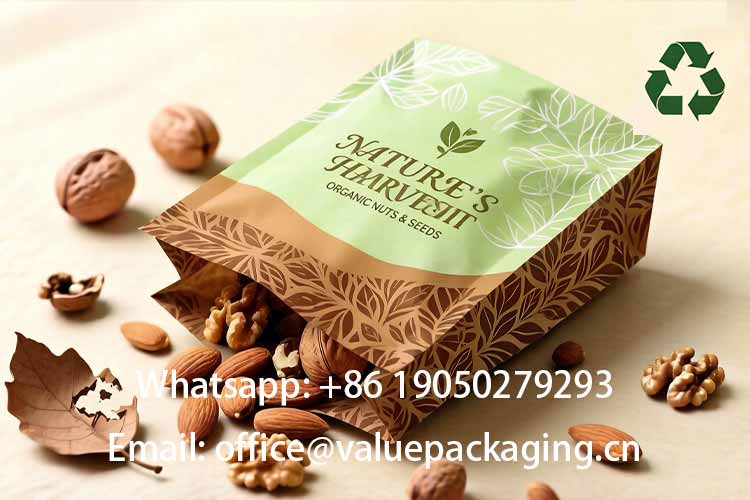
Compostable packaging offers an alternative solution for improving sustainability, especially in regions with effective composting systems. However, the real environmental benefit of compostable packaging depends on how it is disposed of.
Common Compostable Materials for Dry Nuts Packaging:
While compostable materials are promising, the inks and adhesives used in the packaging are typically not compostable. Thankfully, these components usually make up only a small percentage of the total weight of the packaging.
Compostable packaging can only be beneficial when disposed of in composting facilities. If it ends up in a landfill or general waste, its environmental advantages are mostly lost.
6. Functional Features in Dry Nuts Packaging: Zippers and Windows
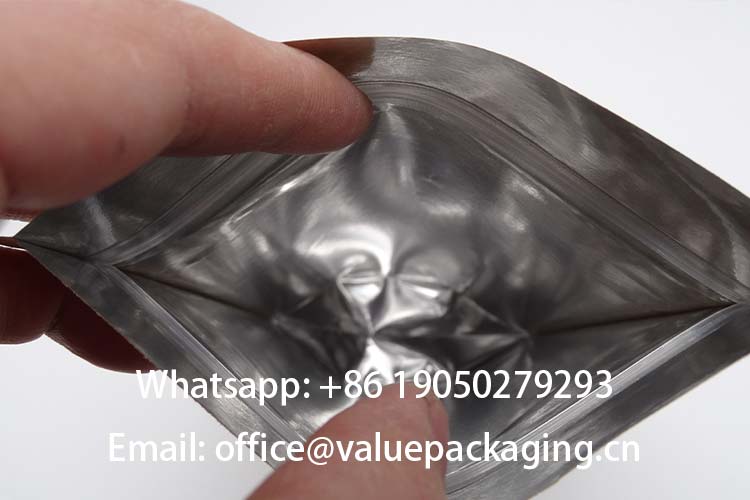
In addition to materials, packaging features such as resealable zippers and transparent windows significantly impact both consumer convenience and the environmental footprint of the packaging.
- Mono-material zippers made of PE can be used in mono-material PE bags, ensuring recyclability.
- PLA zippers are being developed for compostable bags, ensuring that the entire package can be composted.
However, some features, like tear zippers, are not yet compostable, and it’s important for brands to keep track of progress in this area.
Conclusion: Defining the Most Sustainable Dry Nuts Packaging
The most sustainable dry nuts packaging is not the one with the boldest claims but the one that balances product protection, environmental impact, and clear communication about the choices made.
Whether your packaging uses kraft paper, mono-material films, aluminum foil, or compostable materials, its sustainability depends on how well it balances protecting the dry nuts, reducing waste, and clearly communicating the environmental impact of its choices.
If you want to explore more sustainable dry nuts packaging options, we are here to help guide you in creating packaging solutions that align with your environmental goals.