
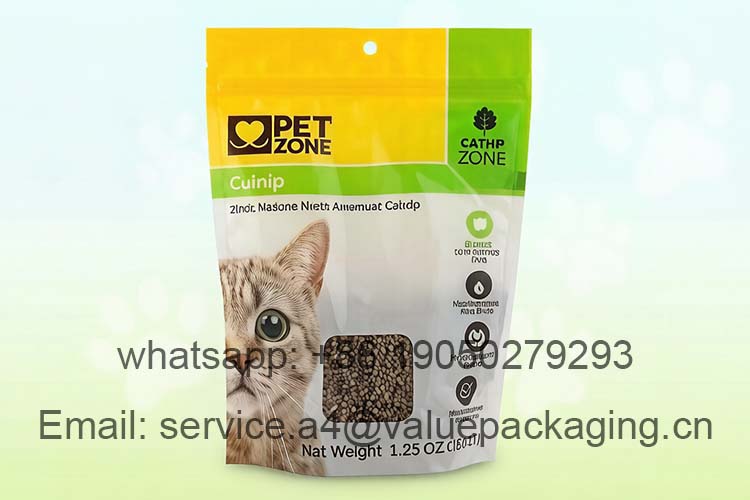
Catnip is a lightweight dried herb product commonly used in cat toys, treats, and pet enrichment products. Because catnip contains natural aromatic compounds that are sensitive to air, moisture, and light exposure, improper packaging may lead to aroma loss, reduced product potency, texture deterioration, or shortened shelf life over time. Compared with many ordinary dry pet products, catnip packaging often requires better aroma retention and moisture protection in order to maintain freshness and product effectiveness during storage and transportation.
In practical applications, catnip packaging must also balance product protection, convenience, and retail presentation. Retail packaging often focuses on resealability, product visibility, and lightweight pouch formats, while bulk packaging may prioritize moisture control and transportation efficiency.
1. Common Catnip Packaging Solutions
Stand Up Zipper Pouches
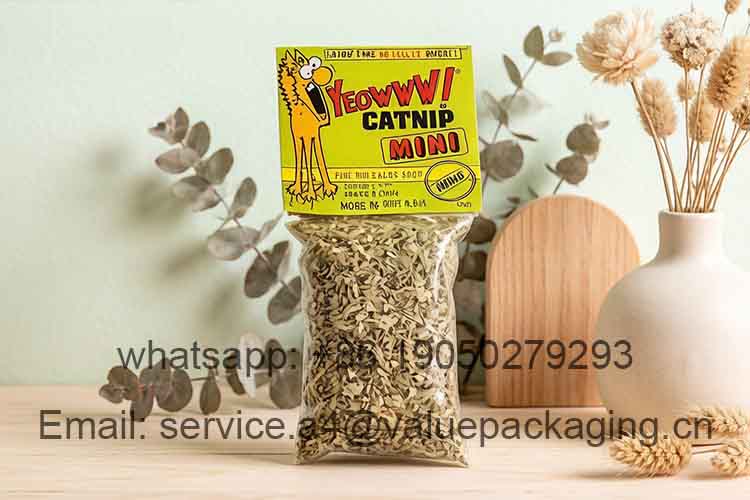
Stand up zipper pouches are one of the most commonly used packaging formats for catnip products. The resealable zipper helps reduce repeated air exposure after opening while maintaining aroma freshness during storage. Compared with rigid containers, stand up pouches also reduce packaging weight and transportation space while providing better shelf presentation for retail products.
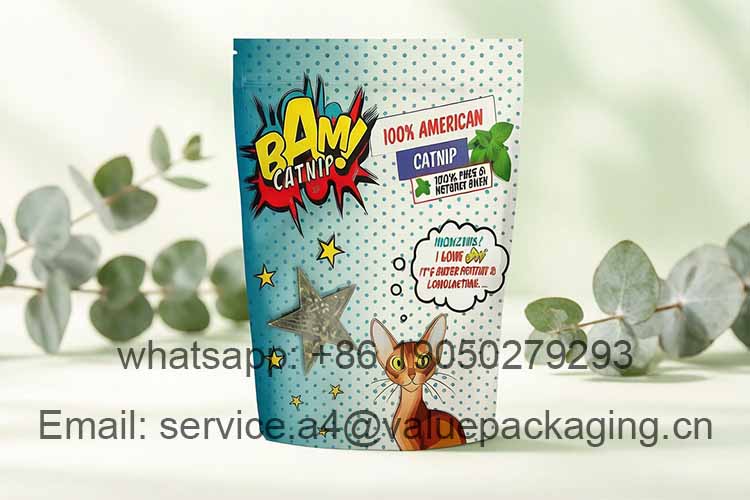
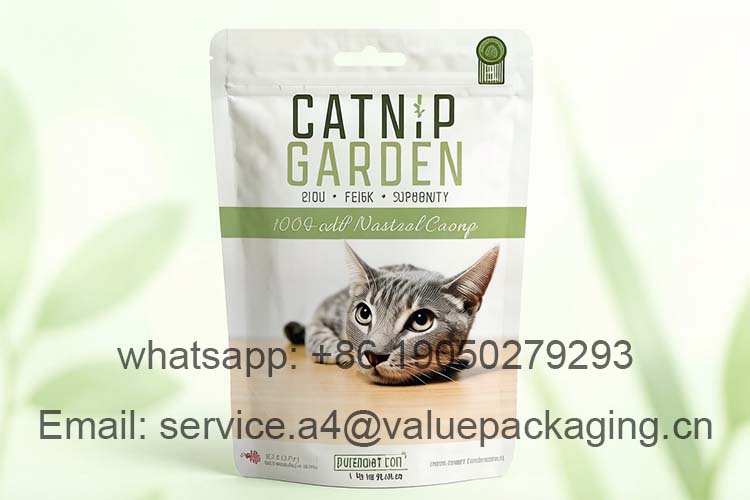
Many catnip stand up pouches include features such as resealable zippers, transparent windows, matte or glossy finishes, hang holes, and rounded corners. Because catnip is lightweight and naturally aromatic, these pouches are often combined with good oxygen and moisture barrier materials to help preserve aroma intensity and maintain product freshness throughout shelf life.
Flat Sachets
Flat sachets are commonly used for single use catnip products, cat toy refill packs, and promotional packaging. Their flat and compact structure supports efficient high speed filling while helping reduce packaging material usage and transportation space.
Compared with stand up pouches, flat sachets are more suitable for small portion packaging and multipack products. They are lightweight, easy to display, and convenient for sample distribution or travel packaging. Because catnip relies heavily on aroma freshness, flat sachets are often combined with moisture and oxygen barrier laminates to help reduce aroma loss and maintain product quality during storage and transportation.
Pillow Bags
Pillow bags are commonly used for larger volume catnip packaging, such as bulk packs and refill sizes. Their simple structure with a back seal offers a cost effective solution while keeping good flexibility and storage efficiency. Compared with stand up pouches and flat sachets, pillow bags are more suitable for higher fill volumes and price sensitive packaging needs.
Because catnip is lightweight and aromatic, pillow bags are usually combined with moisture and oxygen barrier materials to help preserve freshness and reduce aroma loss during storage and transportation.
2. Materials Used in Catnip Packaging
| Product Characteristics | Packaging Considerations |
|---|---|
| Natural Aromatic Oils | Sensitive to oxygen exposure, which may reduce aroma intensity over time. |
| Dried Herbal Texture | Moisture absorption may affect texture and product freshness. |
| Lightweight Plant Material | Requires reliable sealing to reduce leakage during transportation. |
| Natural Color and Appearance | Light exposure may gradually reduce visual quality during storage. |
Catnip packaging requires balanced barrier protection to maintain product freshness and aroma stability throughout shelf life.
Key packaging considerations include:
- Moisture Barrier: Prevents moisture absorption that may reduce product freshness and texture quality.
- Oxygen Barrier: Maintains aroma intensity and reduces loss of volatile natural compounds.
- Light Protection: Minimizes color fading and aroma degradation during retail display.
- Sealing Performance: Maintains package integrity and reduces product leakage during transportation.
- Puncture Resistance: Improves packaging durability during handling and distribution.
Common materials used in catnip packaging include:
- PET film
- LDPE film
- BOPP film
- CPP film
- Kraft paper
- Metallized PET film
- AlOx and SiOx coated PET film
In practical production, these materials are often laminated together to balance aroma retention, sealing performance, packaging appearance, and cost efficiency.
3. Traditional Catnip Packaging Structures
Different multilayer structures are used in catnip packaging depending on shelf life requirements, product positioning, and packaging appearance. Since catnip relies on naturally occurring aromatic compounds to attract cats, packaging plays an important role in preserving aroma intensity and preventing moisture absorption during storage. As a result, manufacturers often select laminate structures that balance aroma retention, shelf life, packaging appearance, and cost.
Standard Retail Packaging:
These structures are commonly used for standard catnip products with short to medium shelf life requirements. They provide reliable sealing performance and basic moisture protection while supporting efficient production and cost control. For products with relatively fast turnover, these laminates are often sufficient to maintain product freshness during normal retail distribution.
High Barrier Packaging:
Metallized films such as VMPET are widely used when stronger aroma retention and moisture protection are required. These structures help reduce the loss of volatile aromatic compounds while protecting the product from moisture and light exposure. They are commonly used for premium catnip products and products requiring longer shelf life.
Transparent or Window Packaging:
- PET / AlOx-PET / PE
- PET / SiOx-PET / PE
Kraft paper laminates create a natural and premium shelf appearance that aligns well with organic and natural pet product positioning. The kraft paper layer improves pouch stiffness and visual appeal, while the inner barrier layers help maintain aroma freshness and reduce moisture exposure throughout storage and transportation.
Kraft Paper Laminates:
Kraft paper laminates create a more natural and premium shelf appearance commonly used for organic or natural pet product positioning. The inner barrier layers help maintain aroma freshness and reduce moisture exposure during storage.
4. Recyclable Mono Material Catnip Pouches
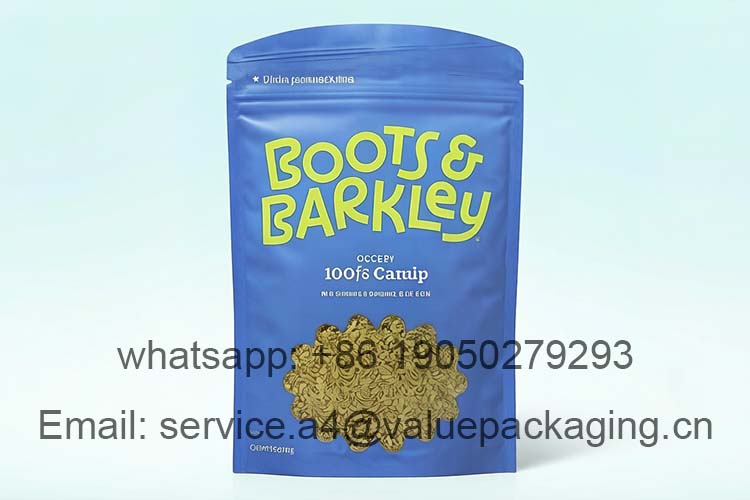
As sustainability continues to gain importance in the pet products industry, recyclable mono material catnip packaging is becoming a practical alternative to conventional multilayer laminates. These structures are specifically designed to improve recyclability while still providing the moisture, oxygen, and aroma protection needed to preserve catnip quality throughout storage and distribution.
Since catnip naturally contains volatile aromatic compounds that contribute to its attractiveness to cats, packaging materials must help minimize aroma loss and maintain product freshness over time. Advances in mono material technology have made it possible to achieve improved barrier performance without relying on complex mixed material structures.
Common PE based materials include:
Common PP based materials include:
Typical recyclable pouch structures for catnip include:
- BOPP/VMCPP
- MDOPE/LDPE
- MDOPE/BOPE/LDPE
- ABOPP/VMCPP
These recyclable structures offer a balance between product protection, packaging functionality, and sustainability goals. They can support reliable sealing performance, help retain aroma intensity, and improve compatibility with existing recycling streams, making them suitable for a wide range of catnip packaging applications.
5. Compostable Catnip Packaging
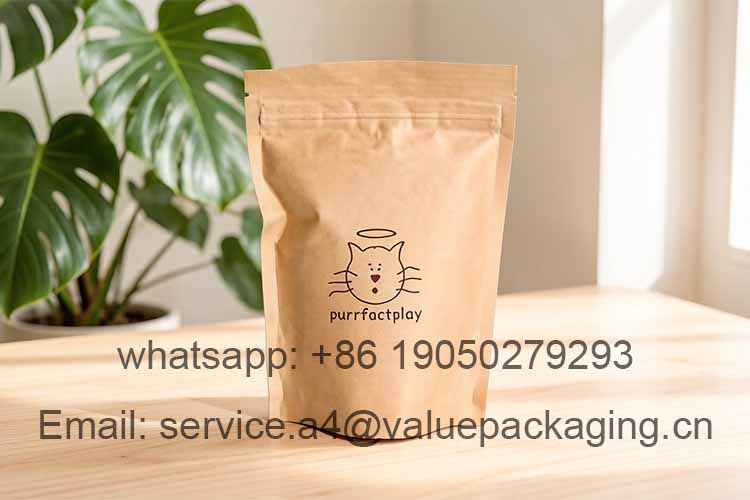
Another emerging development in catnip packaging is the adoption of compostable flexible packaging materials. These solutions are designed to break down under industrial composting conditions while reducing reliance on conventional petroleum based plastics. As sustainability becomes an increasingly important purchasing factor for pet owners, compostable packaging is gaining attention among premium, natural, and environmentally focused pet brands.
Common compostable materials include:
Typical compostable structures include:
- Cellulose/PLA+PBAT Membrane
- Cellulose/Metallized Cellulose/PLA+PBAT Membrane
- Kraft Paper/Metallized Cellulose/PLA+PBAT Membrane
- Kraft Paper/Cellulose/PLA+PBAT Membrane
- Kraft Paper/Cellulose/PBS Membrane
- Metallized Paper/Cellulose/PLA+PBAT Membrane
These material combinations can provide an attractive natural appearance while supporting the barrier properties required for dried herbal products. For catnip applications, packaging must help protect against moisture uptake, oxygen exposure, and aroma loss, as the effectiveness of catnip is closely linked to the retention of its natural aromatic compounds. Modern compostable structures are therefore developed to balance environmental objectives with product protection, shelf life requirements, and packaging functionality.
6. Conclusion
As the pet care market continues to evolve, catnip packaging is moving beyond basic containment toward solutions that enhance product freshness, user convenience, brand presentation, and sustainability performance. Whether using conventional high barrier laminates, recyclable mono material structures, or compostable packaging systems, the primary objective remains the same: preserving the aroma and quality of catnip from production through final use.
The selection of packaging materials and formats depends on factors such as product positioning, shelf life expectations, distribution conditions, and sustainability goals. By combining suitable barrier structures with practical packaging designs, manufacturers can improve product protection, strengthen retail appeal, and meet the growing expectations of modern pet owners.