
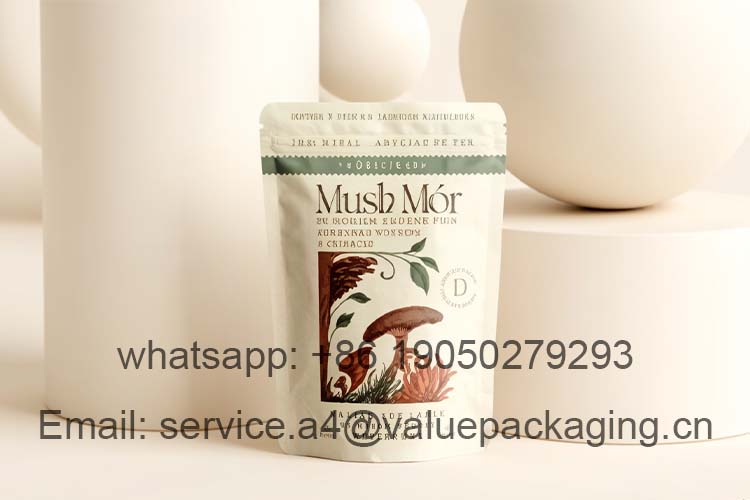
Mushroom powder has become increasingly popular in the food, beverage, supplement, and wellness industries due to its concentrated nutrition, convenient usage, and growing consumer interest in functional ingredients. Common products include lion’s mane mushroom powder, reishi mushroom powder, cordyceps mushroom powder, shiitake mushroom powder, and blended functional mushroom formulations.
Because mushroom powder is a dry and finely milled product, it is sensitive to moisture, oxygen, light, and contamination during storage and transportation. Improper packaging may lead to moisture absorption, caking, flavor deterioration, oxidation, and loss of product quality over time. Compared with many conventional dry food products, mushroom powder often requires packaging with reliable moisture and oxygen barrier properties to help maintain freshness and shelf stability.
As consumer demand for premium wellness products continues to grow, mushroom powder packaging must balance product protection, convenience, visual appeal, and sustainability throughout the supply chain.
1. Common Mushroom Powder Packaging Solutions
Stand Up Pouches with Resealable Zippers
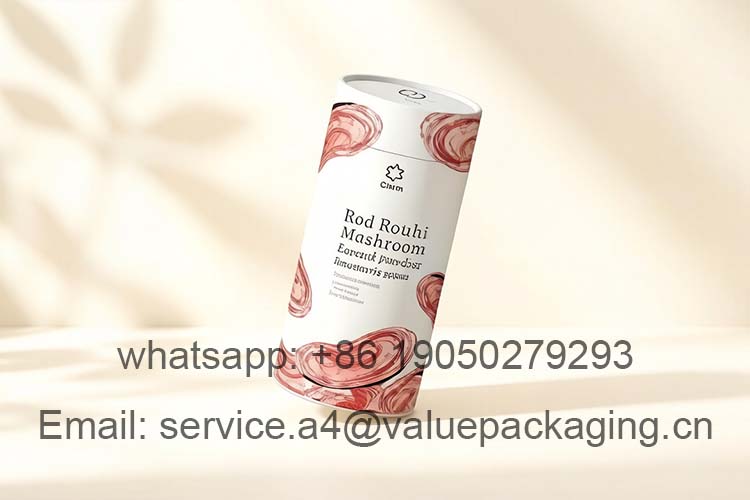
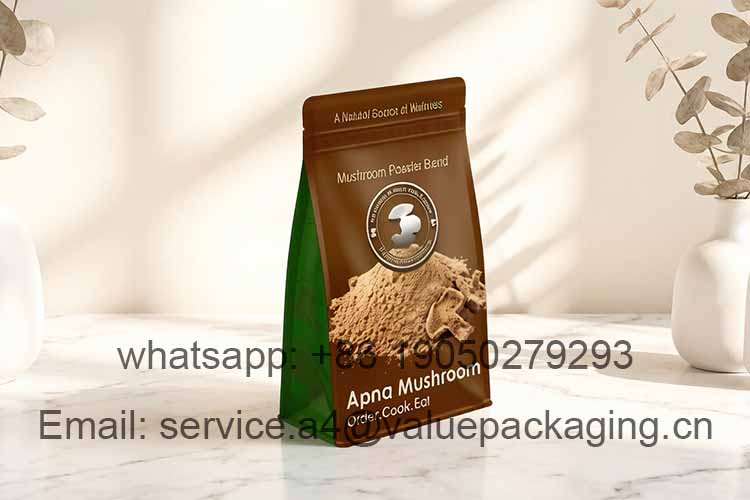
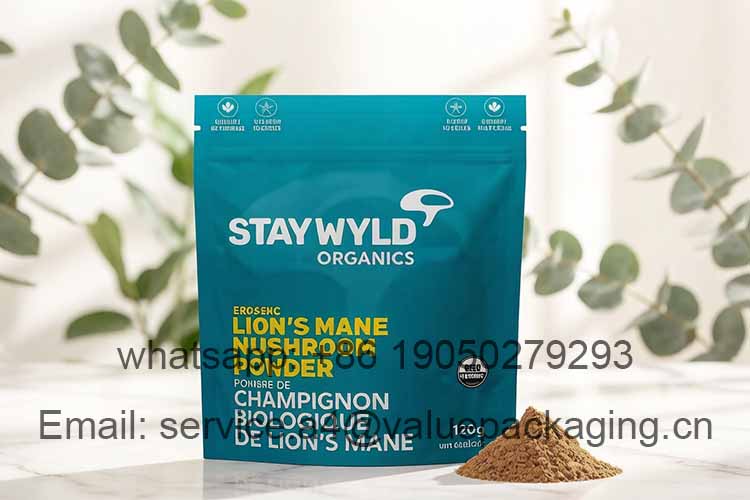
Stand up zipper pouches are among the most widely used packaging formats for mushroom powder. The resealable zipper allows consumers to open and close the package multiple times while helping reduce exposure to moisture and oxygen after opening. The upright structure provides excellent shelf presentation and efficient storage for retail products.
Many mushroom powder pouches can be customized with matte or glossy finishes, transparent windows, tear notches, and hang holes to improve convenience and brand visibility. For fine mushroom powders, dust proof zipper designs are also available to help prevent powder accumulation around the zipper area and maintain smooth resealing performance.
Plastic Jars and Paperboard Canisters
Rigid containers such as plastic jars and paperboard canisters are commonly used for premium mushroom powder products and dietary supplements. Their durable structure helps protect the powder from compression and external damage during transportation while providing a premium appearance. Airtight closures help minimize exposure to moisture and oxygen, supporting longer shelf life and product stability.
Single Serve Sachets
Single serve sachets are widely used for instant mushroom drink mixes, supplement powders, and travel friendly applications. Each sachet contains a pre measured portion, offering convenience and consistent dosage. The sealed format helps maintain freshness and protects the powder until consumption.
2. Materials Used in Mushroom Powder Packaging
Mushroom powder is a fine, hygroscopic product that can easily absorb moisture from the surrounding environment. Exposure to humidity may cause clumping, reduced flowability, and deterioration of product quality. In addition, prolonged contact with oxygen and light may gradually affect aroma, flavor, color, and the stability of naturally occurring bioactive compounds. For functional mushroom products such as lion’s mane, reishi, cordyceps, and shiitake powder, maintaining product integrity throughout storage and distribution is particularly important.
To help preserve freshness and extend shelf life, mushroom powder packaging should provide protection against several environmental factors.
Key Packaging Requirements
- Moisture Protection
Mushroom powder readily absorbs moisture, which can lead to caking and reduced product quality. Effective moisture barriers help keep the powder dry and free flowing throughout storage and transportation. - Oxygen Barrier Performance
Exposure to oxygen may contribute to oxidation of sensitive compounds and gradual loss of flavor. High barrier packaging helps maintain product freshness and supports longer shelf life. - Light Protection
Certain mushroom powders may experience quality degradation when exposed to prolonged light. Packaging structures with light barrier properties help preserve color, aroma, and product stability. - Aroma Retention
Many mushroom powders contain distinctive natural aromas that contribute to product quality and consumer perception. Suitable barrier materials help retain these characteristics while preventing the absorption of external odors. - Contamination Prevention
The fine particle size of mushroom powder requires packaging that effectively protects against dust, contaminants, and environmental exposure throughout the supply chain. - Reliable Sealing Performance
Strong and consistent seals help maintain package integrity and prevent moisture or oxygen from entering the package after filling. - Puncture Resistance During Transportation
Bulk packaging and long distance transportation may expose pouches to compression and handling stress. Durable packaging structures help reduce the risk of damage and product loss.
Common Packaging Materials
To achieve the required level of protection, mushroom powder packaging often utilizes multilayer flexible packaging materials. Each layer contributes specific performance characteristics, such as printability, barrier protection, mechanical strength, or sealing capability.
Common materials include:
- PET film
- VMPET film
- Aluminum foil
- LDPE film
- BOPP film
- PA film
- Kraft paper
- Metallized PET film
- AlOx and SiOx coated PET film
In practical applications, these materials are commonly laminated together to create structures that balance barrier performance, durability, appearance, and cost efficiency. Higher barrier structures are often selected for premium mushroom powders, functional mushroom supplements, and products requiring extended shelf life, while standard retail products may utilize more economical laminate combinations that still provide reliable moisture and oxygen protection.
3. Sustainability Challenges in Traditional Mushroom Powder Pouches
| Packaging Structure | Key Advantages | Typical Applications |
|---|---|---|
| PET / AL / PE | Excellent oxygen, moisture, and light barrier | Premium mushroom powder |
| PET / VMPET / PE | Strong barrier performance with lower cost | Standard retail products |
| PET / AlOx-PET / PE | Transparent barrier structure | Window pouches |
| Kraft Paper / AL / PE | Natural appearance with high barrier protection | Organic mushroom powder |
Different multilayer laminate structures are used depending on product positioning and shelf life requirements.
Premium Mushroom Powder Packaging with Aluminum Foil
Aluminum foil structures provide outstanding protection against oxygen, moisture, and light. These laminates are commonly used for premium mushroom powders that require extended shelf life and maximum protection of flavor and active ingredients.
Standard Retail Packaging
Metallized film structures provide reliable barrier protection while offering a more economical solution for mainstream retail products.
Transparent Barrier Packaging
- PET / AlOx-PET / PE
- PET / SiOx-PET / PE
These structures allow partial product visibility while maintaining strong oxygen and moisture barrier performance, making them suitable for brands that want consumers to see the product.
Kraft Paper Laminates
Kraft paper laminates combine a natural appearance with effective product protection and are frequently used for organic and wellness focused mushroom powder brands.
Because conventional multilayer laminates combine different material types through permanent bonding, they can be difficult to separate during recycling. As a result, many traditional mushroom powder pouches have limited compatibility with existing recycling streams.
4. Mono Material Flexible Packaging for Mushroom Powder
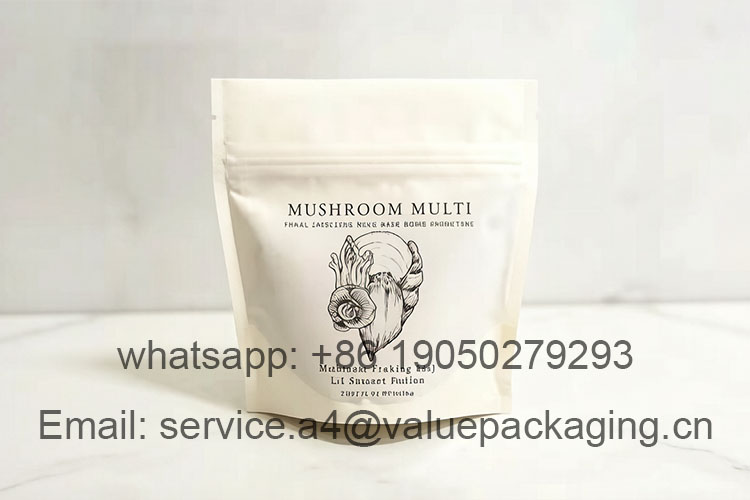
One of the most promising sustainable solutions is mono material flexible packaging based on polyethylene structures. By designing pouches within a single polymer family, these systems are more compatible with existing recycling streams and easier to process after disposal, helping improve the overall recyclability of flexible packaging.
Mushroom powder is highly sensitive to moisture, oxygen, light, and environmental contamination. It can easily absorb moisture from the air, leading to caking, flowability loss, and degradation of active compounds. At the same time, its natural aroma and bioactive components require strong barrier protection to maintain product stability during storage and transportation.
Common polyethylene based materials include:
Compared with PP based materials, PE generally provides better flexibility and sealing performance, while EVOH modified structures can significantly improve oxygen barrier performance. This makes PE based mono material systems particularly suitable for mushroom powder, which requires both moisture protection and aroma retention.
Typical recyclable pouch structures include:
- MDOPE/LDPE
- MDOPE/EVOH-LDPE
- MDOPE/BOPE/LDPE
- MDOPE/BOPE/EVOH-LDPE
By combining different PE films within the same material family, these pouch structures can provide balanced protection against moisture absorption and oxidation while remaining compatible with polyethylene recycling streams. This helps maintain mushroom powder freshness, prevents clumping, and preserves its natural flavor profile throughout shelf life.
5. Compostable Sachet for Mushroom Powder
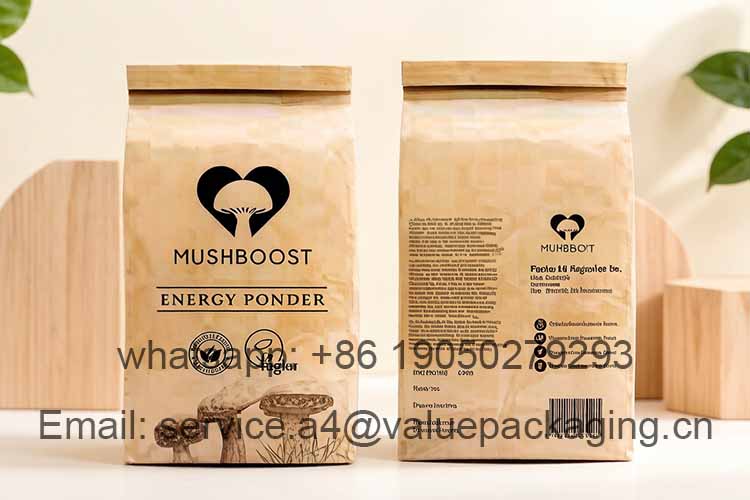
Another emerging direction in sustainable packaging is compostable flexible materials designed to break down under controlled composting conditions. These materials are typically derived from renewable or bio based resources and can help reduce long term environmental impact compared with conventional plastics.
For mushroom powder, compostable packaging must still address strict protection requirements. The powder is highly hygroscopic and sensitive to oxygen exposure, meaning barrier performance, sealing integrity, and storage stability remain critical considerations even in sustainable formats.
Common compostable materials used in flexible packaging include:
In practical applications, these materials are often laminated or coated to improve mechanical strength, heat sealing performance, and moisture resistance.
Typical compostable structures include:
For mushroom powder, compostable structures must carefully balance sustainability with functional protection. While cellulose based layers can provide a natural barrier appearance and good printability, additional compostable coatings are often required to enhance moisture resistance and preserve powder quality during storage.
Barrier Properties of Compostable Laminates
| Biodegradable Foil Laminate | WVTR(g/m2/24hr) | OTR (cc/m2/24hr) |
| Cellulose30/PLA+PBAT60 | 131.5 | 5.6 |
| Cellulose20/Metallized Cellulose20/PLA+PBAT60 | 18 | 2.1 |
6. Conclusion
As demand for functional foods, nutritional supplements, and wellness products continues to grow, mushroom powder packaging is evolving toward more sustainable and higher performance solutions. Modern packaging must balance moisture protection, oxygen barrier performance, product presentation, and environmental responsibility.
Whether using traditional high barrier laminates, recyclable mono material structures, or compostable packaging solutions, selecting the appropriate packaging format and material structure helps preserve freshness, maintain product quality, and support the sustainability objectives of modern brands.