
In today’s market of wheat flour, sustainability packaging has become one of the factors to keep business growing, as consumers increasingly choose products that align with environmental responsibility. Before brands can move toward truly eco-friendly solutions, it’s important to understand where wheat flour packaging stands today, what its limitations are, and how emerging materials like mono-materials and compostable structures can shape a more sustainable future.
The Current Landscape: Traditional Wheat Flour Packaging Materials
Wheat flour is a dry, powdery product that is highly sensitive to moisture and contamination. This makes packaging performance critical. Traditionally, brands have relied on a handful of well-established materials:
1. Non-Woven Fabric Bags
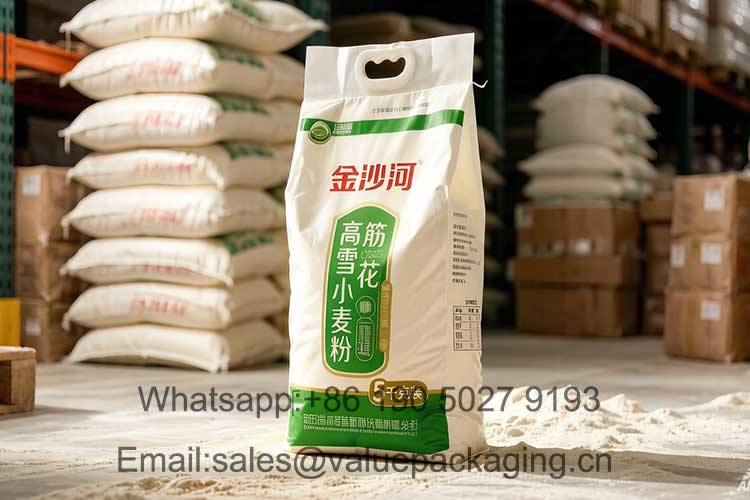
Non-woven fabric is produced by bonding polypropylene fibers together through thermal, chemical, or mechanical processes, rather than weaving or knitting. The result is a lightweight yet strong material with good tear resistance.
In flour packaging, non-woven fabric is typically used for:
- 10 kg, 25 kg, or 50 kg flour bags
- Industrial or B2B supply chains
- Short-distance transportation and storage
With the excellent properties and popularity of non-woven fabrics in flour packaging market, packs with smaller capacities like 1kg and 2.5kg are starting to shift to non-woven fabric material for young generations.
2. PP Woven Bags
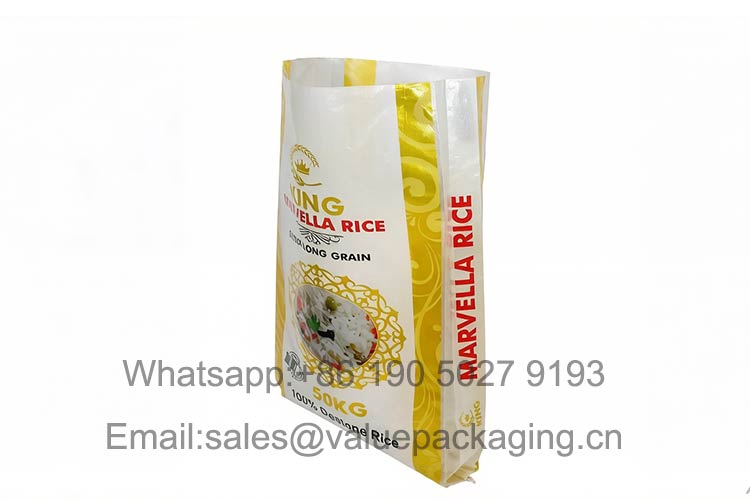
A PP woven bag is made from polypropylene tapes woven into a fabric, forming a strong, lightweight structure. For wheat flour packaging, PP woven bags are commonly used in:
- 10 kg, 25 kg, and 50 kg flour packs
- B2B and industrial distribution
- Milling, wholesale, and food service supply chains
To well meet the requirements of the customers, PP woven bags are often Laminated with BOPP film, lined with an inner PE liner or Printed using flexographic or gravure methods.
3. Multilayer Flexible Packaging
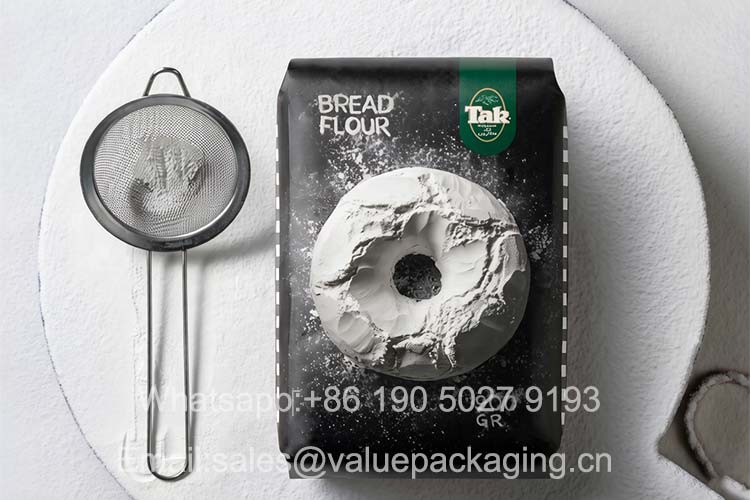
Multilayer flexible packaging is involved in the wheat flour market, as they are able to provide better properties and branding toward the more demanding consumer market. Complicate artwork can be printed on the surface to attract high-level customers, and particular needs can be met beyond the ability of non-woven fabric and PP woven bags.
As a reliable flexible converter, we are now offering various foil laminates for wheat flour customers in the blow list.
- PET/LDPE
- PA/LDPE
- PET/VMPET/LDPE
- PET/AlOx-PET/LDPE
- Kraft Paper/LDPE
- Matte BOPP/Kraft Paper/LDPE
Why Traditional Materials Fall Short in Sustainability
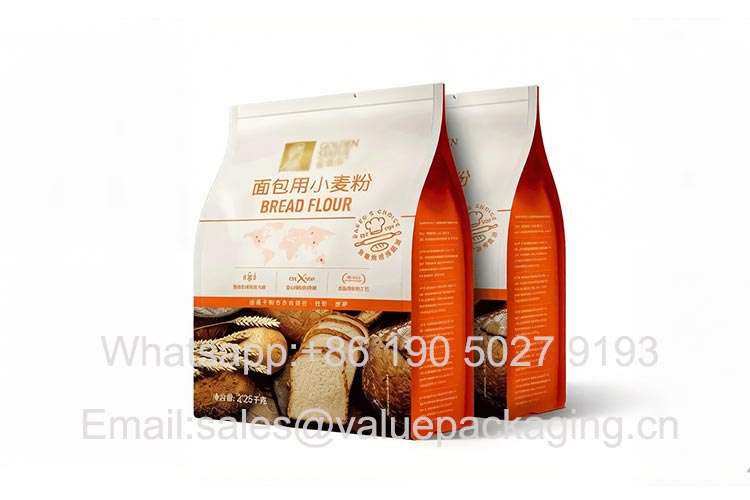
Traditional flour packaging materials,non-woven fabrics, PP woven bags, and multilayer laminates—share one major sustainability challenge:
Mixed or Composite Materials = Limited Recyclability
Most modern recycling systems require materials to be single-polymer streams. When packaging combines PET + PE or Kraft paper + coating, or BOPP/PP woven, or BOPP/Non-woven fabric, the layers cannot be easily separated for recycling. As a result, these products often fall incinerated or landfilled and may contribute to plastic pollution in long-term.
In addition, many traditional structures rely on fossil-based polymers, increasing carbon footprint and environmental burden.
The Goal: Moving Toward Eco-Friendly Packaging
To improve sustainability, flour brands can explore two major directions:
In reality, 3 main directions are explored by the packaging supply chain to improve the sustainability of wheat flour packaging.
- 1. Mono-Material Packaging
- 2. Compostable Packaging
- 3. 100% Kraft Paper Packaging
Mono-Material Packaging: Recyclable and Practical
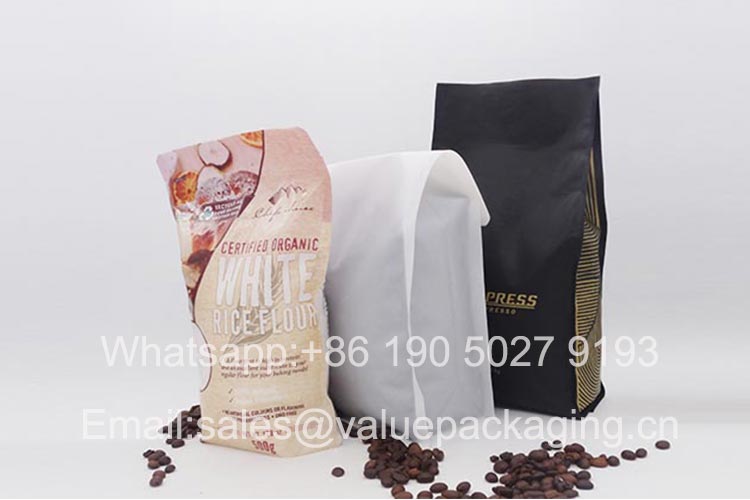
Mono-material packaging refers to structures made entirely from one type of polymer, typically polyethylene (PE) or polypropylene (PP), enabling recyclability in existing systems. Mono material packaging is compatible with existing recycling streams and avoids mixed polymer separation issues. Indeed, it lowers environmental footprint than multi-material laminate. When it comes to wheat four packaging, actually PE mono materials are dominantly used.
We are now offering some full recyclable laminated based on PE mono materials in the blow list.
Mono-material structures strike a balance between performance and recyclability, making them a practical eco-friendly solution for flour brands.
Compostable Packaging: Biodegradable Future
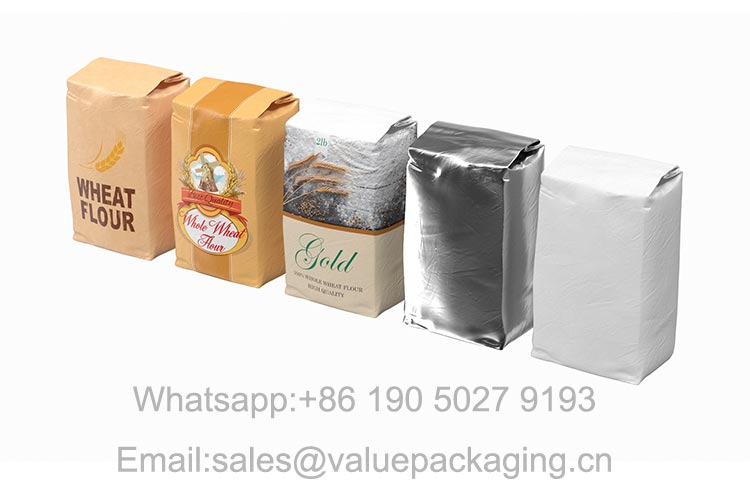
Another sustainability path is compostable packaging, materials that can biodegrade under industrial or home compost conditions.
What Makes Packaging Compostable?
Compostable packaging typically uses bio-based materials like:
- PBS Film
- PLA (polylactic acid)
- BOPLA Film
- Metallized BOPLA Membrane
- PBAT (bio-blend polymers)
- Cellulose or coated paper structures
- PVDC Coated Cellulose Film
- Metallized Cellulose Paper
- Compostable additive-free inks and adhesives
- Metallized paper
- Kraft-paper
These materials can break down into natural substances (CO₂, water, biomass) under controlled conditions.
Now, we are utilizing the above compostable substrate materials to develop various laminated compostable packaging to our customers around the globe.
- Kraft Paper/PLA+PBAT Membrane
- Kraft Paper/BOPLA Membrane
- Cellulose/PLA+PBAT Membrane
- Kraft Paper/PBS Foil Membrane
- Metallized Paper/PLA+PBAT Membrane
- BOPLA/PLA+PBAT Membrane
- Cellulose/Metallized Cellulose/PLA+PBAT Membrane
- Kraft Paper/Metallized Cellulose/PLA+PBAT Membrane
- Cellulose/Metallized Paper/PLA+PBAT Membrane
- Kraft Paper/Cellulose/PLA+PBAT Membrane
- Kraft Paper/Cellulose/PBS Membrane
- Metallized Paper/Cellulose/PLA+PBAT Membrane
100% Kraft Paper Packaging: Fully Recyclable and Compostable
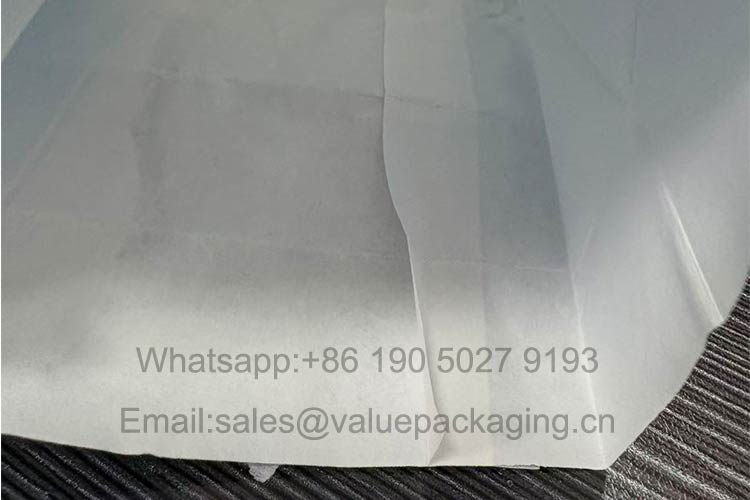
Pure kraft paper packaging is made entirely from uncoated, unlaminated kraft paper, typically in single-ply or multi-ply constructions. It contains no PE lining, no plastic film, and no barrier coating. Usually, the bond and seal of various kraft paper is achieved through the function of water-based adhesive, which is certificated in full compliance of human food safety.
Best Practices for Eco-Friendly Packaging Adoption
As a reliable packaging manufacture located in Qingdao, China, we are always glad to share our experience to the customers who really want to grow their business at a sustainable side. Whenever you have any ideas to customize your packaging, you are always welcome to reach us for further support.
Below is some advice you may need to advance your own sustainable packaging.
Test before scaling: Perform drop tests, moisture barrier testing, and seal strength validation for all new structures.
Educate consumers: Include clear disposal icons and recycling instructions.
Communicate transparently: Avoid vague terms like “eco-friendly” without explanation.
Monitor local infrastructure: Packaging decisions should align with recycling and composting availability in target markets.
Conclusion: Sustainability Starts with Smarter Packaging
Wheat flour packaging is evolving. Traditional materials such as non-woven fabric, PP woven bags, and multilayer laminates have served the industry well, but sustainability demands better solutions.
By analyzing current materials and moving toward mono-material recyclable structures and certified compostable solutions, brands can reduce environmental impact while still delivering performance, protection, and brand value. Eco-friendly flour packaging is not an abstract goal, it’s a practical, measurable strategy that delivers benefits for everyone.
The future of wheat flour packaging is recyclable, compostable, and designed for real sustainability. If you are ready to make the shift, the right materials and partners will ensure a successful transition.