
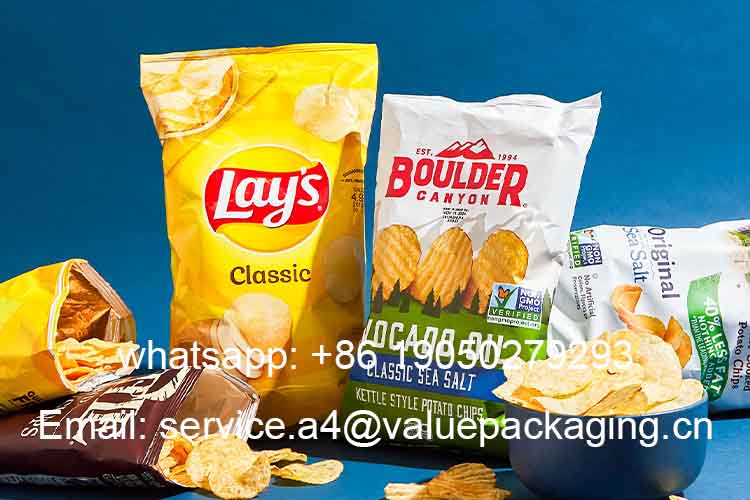
As consumer awareness of environmental issues continues to grow, the demand for sustainable potato chips packaging is increasing across the snack industry. Potato chips are highly sensitive to oxygen, moisture, and light, making packaging a critical factor in maintaining freshness, crispness, and flavor.
Modern potato chips bags and pouches must not only protect the product but also provide convenience, attractive shelf presentation, and improved sustainability. As a result, manufacturers are increasingly exploring materials and structures that balance product protection with environmental responsibility.
1. Common Potato Chips Packaging Formats
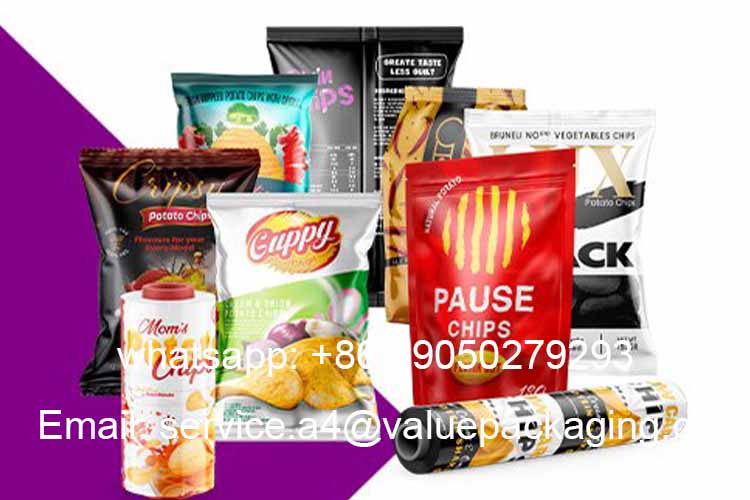
Packaging for potato chips must maintain product freshness while preventing breakage and oxidation. The most commonly used potato chips packaging formats include:
Pillow bags
Pillow bags are the most widely used potato chips bags in the snack industry. They are lightweight, cost-effective, and suitable for high-speed packaging lines. These bags typically contain nitrogen flushing to protect chips from oxygen and reduce product breakage during transportation.
Stand-up pouches
Stand-up potato chips pouches are becoming increasingly popular for premium or resealable snack packaging. The upright design improves shelf visibility and provides more space for branding. Many of these pouches also include resealable zippers, allowing consumers to keep chips fresh after opening.
Small portion sachets
For single servings or on-the-go snacks, potato chips sachets are commonly used. These smaller packs are popular in vending, convenience stores, and airline or catering applications.
Paper canisters or paperboard boxes
Some premium potato chips products are packaged in rigid paper canisters or paperboard boxes. These containers provide stronger protection against breakage during transportation and storage while also offering a distinctive shelf appearance. Inside the container, chips are typically packed in a sealed flexible pouch to maintain freshness and protect against oxygen and moisture.
2. Materials Used in Potato Chips Packaging
| Potato Chips Type | Typical Ingredients | Packaging Considerations |
|---|---|---|
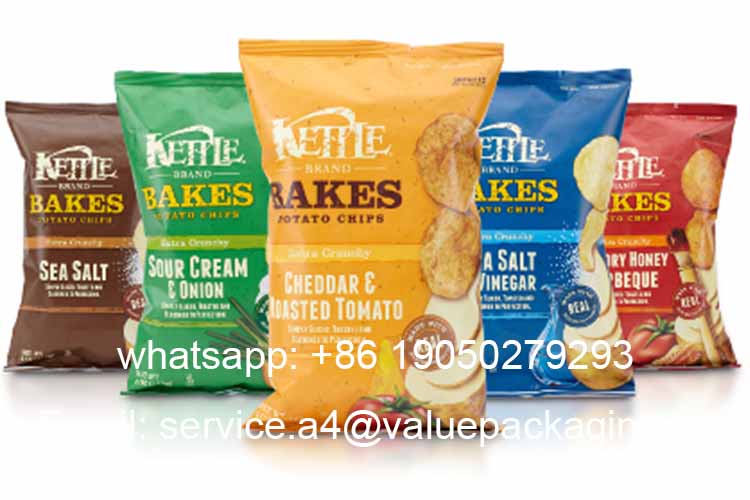
| Classic Potato Chips | Potato slices, vegetable oil, salt | Requires strong oxygen barrier in the potato chips bag to prevent oil oxidation and flavor loss. |
| Flavored Potato Chips | Potato slices, oil, seasoning powders, flavor enhancers | Seasonings are sensitive to moisture, so potato chips packaging needs reliable moisture barrier protection. |
| Baked Potato Chips | Potato flakes, starch, vegetable oil, seasoning | Lower oil content but still requires good oxygen barrier to maintain freshness and crisp texture. |
| Reduced Fat Chips | Potato slices, reduced oil, flavoring | Packaging must prevent moisture absorption to maintain crispness and shelf stability. |
Potato chips are fragile and highly sensitive to environmental factors, so packaging must meet several key performance requirements to maintain product quality throughout the supply chain.
- First, oxygen barrier performance is critical because exposure to oxygen can cause the oils in potato chips to oxidize, leading to rancidity and flavor deterioration. Effective barrier materials help extend shelf life and maintain the original taste.
- Second, moisture protection is essential for preserving the crisp texture of chips. Even small amounts of humidity can cause chips to soften and lose their crunch.
- In addition, potato chips packaging must provide good grease resistance, as the natural oils in the chips can migrate into packaging materials if the structure is not properly designed.
- Finally, most potato chips bags are packed using nitrogen flushing, which helps protect the chips from oxidation and reduces breakage by creating a cushioning effect inside the package.
Common materials include:
For potato chips packaging, VMPET is commonly used as the main barrier layer because it effectively protects against oxygen and moisture, preserving the chips’ crispness and flavor. PET and BOPP films provide structural support and allow high-quality printing, while LDPE layers ensure reliable heat sealing. This combination of materials creates a durable, visually appealing bag or pouch that maintains product freshness throughout storage and transportation.
3. Sustainability Challenges in Conventional Potato Chips Packaging
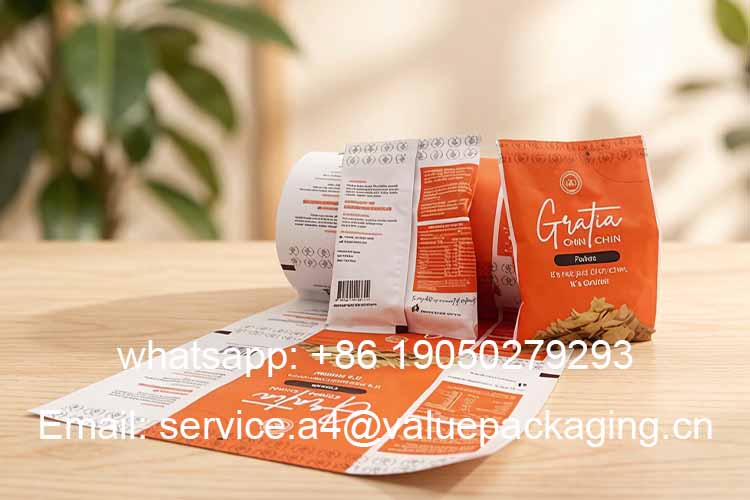
Different multilayer structures are used in potato chips packaging depending on shelf life requirements, brand positioning, and cost considerations.
Typical structures include:
For cases where extremely high barrier performance is required, aluminum foil (AL) is often chosen to ensure maximum protection and extended shelf life. However, for most potato chips packaging, VMPET is preferred because it provides sufficient barrier protection while being more cost-effective and easier to process. VMPET effectively shields chips from oxygen and moisture, the main factors affecting flavor and crispness, and is suitable for typical retail shelf life.
Compared with aluminum, VMPET is more flexible, less prone to pinholes or cracks during production, works well with nitrogen-flushed packaging, is lighter, easier to print and convert into bags or pouches, and significantly less expensive, allowing manufacturers to balance protection, efficiency, and cost.
However, these multilayer laminates are permanently bonded together, making them difficult to separate during recycling. As a result, many traditional potato chips pouches and bags cannot be easily processed in existing recycling systems and are often treated as mixed plastic waste.
4. Recyclable Mono Material Potato Chips Pouches
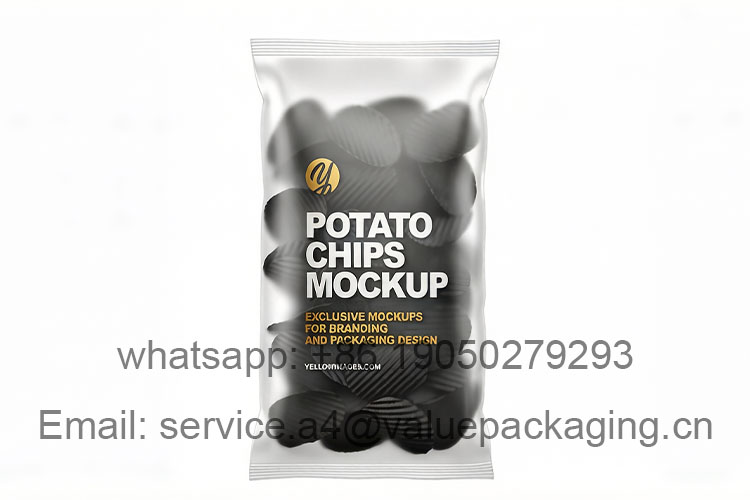
To address recycling challenges, the snack industry is exploring mono material flexible packaging solutions. These designs use materials from the same polymer family, allowing the potato chips pouch to be more compatible with recycling streams.
Common polyethylene based materials include:
In addition to PE based films, some polypropylene based materials are also used in recyclable snack packaging structures, including:
By combining films within the same polymer family, manufacturers can create recyclable potato chips bags that provide sufficient strength, sealing performance, and moisture barrier properties.
Typical recyclable pouch structures include:
- BOPP/VMCPP
- MDOPE/LDPE
- BOPE/LDPE
- MDOPE/BOPE/LDPE
- BOPP/VMCPP
- ABOPP/VMCPP
These structures aim to maintain the freshness and crispness of chips while improving recyclability compared with conventional multilayer laminates.
5. Compostable Potato Chips Sachet Packaging
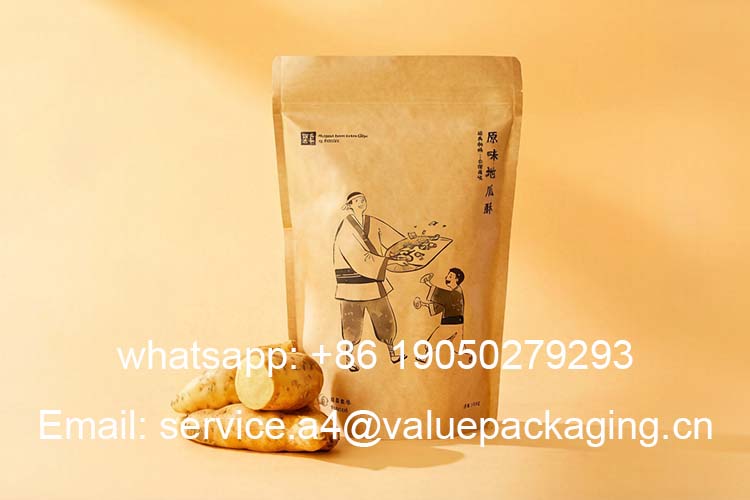
Another emerging approach in sustainable potato chips packaging is the use of compostable flexible materials. These materials are derived from renewable resources and are designed to break down under controlled composting conditions, helping reduce long term environmental impact.
Common compostable packaging materials include:
To improve strength and barrier performance, these materials are typically laminated together in multi layer structures. This allows the packaging to maintain sufficient durability and sealing reliability while still meeting compostability requirements.
Typical compostable structures include:
Barrier Properties of Compostable Laminates
| Biodegradable Foil Laminate | WVTR(g/m2/24hr) | OTR (cc/m2/24hr) |
| Cellulose30/PLA+PBAT60 | 131.5 | 5.6 |
| Cellulose20/Metallized Cellulose20/PLA+PBAT60 | 18 | 2.1 |
6. Conclusion
As sustainability becomes a key priority in the snack industry, potato chips packaging is gradually evolving toward more environmentally responsible solutions. Recyclable mono material potato chips pouches improve compatibility with recycling systems, while compostable potato chips sachets offer another potential pathway to reduce packaging waste.
At the same time, maintaining the essential barrier properties required for chips remains critical. Effective potato chips packaging must protect against oxygen, moisture, and light in order to preserve crispness, flavor, and product quality throughout the supply chain.
By balancing sustainability with packaging performance, snack brands can move toward greener packaging solutions while still ensuring that consumers receive fresh, high quality potato chips.