Today, brands are rethinking their approach by adopting eco-friendly kidney beans packaging that balances performance, cost, and sustainability. From bulk retail bags and packs to flexible pouch, doypack, sachet formats, the packaging industry is evolving rapidly to meet both environmental regulations and consumer expectations.
In this article, we explore how sustainable materials are transforming kidney beans packaging.
Conventional Materials in Kidney Beans Packaging
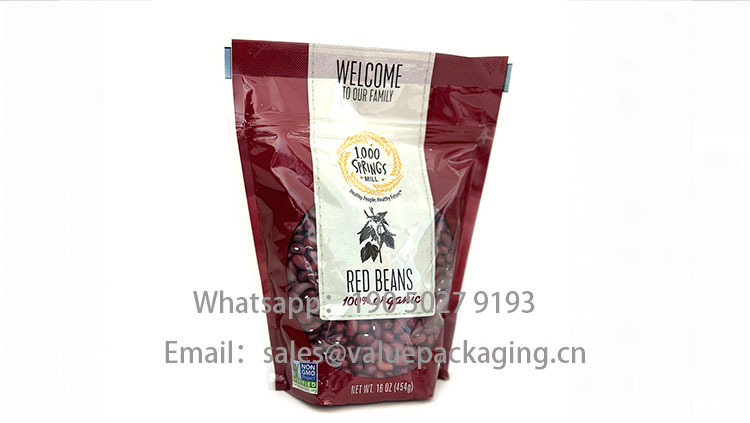
Despite the push for sustainability, conventional packaging materials remain dominant in the kidney beans market due to their excellent durability and barrier performance. Kidney beans, especially dried varieties, require protection from moisture, oxygen, and contamination during storage and transportation.
Common Structures
Typical structures include:
- BOPP / LDPE
- PET / LDPE
- PA/LDPE
- Kraft Paper / LDPE
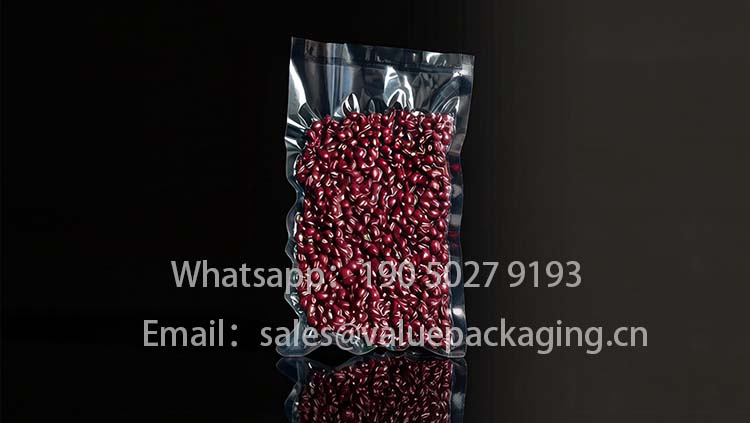
Core benefits of PA/LDPE for vacuum extraction of red beans
| Competitive advantages | |
| Puncture-resistant | The PA layer effectively resists puncture from red bean ridges, significantly reducing the bag breakage rate in vacuum packaging. |
| High vacuum maintenance | The barrier property of polyamide (PA) combined with the superior heat-sealing performance of low-density polyethylene (LDPE) ensures long-term vacuum maintenance. |
| Insect and mold prevention | Vacuum extraction is employed to remove argon gas, combined with the oxygen-blocking properties of PA, to inhibit the hatching of storage pests such as rice weevils and prevent moisture-induced mold growth in red beans. |
| Extend shelf life | Under vacuum conditions, the fatty acid oxidation rate of red beans is significantly reduced, and the shelf life at room temperature can be extended from 3-6 months for conventional packaging to 12-18 months. |
Compostable Packaging Materials
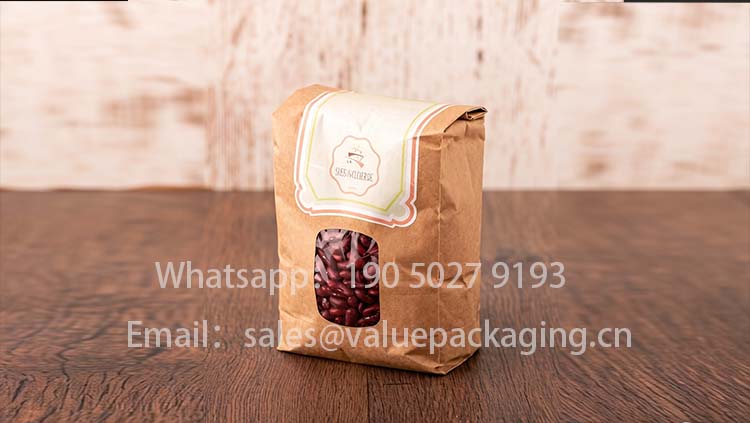
Compostable packaging is gaining popularity among eco-conscious food brands looking to reduce environmental impact.
Compostable Substrates
Common Compostable Structures
- Kraft Paper / glue
Recyclable Packaging Materials
Common Recyclable Structures
- MDOPE/LDPE
- MDOPE/LLDPE
- MDOPE/EVOH-PE
- MDOPE/APE
- BOPE / PE
MDOPE refers to polyethylene films processed through the Machine Direction Orientation (MDO) process.
During production, PE film undergoes longitudinal stretching at specific temperatures, which induces molecular chain rearrangement and significantly enhances material properties.
The MDOPE surface is smooth and undergoes corona treatment, enabling high-quality gravure printing and flexographic printing, achieving a matte finish to enhance the overall packaging texture.
MDOPE is one of the key materials driving the transition of flexible packaging towards recyclable and single-material structures.Through the stretching process, it significantly enhances the mechanical properties and printability of PE, enabling it to meet environmental goals while maintaining packaging performance.

Comparison between MDOPE/LDPE and MDOPE/LLDPE
| MDOPE/LDPE | MDOPE/LLDPE | |
| Impact resistance | Average | Better |
| Anti-puncture | Average | Better |
| Resilience | Average | Better |
| Heat seal strength | Good | Better than MDOPE/LDPE |
| Transparency | Good | Slightly poor |
| Cost | Lower | Slightly higher |
| Environmental friendliness | Same | Same |
Comparison of barrier properties between MDOPE/LLDPE and MDOPE/EVOH-PE
| MDOPE/LLDPE | MDOPE/EVOH-PE | |
| OTR | Around 1500-3000 cc/(m²·24h·atm) | < 1 cc/(m²·24h·0.1MPa) |
| WVTR | >10 g/(m²·24h) | < 5 g/(m²·24h) |
MDOPE/LLDPE and MDOPE/EVOH-PE are both recyclable PE-based structures, but their barrier performance differs significantly depending on the function required. In terms of moisture protection, both structures offer similar WVTR levels (typically around 2–5 g/m²·day), as water vapor barrier is mainly provided by the polyethylene layers, meaning the addition of EVOH does not significantly improve moisture resistance. However, when it comes to oxygen barrier, MDOPE/EVOH-PE shows a dramatic advantage, with OTR values reduced to as low as 0.1–5 cc/m²·day, compared to 100–300+ cc/m²·day for MDOPE/LLDPE.
Conclusion
Eco-friendly kidney beans packaging is no longer optional—it is essential for brands looking to remain competitive in a sustainability-driven market.
By adopting sustainable solutions across formats such as pouch, doypack, bag, sachet, pack, and packet, brands can reduce environmental impact while maintaining product quality and enhancing consumer trust.
As technology advances and regulations evolve, the future of kidney beans packaging will continue to move toward smarter, greener, and more efficient solutions.