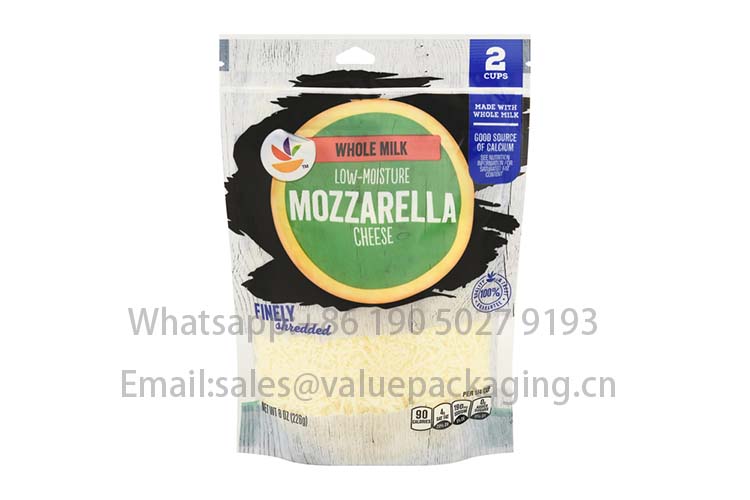
As consumer demand for sustainable food products continues to rise, the dairy industry is undergoing a significant transformation, especially in packaging. Mozzarella cheese, known for its freshness, high moisture content, and delicate texture, requires carefully designed packaging to maintain quality while reducing environmental impact.
Today, brands are actively exploring eco-friendly mozzarella cheese packaging solutions that combine performance, sustainability, and visual appeal.
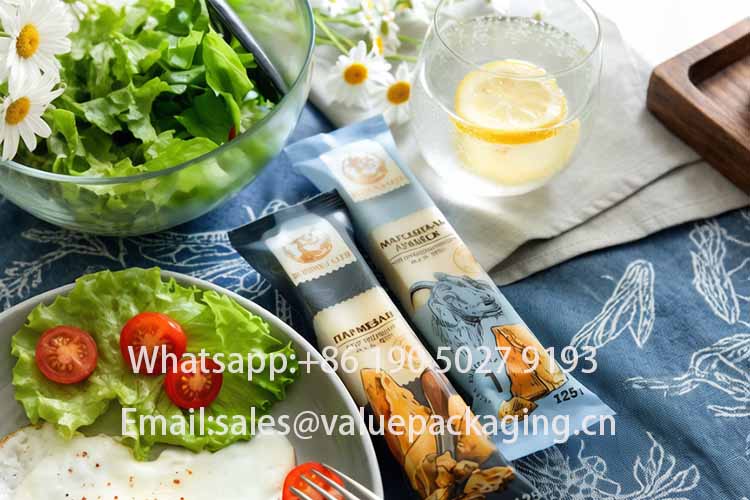
Conventional Materials in Mozzarella Cheese Packaging
Despite sustainability efforts, conventional materials remain dominant due to the strict barrier requirements of mozzarella cheese. As a high-moisture and oxygen-sensitive product, mozzarella needs strong protection against spoilage, microbial growth, and dehydration.
Common Structures
Typical packaging structures include:
- PET / LDPE
- PA / LDPE (Nylon/LDPE)
Classification and Packaging of Masurilla Cheese
| Type | Features | Core Requirements for Packaging |
| Low-moisture mozzarella (LMPS) | Fresh Mozzarella (high moisture content) | High-barrier moisture-proof, antioxidant, and anti-caking |
| Fresh Mozzarella (high moisture content) | Soaked in saline/whey solution, soft texture, short shelf life | Sealing and leak-proof, acid-resistant, and moisture-retaining environment |
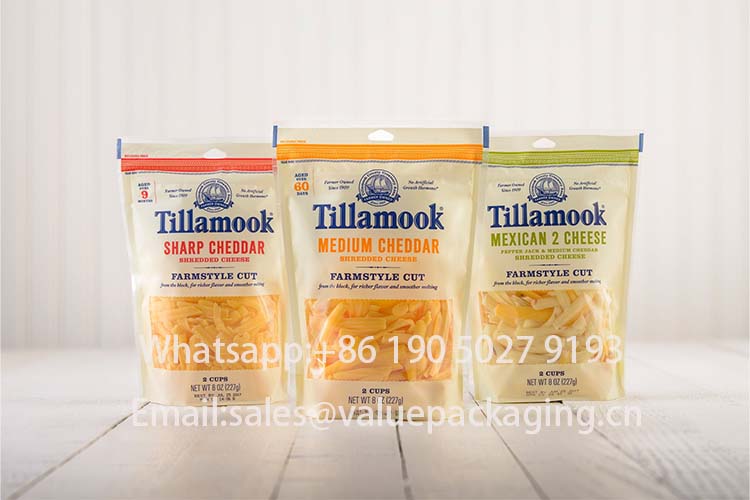
Packaging of block/fragmented low-moisture mozzarella
| Packaging format | material structure | Features |
| Vacuum bag | PET/PE, PA/PE, | High barrier, puncture-resistant, extended shelf life |
| Stand-up bag | PET/PE | Reusable sealing, easy to access |
Such packaging must possess
Extremely low oxygen transmission rate (OTR): Prevents cheese oxidation discoloration and flavor loss
Good puncture resistance: Cheese blocks may have edges to prevent puncture of the packaging.
Low-temperature resistance: Masurilla requires cold chain storage (0-4°C).
Recyclable Packaging Materials
Recyclable packaging is emerging as the most practical solution for balancing performance and sustainability in mozzarella cheese packaging.
Recyclable packaging typically uses mono-material structures, such as polyethylene (PE), that can be processed within existing recycling systems.
PE Mono Materials
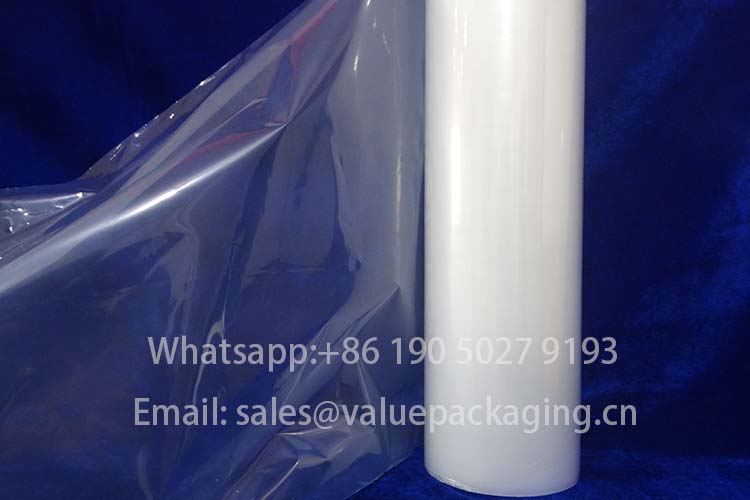
EVOH-LDPE film is a high-performance flexible packaging material widely used in food and industrial applications that require strong barrier protection. It is typically structured as a multilayer film, where EVOH (Ethylene Vinyl Alcohol) is sandwiched between layers of LDPE (Low-Density Polyethylene). Each material plays a specific role: EVOH provides exceptional oxygen barrier properties, while LDPE delivers excellent moisture resistance, heat sealability, and flexibility.
This combination creates a balanced packaging solution. EVOH can reduce oxygen transmission to extremely low levels, helping to prevent oxidation, preserve flavor, and extend shelf life,especially important for products like coffee, cheese, meat, and ready-to-eat foods.
WVTR & OTR Comparison of EVOH-LDPE Film
| Property | Unit | LDPE (Typical) | EVOH-LDPE (Co-extruded) | Improvement |
|---|---|---|---|---|
| WVTR (Water Vapor Transmission Rate) | g/m²·day | 0.3 – 0.5 | 0.2 – 0.4 | Slight improvement |
| OTR (Oxygen Transmission Rate) | cc/m²·day·atm | 2000 – 8000 | 1 – 50 | Significant improvement |
PE Mono-Material Laminate
MDOPE / CPE
MDOPE/APE
MDOPE/EVOH-LDPE
MDOPE/BOPE/EVOH-LDPE
Why not use MDOPE/LDPE?
Due to the extremely poor oxygen barrier property of LDPE, the oxygen transmission rate (OTR) is excessively high: ordinary LDPE films exhibit a very high oxygen transmission rate (approximately 2000-3000 cm³/(m²·24h·atm)), which facilitates the oxidation and spoilage of mozzarella cheese.
Conclusion
Eco-friendly packaging trends in mozzarella cheese are reshaping the dairy industry. Brands now have multiple options to balance product protection, sustainability, and cost efficiency.
mozzarella brands can meet evolving consumer expectations while reducing environmental impact.
As technology continues to advance, eco-friendly mozzarella cheese packaging will play a critical role in delivering fresh, high-quality products in a more sustainable way.