
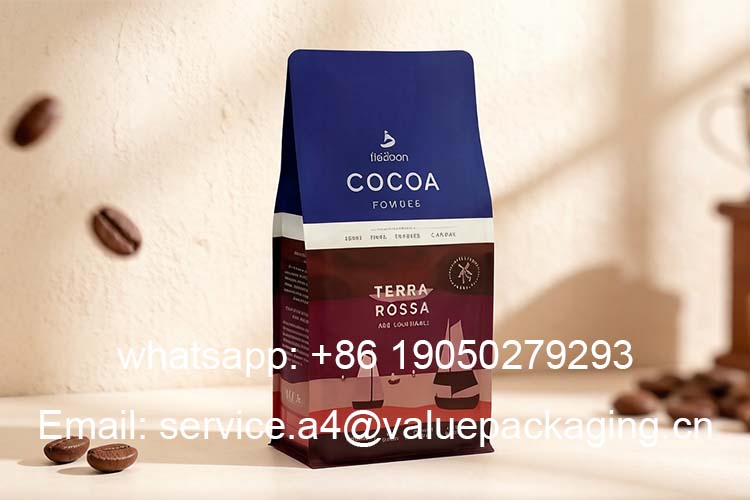
Cocoa powder is a dry and fine powder product that is sensitive to moisture, oxygen, light, and external odors during storage and transportation. Because cocoa powder contains natural fats and aromatic compounds, improper packaging may lead to moisture absorption, caking, flavor loss, or oxidation over time. Compared with general dry food products, cocoa powder packaging often places higher demands on moisture barrier and aroma protection in order to maintain product quality and shelf stability.
In practical applications, cocoa powder packaging also needs to balance sealing reliability, mechanical durability, and convenient consumer use. For retail products, packaging often focuses on resealability and shelf presentation, while bulk industrial packaging may place greater emphasis on transportation strength and long term storage performance.
1. Common Cocoa Powder Packaging Solutions
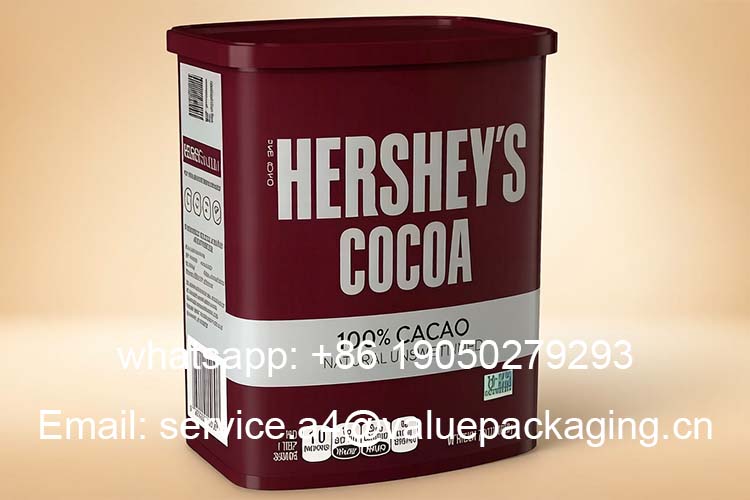
Tin Cans
Tin cans are commonly used for premium cocoa powder, hot chocolate mixes, and gift packaging. Their rigid structure helps protect the powder from external pressure during storage and transportation while preserving aroma and flavor. Airtight lids help reduce exposure to moisture and oxygen after opening, supporting longer shelf life and a more premium appearance.
Flat Bottom Pouches
Flat bottom cocoa powder pouches are widely used for premium retail packaging and larger volume products. The eight side sealed structure provides excellent shelf stability and efficient storage while offering a larger printable area for branding. Because cocoa powder is sensitive to moisture, these pouches are often made with high barrier laminated materials and resealable zippers to help maintain freshness after opening.
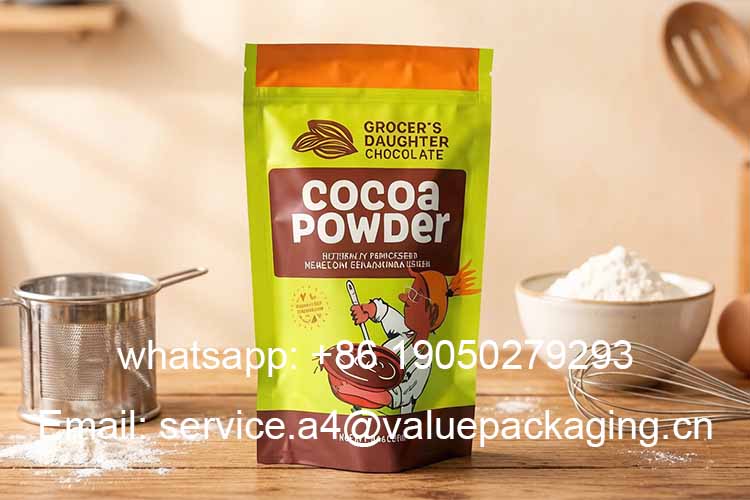
Stand Up Zipper Pouches
Stand up zipper pouches are one of the most common packaging formats for cocoa powder. They are suitable for retail, baking ingredients, and refill applications. The resealable zipper helps reduce exposure to air and moisture during repeated use. Since cocoa powder particles are very fine, many pouches also use dust proof zipper designs to reduce powder buildup around the sealing area and improve closure performance.
Single Serve Sachets
Single serve cocoa powder sachets are commonly used for instant cocoa drinks, cafes, hotels, and travel applications. Each sachet contains a pre measured amount of cocoa powder for convenient preparation and portion control. The sealed structure also helps protect the powder from moisture and external odors before use.
Because cocoa powder particles are very fine and lightweight, powder can easily accumulate around the zipper area during filling and repeated use. For this reason, cocoa powder pouches are commonly equipped with dust proof zippers. This type of zipper is designed with an additional protective groove or sealing structure that helps reduce powder buildup in the closure area, improving sealing performance and keeping the package cleaner during repeated opening and closing. It also helps maintain product freshness by reducing air and moisture exposure after opening.
2. Materials Used in Cocoa Powder Packaging
Cocoa powder packaging requires reliable barrier performance to protect product quality throughout shelf life. Key considerations include:
- Moisture Protection: Prevents clumping and maintains smooth powder flowability.
- Oxygen Barrier: Helps preserve aroma, flavor, and color stability.
- Light Protection: Reduces quality degradation caused by UV exposure.
- Odor Protection: Prevents absorption of external odors during storage and transportation.
- Sealing Performance: Maintains airtight packaging integrity before and after opening.
To meet these packaging requirements, cocoa powder packaging commonly uses a combination of high barrier flexible materials. Different films provide specific functions such as printability, moisture resistance, oxygen barrier performance, sealing strength, or improved shelf appearance.
Common materials used in cocoa powder packaging include:
- PET film
- VMPET film
- Aluminum foil
- LDPE film
- BOPP film
- Kraft paper
- Metallized PET film
- AlOx and SiOx coated PET film
In practical applications, a single material is often not sufficient to provide all required properties. Therefore, cocoa powder packaging commonly uses multilayer laminate structures that combine different materials to balance barrier performance, sealing reliability, durability, appearance, and production cost.
3. Traditional Cocoa Powder Packaging Structures
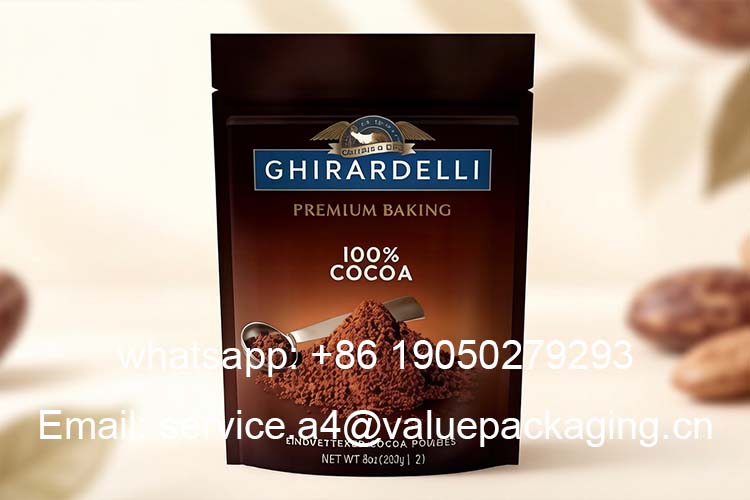
Different multilayer structures are selected depending on the product positioning and storage requirements. Premium cocoa powder products often require stronger barrier performance to better preserve flavor and aroma, while standard retail products may prioritize cost efficiency and shelf appearance.
| Packaging Structure | Key Advantages | Typical Applications |
|---|---|---|
| PET / AL / PE | Excellent oxygen, moisture, and light barrier to preserve cocoa aroma and freshness | Premium cocoa powder packaging |
| PET / VMPET / PE | Good barrier performance with lower production cost | Standard retail cocoa powder pouches |
| PET / AlOx PET / PE | Transparent barrier film allowing partial product visibility | Cocoa powder packaging with product window |
| Kraft Paper / AL / PE | Natural appearance with strong barrier protection | Organic or specialty cocoa powder packaging |
Premium Cocoa Powder Packaging with Aluminum Foil
Aluminum foil structures provide excellent protection against oxygen, moisture, and light. These laminates are suitable for premium cocoa powder products that require extended shelf life and stable flavor preservation. The strong moisture barrier also helps prevent powder caking during storage.
Standard Retail Packaging
Metallized films such as VMPET provide reliable barrier performance while remaining more cost effective than aluminum foil. These structures are commonly used for standard retail cocoa powder pouches and refill packaging.
Transparent Barrier Packaging
- PET / AlOx-PET / PE
- PET / SiOx-PET / PE
For brands that want partial product visibility, transparent coated films such as AlOx PET and SiOx PET provide good oxygen and moisture barrier properties while allowing consumers to see the cocoa powder inside the package.
Kraft Paper Laminates
Kraft paper laminates provide a natural and premium appearance while improving stiffness and shelf presentation. When combined with foil, metallized films, or coated barrier films, these structures provide both visual appeal and effective product protection.
Because conventional multilayer laminates combine several permanently bonded materials, they are often difficult to recycle through standard recycling systems. As a result, many traditional cocoa powder pouches are treated as mixed plastic waste after disposal.
4. Recyclable Mono Material Cocoa Powder Pouches
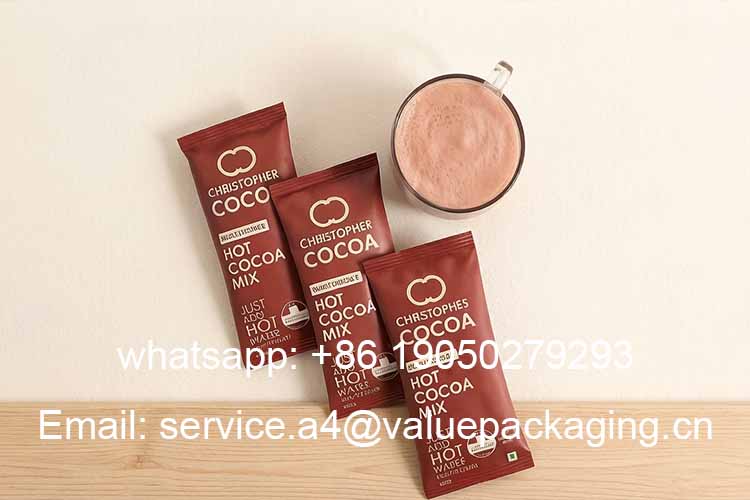
As sustainability becomes increasingly important in the food packaging industry, recyclable mono material cocoa powder pouches are becoming more widely used. Compared with traditional multilayer laminates that combine different material families, mono material structures are designed to improve compatibility with existing recycling systems while still maintaining the barrier performance required for cocoa powder packaging.
Because cocoa powder is sensitive to moisture, oxygen, and external odors, recyclable packaging solutions must still provide reliable product protection during storage and transportation. Polyethylene based structures are commonly used because they offer good sealing performance, flexibility, and recyclability while supporting the development of more sustainable packaging solutions.
Common PE based materials include:
Typical recyclable cocoa powder pouch structures include:
- MDOPE/LDPE
- MDOPE/EVOH-LDPE
- MDOPE/BOPE/LDPE
- MDOPE/BOPE/EVOH-LDPE
These structures help maintain freshness and aroma while improving recyclability compared with conventional multilayer packaging.
5. Compostable Cocoa Powder Sachets
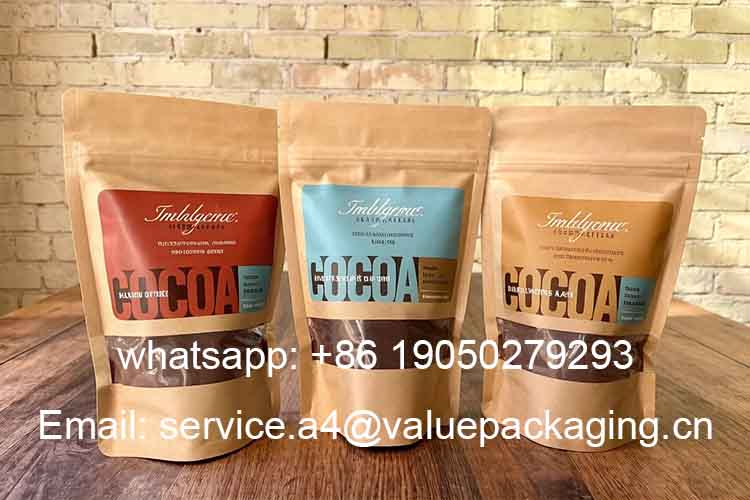
Another developing trend in sustainable cocoa powder packaging is the use of compostable flexible materials. These materials are typically derived from renewable or bio based resources and are designed to break down under industrial composting conditions.
Common compostable materials include:
In practical applications, these materials are often laminated together to improve sealing strength, durability, and barrier performance for powder packaging.
Typical compostable structures include:
- Cellulose/PLA+PBAT Membrane
- Metallized Paper/PLA+PBAT Membrane
- Cellulose/Metallized Cellulose/PLA+PBAT Membrane
- Kraft Paper/Metallized Cellulose/PLA+PBAT Membrane
- Kraft Paper/Cellulose/PLA+PBAT Membrane
- Kraft Paper/Cellulose/PBS Membrane
For cocoa powder packaging, compostable laminates must still provide adequate moisture and oxygen barrier performance to prevent clumping and maintain flavor stability during storage and transportation.
Barrier Properties of Compostable Laminates
| Biodegradable Foil Laminate | WVTR(g/m2/24hr) | OTR (cc/m2/24hr) |
| Cellulose20/Metallized Cellulose20/PLA+PBAT60 | 18 | 2.1 |
| Cellulose20/Metallized Cellulose20/BOPLA40 | 19 | 2.2 |
| K-Cellulose22/Metallized Cellulose20/PLA+PBAT60 | 8 | 0.5 |
| Metallized Paper 69g/Cellulose30/PLA+PBAT60 | 5.6 | 1.12 |
| Cellulose30/Metallized Paper69g/PLA+PBAT60 | 8.9 | 1.1 |
6. Conclusion
As sustainability becomes increasingly important in the food packaging industry, cocoa powder packaging is gradually evolving toward more environmentally responsible solutions. Recyclable mono material cocoa powder pouches offer improved recyclability while maintaining strong barrier performance, and compostable cocoa powder sachets provide an alternative option for reducing long term packaging waste. By combining effective product protection with sustainable packaging design, brands can help preserve the flavor, freshness, and quality of cocoa powder while meeting the expectations of environmentally conscious consumers.