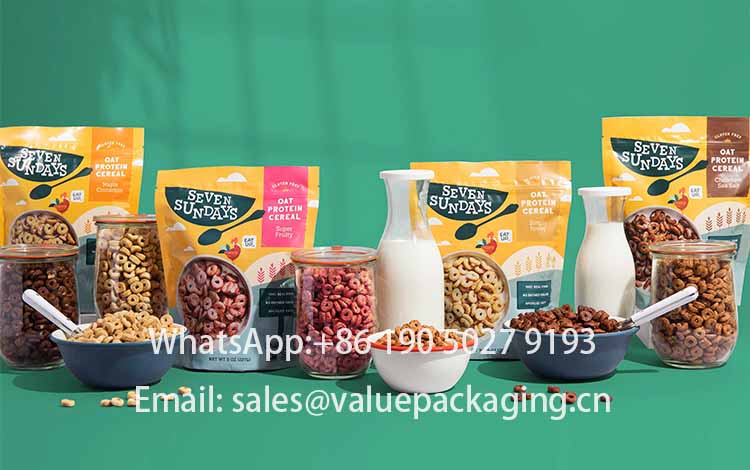
The global cereal industry is undergoing a major transformation as brands increasingly focus on sustainability, product protection, and premium consumer experience. Modern cereal products, including corn flakes, granola, oat mixes, muesli, and high-protein breakfast blends, require packaging systems capable of maintaining freshness while supporting recyclable and environmentally responsible packaging strategies.
Modern flexible packaging technology is increasingly shifting away from traditional non-recyclable multilayer laminates toward recyclable mono-material PE structures and high-barrier compostable films.
Packaging Performance Requirements for Cereal Products
Cereal packaging performance is primarily determined by two technical indicators:
| Property | Function |
|---|---|
| WVTR (Water Vapor Transmission Rate) | Controls moisture penetration |
| OTR (Oxygen Transmission Rate) | Controls oxygen permeation |
For cereal products, low WVTR is especially important because moisture exposure quickly softens crispy textures. OTR control becomes increasingly critical for cereals containing:
- nuts
- chocolate
- dried fruits
- oils
- protein ingredients
High oxygen exposure accelerates oxidation and shortens shelf life.
Recommended barrier targets for cereal packaging are typically:
| Property | Recommended Target |
|---|---|
| WVTR | ≤ 1–3 g/m²·day |
| OTR | ≤ 1–10 cc/m²·day |
Traditional High-Barrier Cereal Packaging Structures
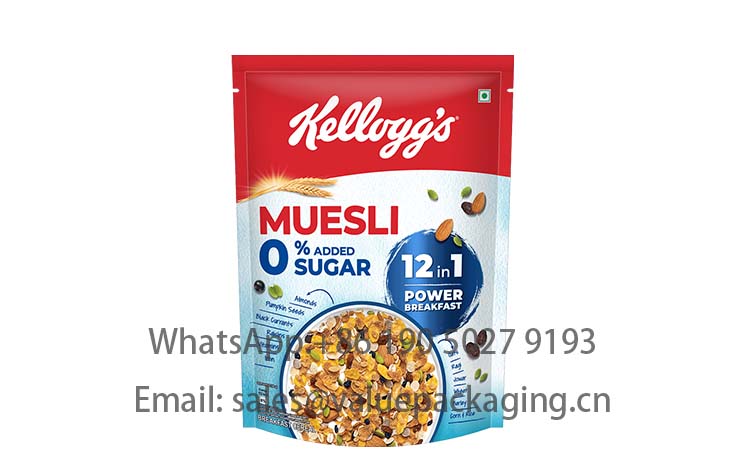
Traditional cereal packaging structures prioritize long shelf life and strong barrier performance. These structures remain widely used in global food packaging markets.
PET/VMPET/LDPE
PET/VMPET/LDPE is one of the most common flexible packaging structures used for cereal pouch and granola bag applications. The metallized PET layer significantly improves moisture and oxygen resistance while maintaining relatively lightweight material usage.
Typical barrier performance:
| Structure | WVTR | OTR |
|---|---|---|
| PET/VMPET/LDPE | 0.3–1.5 g/m²·day | 0.5–5 cc/m²·day |
Although technically effective, PET/VMPET laminates remain difficult to recycle because of mixed-material construction.
PET/AL/LDPE
PET/AL/LDPE remains one of the highest barrier flexible packaging structures available for cereal packaging applications. The aluminum foil layer creates an almost complete barrier against oxygen, moisture, and light.
Typical barrier performance:
| Structure | WVTR | OTR |
|---|---|---|
| PET/AL/LDPE | 0–0.05 g/m²·day | 0–0.05 cc/m²·day |
The primary limitation of aluminum foil laminates is poor recyclability, which increasingly conflicts with modern sustainability goals.
PET/AlOxPET/LDPE is an advanced high-barrier flexible packaging structure highly suitable for cereal products requiring strong moisture and oxygen protection. The combination of PET mechanical strength, transparent AlOx barrier technology, and LDPE sealing performance provides excellent shelf-life stability while supporting premium packaging appearance.
Compared with traditional foil laminates, PET/AlOxPET/LDPE offers improved transparency, lighter material usage, and better sustainability positioning, making it increasingly attractive for modern cereal pouch, doypack, bag, sachet, packet, and pack applications.
Recyclable Mono-Material Cereal Packaging Structures
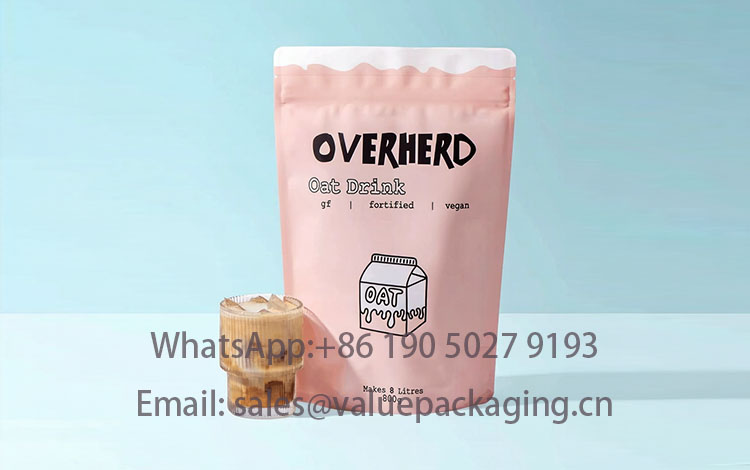
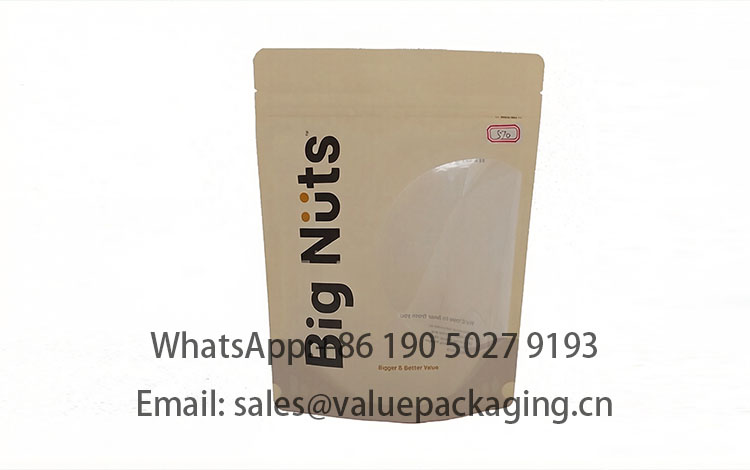
Sustainability regulations and retailer packaging targets are accelerating the adoption of recyclable mono-material packaging systems throughout the food industry. Recyclable PE structures are becoming increasingly important because they support circular economy packaging strategies while reducing mixed-material waste.
PE MONO Material
Why MDOPE Can Replace Traditional PET in Flexible Packaging
MDOPE (Machine Direction Oriented Polyethylene) is becoming one of the most important materials in sustainable flexible packaging because it can provide many of the same functional properties as traditional PET while improving recyclability and reducing environmental impact.
In many modern recyclable packaging structures, MDOPE is increasingly replacing PET in applications such as:
- snack packaging
- cereal pouch
- coffee packaging
- dairy powder pouch
- frozen food packaging
- personal care packaging
The main reason is that MDOPE allows packaging manufacturers to create mono-material PE structures that are compatible with PE recycling streams, while still maintaining strong mechanical and barrier performance.
MDOPE/EVOH-LDPE
MDOPE/EVOH-LDPE is currently one of the most commercially important recyclable high-barrier PE structures for cereal packaging applications.
The EVOH barrier layer significantly reduces oxygen transmission while LDPE maintains seal integrity.
Typical barrier performance
| Structure | WVTR | OTR |
|---|---|---|
| MDOPE/EVOH-LDPE | 1–3 g/m²·day | 0.5–10 cc/m²·day |
MDOPE/BOPE/EVOH-LDPE
This structure offers improved puncture resistance and dimensional stability compared with simpler PE laminates.
Typical barrier performance:
| Structure | WVTR | OTR |
|---|---|---|
| MDOPE/BOPE/EVOH-LDPE | 0.8–2.5 g/m²·day | 0.3–5 cc/m²·day |
MDOPE/LDPE is a recyclable mono-material PE packaging structure that offers improved sustainability, lightweight design, and enhanced stiffness for cereal packaging applications. Compared with traditional PET-based laminates, MDOPE/LDPE provides significantly better recyclability while maintaining acceptable moisture barrier performance for many dry cereal products.
Although its oxygen barrier remains lower than EVOH or metallized structures, MDOPE/LDPE is increasingly used for recyclable cereal pouch, bag, sachet, packet, and doypack applications where sustainability and circular economy packaging goals are prioritized.
PP MONO Material
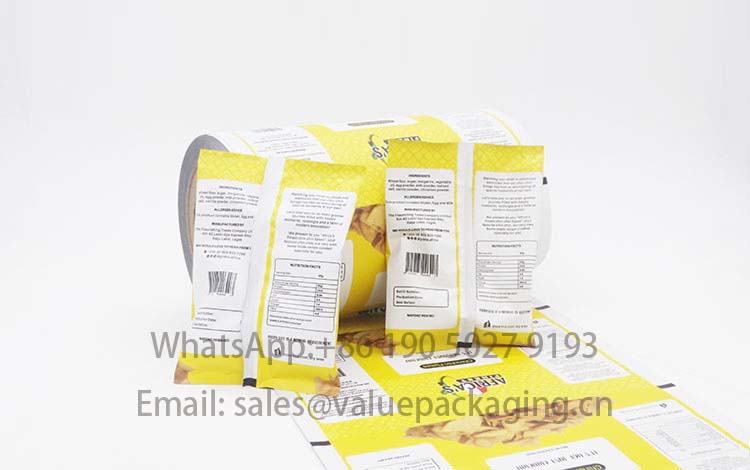
| Structure | WVTR | OTR |
|---|---|---|
| Matte BOPP/VMCPP | 0.5–1.5 | 5–20 |
| PET/VMPET/LDPE | 0.3–1.5 | 0.5–5 |
Matte BOPP/VMCPP is a cost-effective and visually attractive flexible packaging structure for cereal products requiring good moisture protection and premium shelf appearance. The combination of Matte BOPP stiffness and VMCPP moisture barrier performance makes this structure highly suitable for cereal pouch, doypack, sachet, packet, and bag applications.
Compostable Cereal Packaging Materials
The global cereal packaging market is increasingly exploring compostable flexible packaging solutions as brands seek alternatives to traditional plastic laminates. However, cereal products require relatively strong moisture and oxygen barriers because exposure to humidity quickly reduces crispness and shelf-life quality.
Cellulose/Metallized Cellulose/PLA+PBAT
Among compostable structures, Metallized Cellulose/PLA+PBAT provides one of the best overall balances between sustainability and barrier performance.
Typical barrier performance
| Structure | WVTR | OTR |
|---|---|---|
| Cellulose/Metallized Cellulose/PLA+PBAT | 18 | 2.1 |
Among compostable structures, metallized cellulose systems provide some of the best overall barrier properties for dry food packaging.
Structure Analysis
| Layer | Function |
|---|---|
| Cellulose | Printability and mechanical support |
| Metallized Cellulose | Oxygen and moisture barrier |
| PLA+PBAT | Heat sealing and compostability |
Kraft Paper/Metallized Cellulose/PLA+PBAT
This structure combines natural kraft aesthetics with improved barrier performance through metallized cellulose technology.
Typical barrier performance
| Structure | WVTR | OTR |
|---|---|---|
| Kraft Paper/Metallized Cellulose/PLA+PBAT | 1–3 g/m²·day | 1–10 cc/m²·day |
The kraft paper outer layer enhances shelf differentiation while supporting eco-friendly branding strategies.
Comparison Between Traditional and Sustainable Structures
| Structure Type | Barrier Performance | Recyclability | Sustainability |
|---|---|---|---|
| PET/AL/LDPE | Excellent | Poor | Low |
| PET/VMPET/LDPE | Very Good | Poor | Medium-Low |
| BOPP/VMCPP | Moderate | Limited | Medium-Low |
| MDOPE/EVOH-LDPE | Very Good | Excellent | High |
| MDOPE/BOPE/EVOH-LDPE | Excellent | Excellent | High |
| Metallized Cellulose/PLA+PBAT | Very Good | Compostable | High |
Conclusion
Eco-friendly cereal packaging is becoming a critical component of modern food brand strategy. Because cereal products are highly sensitive to moisture and oxygen exposure, packaging structures must provide strong barrier protection while supporting sustainability goals and circular economy packaging requirements.
Traditional structures such as PET/VMPET/LDPE and PET/AL/LDPE continue to provide excellent technical performance, particularly for long shelf-life applications. However, recyclable mono-material structures such as MDOPE/EVOH-LDPE and MDOPE/BOPE/EVOH-LDPE are emerging as highly effective sustainable alternatives capable of delivering strong oxygen and moisture barrier performance while improving recyclability.
Compostable structures including Metallized Cellulose/PLA+PBAT also provide promising opportunities for organic and environmentally conscious cereal brands seeking premium sustainable packaging solutions.
As flexible packaging technology continues evolving, future cereal pouch, doypack, bag, sachet, packet, and pack solutions will increasingly combine barrier performance, lightweight design, recyclability, and environmental responsibility to meet the demands of modern consumers and global sustainability regulations.