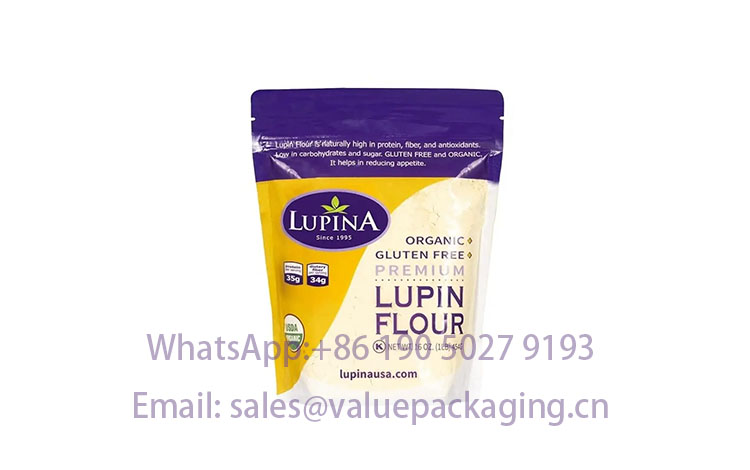
As consumer demand for plant-based proteins and sustainable food products continues to grow, lupin flour has emerged as a valuable ingredient in the global food industry. Produced from lupin beans, this nutrient-rich flour is increasingly used in bakery products, gluten-free foods, protein-enriched snacks, pasta, and vegan formulations. Its high protein content, dietary fiber, and low carbohydrate profile make it an attractive alternative to traditional grain flours.
However, like many dry powder products, lupin flour presents unique packaging challenges. Exposure to moisture, oxygen, light, and contaminants can negatively affect product quality, shelf life, flavor, and nutritional value. At the same time, brands are under increasing pressure to reduce packaging waste and improve environmental performance.
Flexible packaging offers an effective solution by combining product protection, resource efficiency, and sustainability. Modern pouch, bag, packet, sachet, and doypack formats help lupin flour brands achieve both performance and environmental objectives while meeting evolving consumer expectations.
Understanding Lupin Flour Packaging Requirements
Lupin flour contains natural proteins, lipids, and dietary fibers that can be sensitive to environmental conditions during storage and distribution. Although the product has relatively low moisture content, prolonged exposure to humidity can lead to caking, reduced flowability, and diminished product quality.
In addition, oxygen exposure may accelerate the oxidation of naturally occurring oils, resulting in flavor degradation and reduced shelf stability.
The most critical technical parameters are WVTR (Water Vapor Transmission Rate) and OTR (Oxygen Transmission Rate).
Recommended packaging targets for lupin flour typically include:
| Property | Recommended Target |
|---|---|
| WVTR | ≤ 2 g/m²·day |
| OTR | ≤ 10 cc/m²·day |
These values help maintain product freshness throughout typical commercial shelf-life periods.
Traditional Flexible Packaging for Lupin Flour
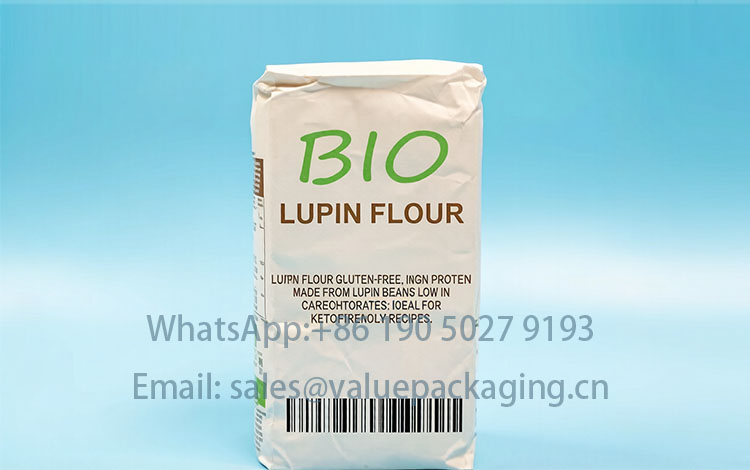
Many lupin flour products currently utilize traditional multilayer laminate structures designed to maximize barrier performance and shelf life.
- PET/LDPE
- PA/LDPE
- PET/VMPET/LDPE
- PET/AlOx-PET/LDPE
- Kraft Paper/LDPE
- Matte BOPP/Kraft Paper/LDPE
PET/VMPET/LDPE
PET/VMPET/LDPE remains one of the most widely used structures for flour packaging applications.
Typical barrier performance
| Structure | WVTR | OTR |
|---|---|---|
| PET/VMPET/LDPE | 0.3–1.5 g/m²·day | 0.5–5 cc/m²·day |
Advantages include excellent moisture protection, strong mechanical strength, and attractive shelf presentation.High cost-performance ratio is the market’s advantage.
PET/AL/LDPE
For maximum shelf-life protection, some premium flour products use aluminum foil laminates.
Typical barrier performance
| Structure | WVTR | OTR |
|---|---|---|
| PET/AL/LDPE | <0.05 g/m²·day | <0.05 cc/m²·day |
This structure provides near-complete protection against moisture, oxygen, and light. Excellent aroma retention and long shelf life.
Recyclable Packaging Solutions for Lupin Flour
As governments and retailers increase their focus on circular economy initiatives, recyclable mono-material packaging structures are becoming increasingly important.
MDOPE/EVOH-LDPE
MDOPE/EVOH-LDPE is one of the most promising recyclable alternatives to traditional PET laminates.
Typical barrier performance
| Structure | WVTR | OTR |
|---|---|---|
| MDOPE/EVOH-LDPE | 1–3 g/m²·day | 0.5–10 cc/m²·day |
The EVOH layer provides strong oxygen barrier properties, while MDOPE contributes stiffness and printability.
Because the structure remains predominantly PE-based, it supports recyclability in many polyethylene recycling streams.
MDOPE/BOPE/EVOH-LDPE
For premium applications requiring enhanced durability, MDOPE/BOPE/EVOH-LDPE offers an advanced recyclable solution.
Typical barrier performance
| Structure | WVTR | OTR |
|---|---|---|
| MDOPE/BOPE/EVOH-LDPE | 0.8–2.5 g/m²·day | 0.3–5 cc/m²·day |
This structure delivers:
- Excellent puncture resistance
- Improved dimensional stability
- Strong oxygen protection
- Recyclability compatibility
For brands seeking sustainable packaging without sacrificing performance, this structure represents a strong future-oriented solution.
Compostable Packaging Options for Organic Lupin Flour
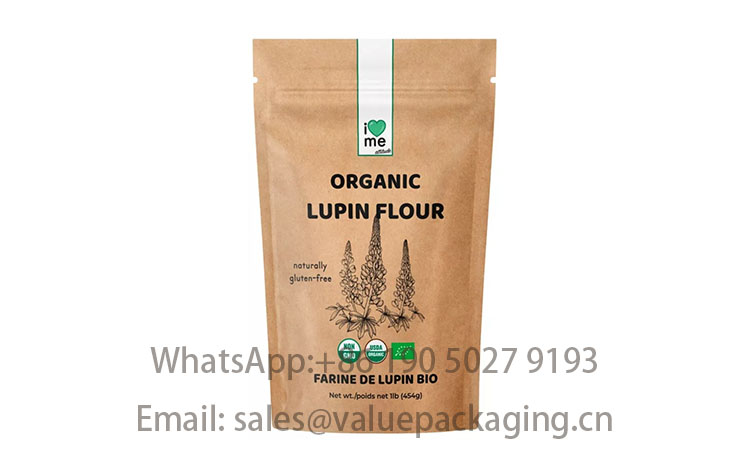
Many organic and specialty food brands are exploring compostable packaging as part of broader environmental commitments.
Cellulose/Metallized Cellulose/PLA+PBAT
Among compostable structures, this laminate provides some of the strongest barrier performance currently available.
Typical barrier performance:
| Structure | WVTR | OTR |
|---|---|---|
| Cellulose/Metallized Cellulose/PLA+PBAT | 0.5–2 g/m²·day | 0.5–5 cc/m²·day |
The metallized cellulose layer significantly improves moisture and oxygen resistance while maintaining industrial compostability.
This structure is particularly suitable for:
- Organic lupin flour pouch packaging
- Premium sustainable food brands
- Environmentally focused retail programs
Kraft Paper/Metallized Cellulose/PLA+PBAT
Brands seeking a natural paper appearance often choose kraft-paper-based compostable structures.
Typical barrier performance:
| Structure | WVTR | OTR |
|---|---|---|
| Kraft Paper/Metallized Cellulose/PLA+PBAT | 1–3 g/m²·day | 1–10 cc/m²·day |
The kraft paper exterior supports strong sustainability messaging while maintaining adequate protection for many flour applications.
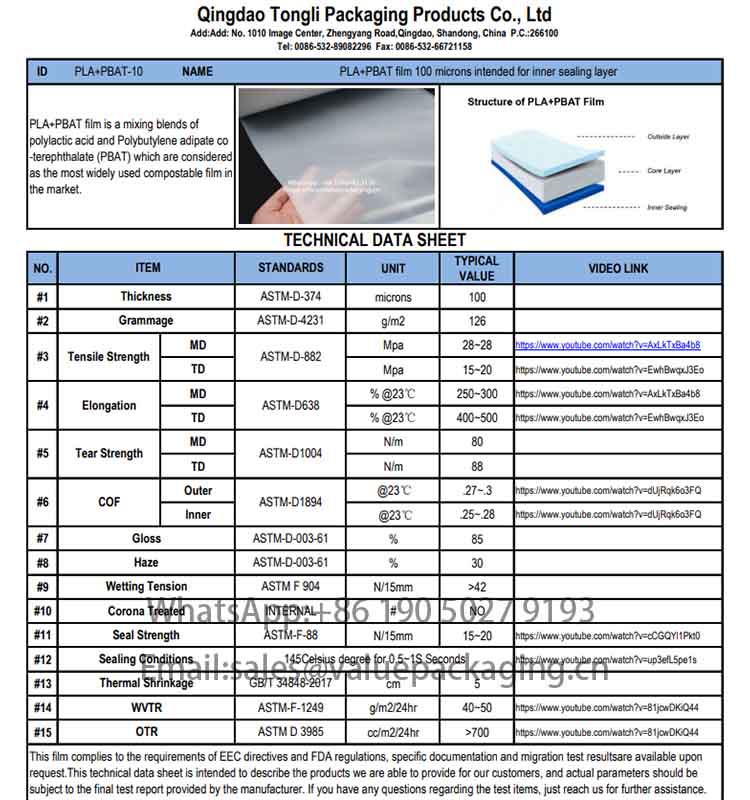
PLA+PBAT Film
The PLA+PBAT film is the most common biodegradable film commercialized in various demanding market, which actually contains PLA (poly lactic acid) (70~85%) blended with polybutylene adipate terephthalate (PBAT) (10~20%) and plasticizer (2~10%). With great mechanical strength, physical stability, great sealing performance and printability, this film is now extending its packaging application for more and more products.
Due to different understanding on this blended film, some people may just call it PLA Film, as actually PLA (Poly Lactic Acid) occupies the largest content of its formulation.
Actually, there are two kinds of biopolymer resins in this formulation, with PBAT not able to be neglected, so usually for industries, the professionals will call it PLA+PBAT film, which is able to describe the film in a better understanding.
Plasticizer is added into the formulation, which works as the aid agent in the manufacturing process, which enables the final film with optimized property, such as silicon dioxide in producing traditonal plastic film, so people usually do not mention it when trying to name the final film.
100% Kraft Paper Packaging: Fully Recyclable and Compostable
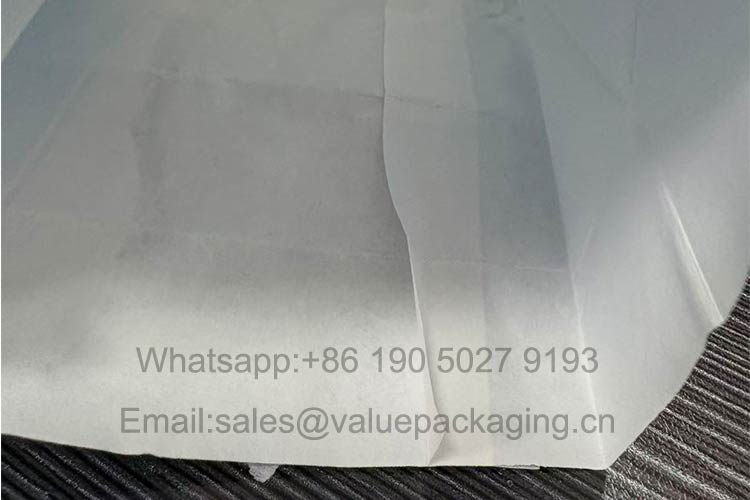
Pure kraft paper packaging is made entirely from uncoated, unlaminated kraft paper, typically in single-ply or multi-ply constructions. It contains no PE lining, no plastic film, and no barrier coating. Usually, the bond and seal of various kraft paper is achieved through the function of water-based adhesive, which is certificated in full compliance of human food safety.
Choosing the Right Packaging Format
Several flexible packaging formats are commonly used for lupin flour products.
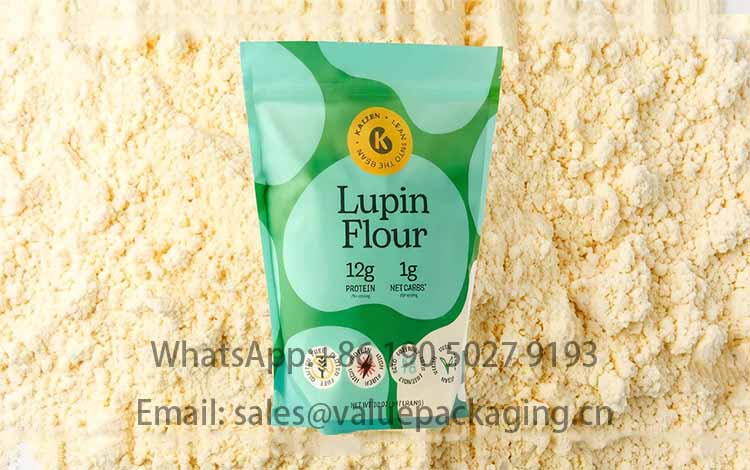
Stand-Up Pouch (Doypack)
Stand-up pouches offer excellent shelf presentation and efficient storage. Resealable zipper options improve consumer convenience and product freshness.
Side Gusset Bag
Popular for larger pack sizes, side gusset bags provide strong filling efficiency and high product capacity.
Flat Bottom Bag
Flat bottom bags combine premium appearance with enhanced stability, making them suitable for specialty and premium flour brands.
Conclusion
Flexible packaging plays a critical role in supporting lupin flour sustainability goals by combining product protection, material efficiency, and environmental responsibility. While traditional structures such as PET/VMPET/LDPE and PET/AL/LDPE continue to offer excellent barrier performance, recyclable solutions including MDOPE/EVOH-LDPE and MDOPE/BOPE/EVOH-LDPE are increasingly emerging as preferred alternatives for modern food brands.
Compostable options such as Cellulose/Metallized Cellulose/PLA+PBAT further expand opportunities for environmentally conscious companies seeking to reduce packaging waste while maintaining shelf-life performance. By selecting the appropriate pouch, doypack, bag, sachet, packet, or pack format, lupin flour manufacturers can successfully balance sustainability objectives, regulatory requirements, and consumer expectations.
As the market for plant-based ingredients continues to expand, sustainable flexible packaging will remain a key driver of innovation and long-term brand value in the lupin flour industry.