
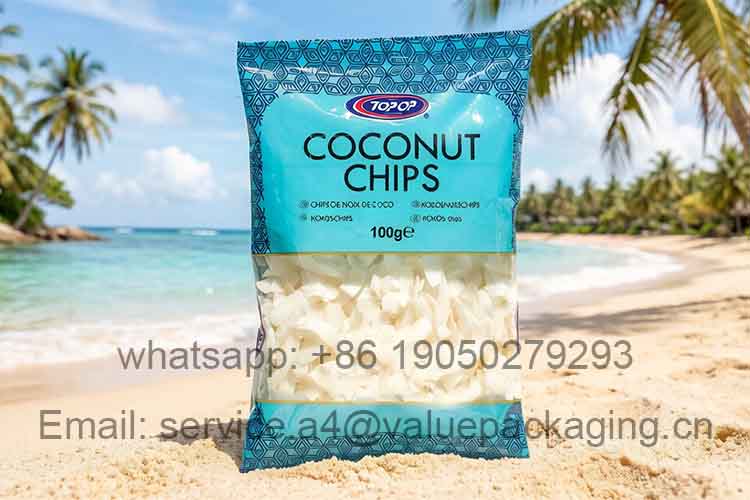
As demand for natural and healthy snacks continues to grow, coconut chips have become increasingly popular in global markets. Made from sliced and dried coconut meat, coconut chips are widely consumed as a standalone snack or used in cereals and desserts. Because coconut chips contain natural oils and have a crisp texture, coconut chips packaging plays a critical role in preserving freshness, preventing rancidity, and maintaining crunch. At the same time, brands are increasingly seeking eco-friendly coconut chips packaging and sustainable coconut chips bags to reduce environmental impact.
1. Common Coconut Chips Packaging Solutions
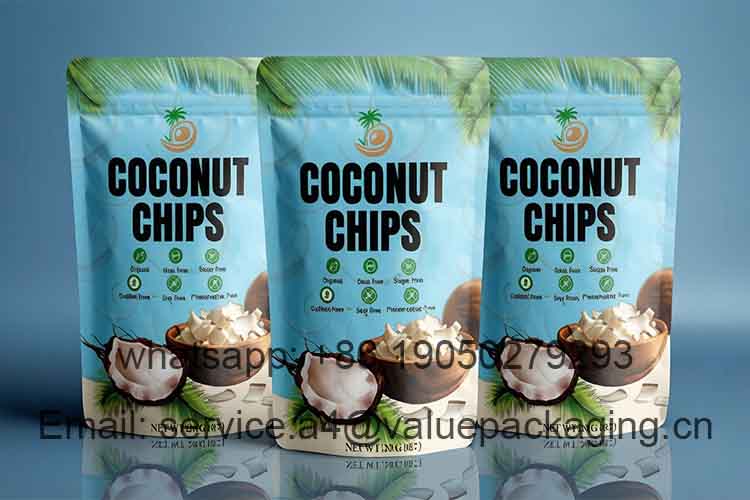
Coconut chips packaging must protect the product from moisture, oxygen, and physical damage while maintaining convenience and shelf appeal. The most commonly used formats include:
Stand-up pouches with resealable zippers
These coconut chips pouches are widely used for convenience. The resealable zipper allows consumers to open and close the package multiple times, helping maintain freshness after opening.
Many coconut chips pouches also include hang holes, allowing them to be displayed on hooks. This improves shelf visibility, makes the product easier for customers to notice, and helps maximize exposure in retail settings.
Flat bottom pouches
Ideal for larger pack sizes, flat-bottom bags provide better stability and a premium look. They are well-suited for retail display and offer more space for branding and product information.
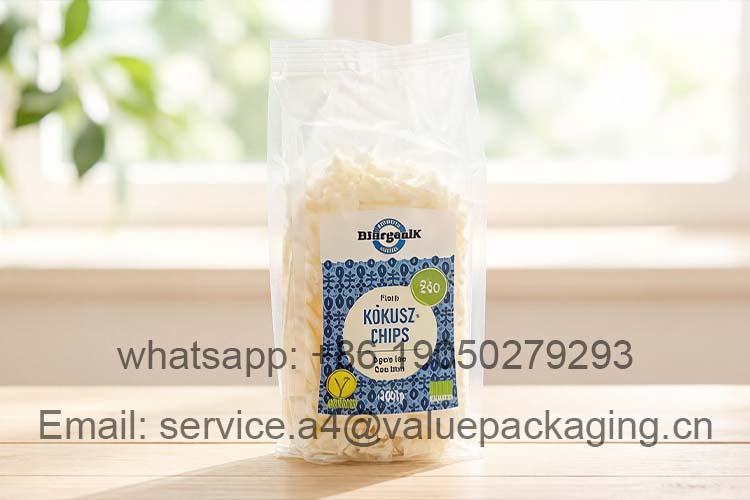
Pillow bags
For larger volume needs, pillow pouch packaging is often used. These coconut chips pouches are typically filled with higher weights and provide a simple, cost-effective solution for bulk or family-size packs. The pillow shape allows efficient packing and transport while still protecting the product from moisture and physical damage. Though less rigid than stand-up or flat-bottom designs, pillow pouches remain a practical option for products where storage efficiency and production cost are priorities.
2. Traditional Materials Used in Coconut Chips
Due to their composition and texture, coconut chips packaging must meet several key requirements:
- Moisture protection
Coconut chips contain water and oils, making them prone to softening or spoilage if exposed to moisture. Packaging materials should have strong moisture barrier properties. - Oxidation protection
The oils in coconut chips can oxidize, leading to off-flavors or discoloration. Materials with good oxygen barrier performance should be used, and air exposure minimized through resealable zippers or vacuum packaging. - Light protection
Exposure to light can accelerate oxidation and fading, affecting taste and appearance. Opaque or high light-blocking materials are recommended. - Physical protection
Coconut chips are fragile, so packaging should provide adequate compression resistance and cushioning, especially for large packs or during transport. - Convenience
Consumers prefer packaging that is easy to open and reseal. Stand-up pouches with zippers are practical for multiple uses while keeping the product fresh.
To achieve these functions, coconut chips packaging materials must provide reliable barrier performance and sealing properties. Common materials include:
- PET film
- PA film
- VMPET film
- Aluminum foil
- LDPE film
- BOPP film
- Kraft paper
- Metallized PET film
- AlOx and SiOx coated PET film
3. Sustainability Challenges in Conventional Coconut Chips Packaging
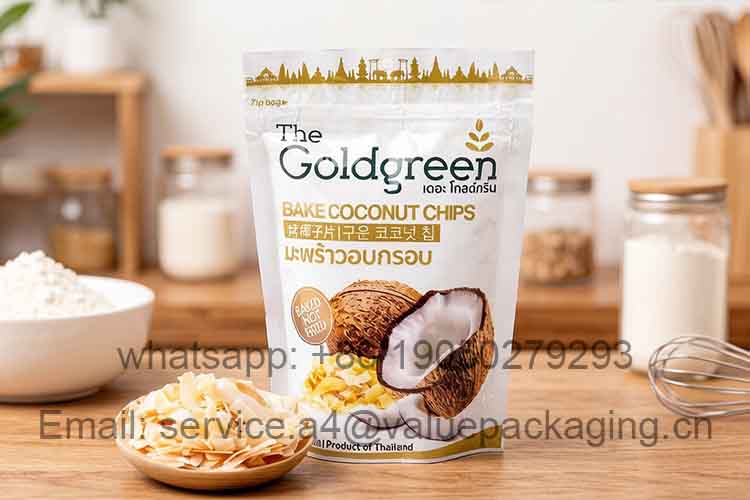
Selecting the right packaging material is crucial for maintaining the quality, freshness, and visual appeal of coconut chips. Different materials offer varying levels of moisture and oxygen barrier, transparency, and sustainability, making them suitable for distinct product positions and market segments.
The table below outlines common packaging options, their key advantages, and typical applications:
| Packaging Material | Key Advantages | Typical Applications |
|---|---|---|
| PET / AL / PE | Excellent barrier against moisture, oxygen, and light; keeps coconut chips crisp and fresh; suitable for long shelf life | Premium or export-grade coconut chips in stand-up pouches |
| PET / VMPET / PE | Balanced barrier performance with cost efficiency; maintains crispness while reducing packaging cost | Standard retail coconut chips pouches, mid-range pricing |
| PET / AlOx-PET / PE | Transparent film allows partial product visibility while still protecting against moisture and oxygen | Coconut chips with window for branding or small gift packs |
| Kraft Paper / AL / PE | Eco-friendly, natural appearance with good barrier properties; appeals to organic or specialty markets | Organic, artisanal, or specialty coconut chips in flat-bottom pouches or pillow packs |
| PET / LDPE | Strong, flexible, and cost-effective; provides good moisture and oxygen protection for bulk quantities | Large-format coconut chips for wholesale, bulk retail, or family packs |
Premium Coconut Chips Packaging with Aluminum Foil:
- PET / AL / PE
- PET/AL/PET/LDPE
Aluminum foil provides one of the highest barrier levels among flexible packaging materials. For premium or export-grade coconut chips, it effectively protects against moisture, oxygen, and light, keeping the chips crisp and fresh for extended shelf life. The foil layer prevents oil oxidation and preserves natural flavor and texture, while laminated plastics provide mechanical strength to avoid foil damage during storage and transportation.
Standard Retail Packaging:
- PET / VMPET / PE
- BOPP / VMPET / PE
- Matte BOPP/VMPET/PE
Metallized films such as VMPET offer reliable barrier performance at a lower cost than aluminum foil. These structures maintain chip crispness while keeping production affordable, making them suitable for everyday retail coconut chips pouches.
Transparent or Window Packaging:
- PET / AlOx-PET / PE
- PET / SiOx-PET / PE
Transparent coated films allow partial product visibility, showcasing the natural coconut texture. AlOx-PET or SiOx-PET still provide effective moisture and oxygen barriers, combining shelf appeal with functional protection.
Kraft Paper Laminates:
- Kraft Paper / AL / PE
- Kraft Paper / VMPET / PE
- Kraft Paper / AlOx-PET / PE
Kraft paper laminates give a natural and premium look while enhancing stiffness for better shelf display. When combined with aluminum, metallized PET, or coated films, they balance eco-friendly aesthetics with product protection.
Bulk or Family Pack Pillow Pouches:
- PET / LDPE
PET/LDPE pillow pouches are strong, flexible, and cost-effective for large-format coconut chips. They provide good moisture and oxygen protection while accommodating bulk quantities, making them ideal for wholesale, family packs, or value-oriented retail formats.
Different multilayer laminates are commonly used in coconut chips pouches depending on shelf life and product positioning. These structures offer strong protection but are typically composed of multiple materials bonded together.
As a result, most conventional coconut chips packaging is difficult to recycle and often ends up as mixed plastic waste, creating challenges for brands aiming to improve sustainability.
4. Recyclable Mono Material Coconut Chips Packaging
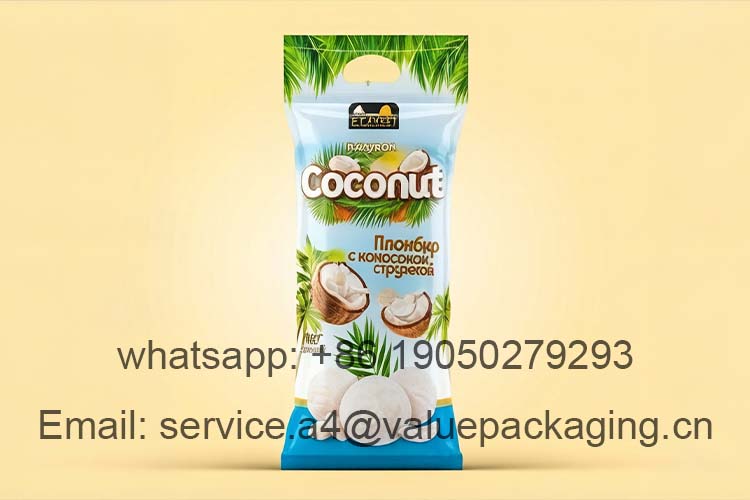
To tackle recycling challenges, the snack industry is increasingly adopting mono-material flexible packaging solutions for coconut chips. By using films from the same polymer family, such as polyethylene (PE) or polypropylene (PP), these pouches are more compatible with recycling streams while still protecting delicate coconut chips from moisture, oxygen, and mechanical stress.
Common PE-based materials for coconut chips include:
Common PP-based materials include:
By carefully combining films within the same polymer family, manufacturers can create recyclable coconut chips pouches that maintain structural strength, sealing reliability, and barrier performance, while reducing environmental impact.
Typical recyclable pouch structures for coconut chips:
- BOPP/VMCPP
- MDOPE/LDPE
- BOPE/LDPE
- MDOPE/BOPE/LDPE
- BOPP/VMCPP
- ABOPP/VMCPP
These mono-material structures help preserve crispness, natural flavor, and oil stability during storage and transport, while making pouches easier to recycle compared with conventional multi-material laminates. Such solutions provide a balance between sustainability, product protection, and consumer appeal, meeting the growing demand for eco-friendly snack packaging.
5. Compostable Coconut Chips Packaging
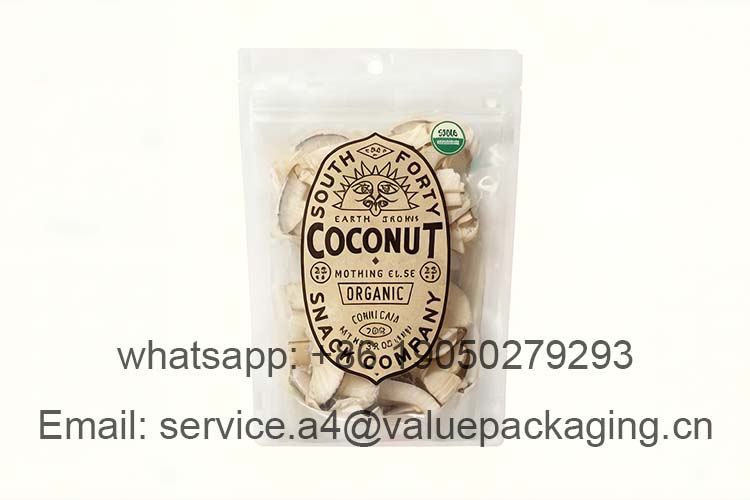
Another emerging direction in sustainable coconut chips packaging is the use of compostable flexible materials designed to break down under controlled composting conditions. These materials are typically derived from renewable or bio-based resources and can help reduce long-term environmental impact compared with conventional plastic laminates.
Common compostable materials used for coconut chips flexible packaging include:
In practical applications, these materials are often laminated together to improve mechanical strength, sealing performance, and moisture/oxygen barrier properties required to protect the delicate, high-fat coconut chips during storage and transport. Some laminates may also include thin protective coatings to reduce oil migration or clumping.
Typical compostable pouch structures for coconut chips include:
- Kraft Paper/PLA+PBAT Membrane
- Cellulose/PLA+PBAT Membrane
- Metallized Paper/PLA+PBAT Membrane
- Cellulose/Metallized Cellulose/PLA+PBAT Membrane
- Kraft Paper/Metallized Cellulose/PLA+PBAT Membrane
- Kraft Paper/Cellulose/PLA+PBAT Membrane
- Kraft Paper/Cellulose/PBS Membrane
- Metallized Paper/Cellulose/PLA+PBAT Membrane
For coconut chips, compostable packaging must provide sufficient moisture and oxygen barrier to preserve crispness, natural flavor, and oil stability throughout storage and transportation. Properly designed compostable structures allow brands to offer eco-friendly, fully compostable snack packaging without compromising product quality or visual appeal.
Barrier Properties of Compostable Laminates
| Biodegradable Foil Laminate | WVTR(g/m2/24hr) | OTR (cc/m2/24hr) |
| Cellulose20/Metallized Cellulose20/PLA+PBAT60 | 18 | 2.1 |
| Cellulose20/Metallized Cellulose20/BOPLA40 | 19 | 2.2 |
| K-Cellulose22/Metallized Cellulose20/PLA+PBAT60 | 8 | 0.5 |
| Metallized Paper 69g/Cellulose30/PLA+PBAT60 | 5.6 | 1.12 |
| Cellulose30/Metallized Paper69g/PLA+PBAT60 | 8.9 | 1.1 |
6. Conclusion
As demand for healthier snacks and sustainable products grows, coconut chips packaging is evolving toward more environmentally responsible solutions. Recyclable coconut chips pouches improve compatibility with recycling systems, while compostable coconut chips bags offer an alternative way to reduce packaging waste.
At the same time, effective packaging must continue to protect against oxygen, moisture, and physical damage to preserve freshness and crisp texture. By balancing sustainability with performance, brands can deliver high-quality coconut chips while meeting modern consumer expectations.