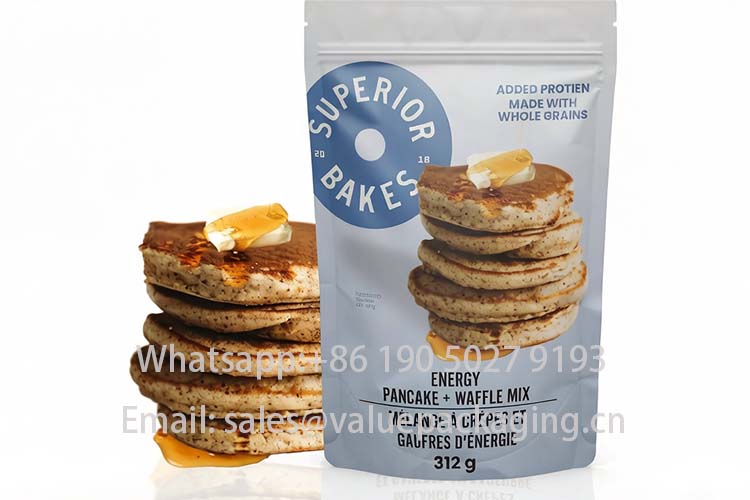
As consumers increasingly prioritize sustainability, food brands are under growing pressure to rethink their packaging strategies. Pancake mix, a staple in households worldwide, is no exception. While the product itself is simple, its packaging plays a critical role in maintaining freshness, extending shelf life, and enhancing brand appeal.
Today, sustainable pancake packaging is becoming a key differentiator, helping brands reduce environmental impact while meeting consumer expectations.
Conventional Materials
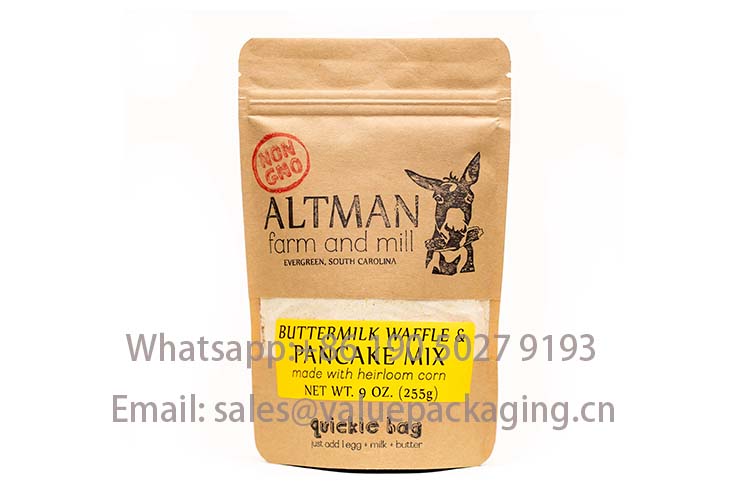
Traditional pancake mix packaging often uses multi-layer laminates such as:
PET/LDPE
PET/AL/LDPE
PET/VMPET/LDPE
Kraft Paper/AlOx-PET/LDPE
WVTR Guide for Pancake Mix Packaging
WVTR (Water Vapor Transmission Rate) measures how much moisture passes through a packaging material. For pancake mix, controlling WVTR is critical to prevent moisture absorption and product degradation.
Recommended WVTR Levels
| Application | Recommended WVTR |
|---|---|
| Short shelf life (3–6 months) | ≤ 5 g/m²·day |
| Standard retail (6–12 months) | ≤ 3 g/m²·day |
| Long shelf life (12–24 months) | ≤ 1–2 g/m²·day |
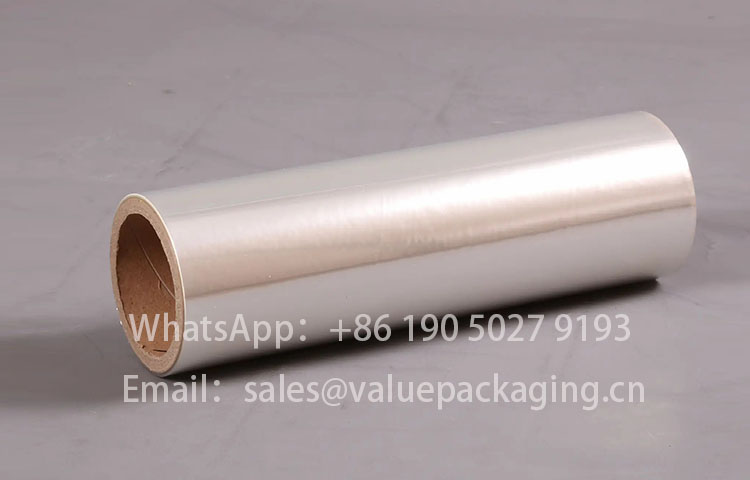
AlOx-PET (Aluminum Oxide Coated PET) is a high-barrier, transparent packaging material widely used in advanced flexible packaging applications. It is produced by depositing an ultra-thin layer of aluminum oxide (AlOx) onto the surface of PET (polyethylene terephthalate) film through vacuum coating technology.
The key advantage of AlOx-PET lies in its ability to significantly enhance barrier properties while maintaining excellent transparency. Compared to standard PET, AlOx-PET provides dramatically improved oxygen barrier (low OTR) and enhanced moisture barrier (lower WVTR), making it ideal for products that require extended shelf life and protection against oxidation. Unlike metallized films such as VMPET, AlOx-PET remains clear, allowing full product visibility—an important feature for premium packaging design.
Compostable Materials (Eco-Friendly Positioning)
Compostable Substrates
Compostable Laminates
| Biodegradable Foil Laminate | WVTR(g/m2/24hr) | OTR (cc/m2/24hr) |
| K-Cellulose22/Metallized Cellulose20/PLA+PBAT60 | 8 | 0.5 |
| Metallized Paper 69g/Cellulose30/PLA+PBAT60 | 5.6 | 1.12 |
| Cellulose30/Metallized Paper69g/PLA+PBAT60 | 8.9 | 1.1 |
Recyclable Materials
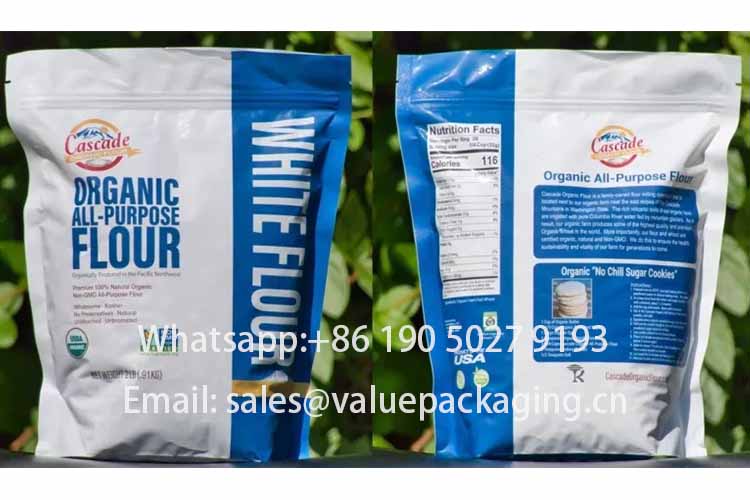
MDOPE/LDPE
MDOPE/EVOH-LDPE
MDOPE/BOPE/LDPE
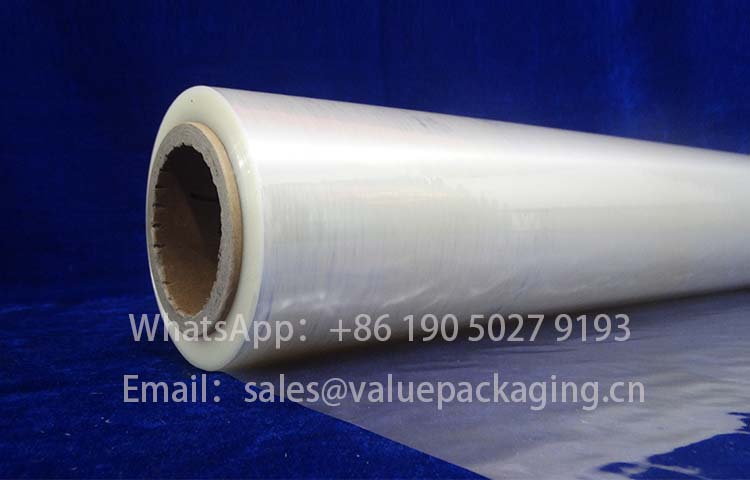
MDOPE (Machine Direction Oriented Polyethylene) film is an advanced polyethylene material engineered through a controlled stretching process in the machine direction. This orientation aligns the polymer chains, significantly enhancing the film’s mechanical properties compared to conventional PE. As a result, MDOPE offers higher tensile strength, improved stiffness, and better dimensional stability, making it suitable for applications requiring both durability and a premium appearance.
One of the key advantages of MDOPE film is its excellent printability. After surface treatment, it supports high-quality gravure and flexographic printing, often delivering a matte or paper-like finish that enhances shelf appeal. In addition, MDOPE provides moderate moisture barrier performance and good heat seal compatibility when laminated with sealant layers such as LLDPE.
Conclusion
Sustainable pancake packaging is no longer optional,it is essential for modern food brands. By adopting eco-friendly materials and optimizing WVTR performance, brands can ensure product quality while reducing environmental impact.
In conclusion, sustainable pancake packaging is no longer just an option but a strategic necessity for brands aiming to stay competitive in today’s eco-conscious market. By carefully balancing performance, cost, and environmental impact, companies can select the most suitable solution among conventional, compostable, and recyclable materials. While traditional laminates still provide superior barrier protection, recyclable mono-material structures such as MDOPE-based films are becoming the preferred choice for scalable sustainability. Compostable options, on the other hand, offer strong branding advantages for niche and premium segments.