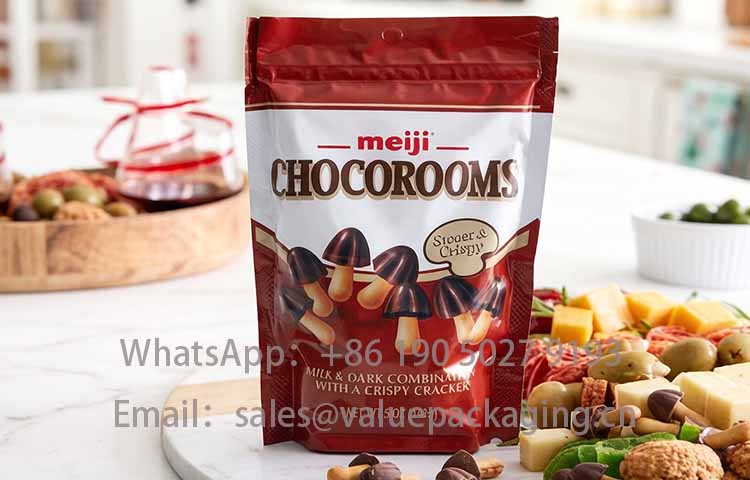
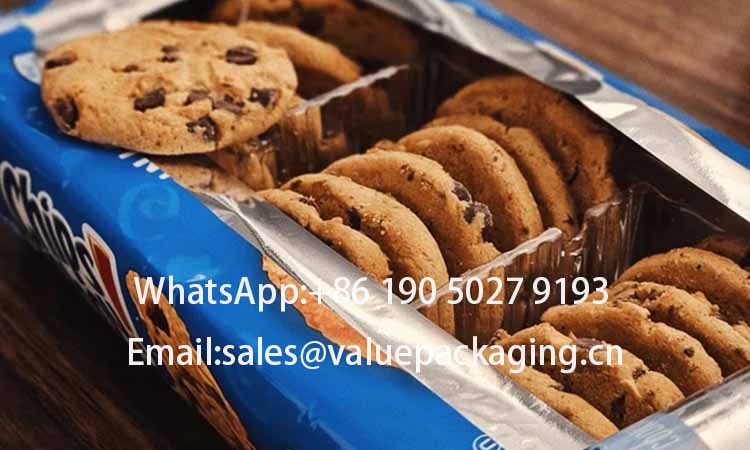
In the competitive world of the snack industry, the “unboxing” experience is no longer just about aesthetics,it is about values. As global awareness regarding plastic waste reaches an all-time high, the demand for eco-friendly chocolate cookies packaging has shifted from a niche trend to a market standard. For cookie brands, the challenge is twofold: maintaining the buttery, crisp texture of the product while transitioning to materials that respect the planet.
Why Packaging Strategy is Critical for Chocolate Cookies
Chocolate cookies are a complex product to package. They contain fats (butter or oils) that can go rancid if exposed to oxygen, and they are highly hygroscopic, meaning they quickly absorb moisture from the air, turning a snap-crisp cookie into a soft, stale one. Furthermore, chocolate is sensitive to temperature and light, which can cause “blooming”,that white, dusty film that occurs when cocoa butter separates.
Normal Materials (Optimized for Efficiency)
PET / VMPET / LDPE
BOPP / VMPET / LDPE
PET / AL / LDPE

Difference Between AL and VMPET
| AL | VMPET | |
| Barrier performance | Nearly 100% Barrier Protection | good |
| OTR | The oxygen transmission rate of high-quality aluminum foil can be ≤ 0.5 cm³/(m²·24h·0.1 MPa). | As low as 1.2 cm³/(m²·24h·atm) |
| Mechanical Properties | Poor quality; the material is relatively brittle and prone to developing pinholes or fracturing after repeated bending. | excellent |
| Cost-effectiveness | Relatively high costs | Significant cost advantages |
Compostable Packaging Materials
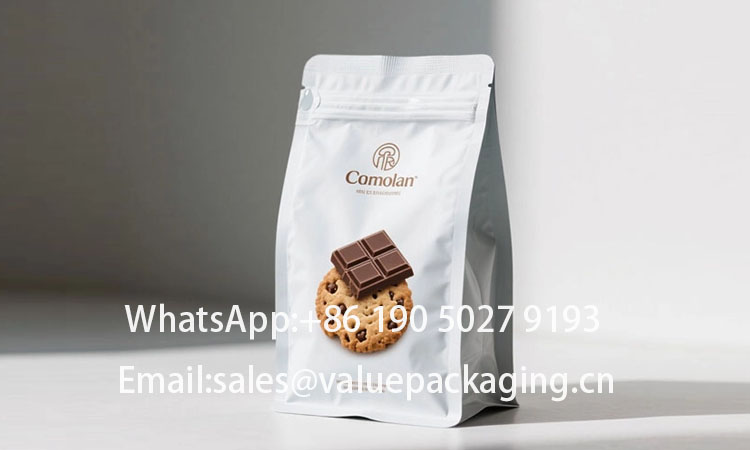
Compostable Substrates
- BOPLA Film
- PLA+PBAT Film
- Kraft Paper
- Metallized Paper
- Cellulose Film
- Metallized Cellulose Paper
- PBS Film
Compostable Laminates
Cellulose/Metallized Cellulose/PLA+PBAT
Cellulose20/Metallized Cellulose20/BOPLA40
Metallized Paper 69g/Cellulose30/PLA+PBAT60
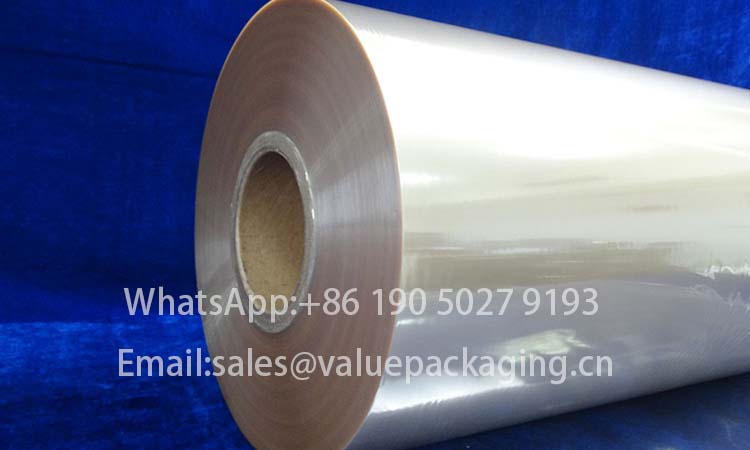
Cellulose film is a biodegradable and renewable packaging material made from natural cellulose, typically derived from wood pulp or cotton fibers. It is widely recognized as an eco-friendly alternative to conventional plastic films, especially for brands seeking sustainable packaging solutions.
One of the key advantages of cellulose film is its excellent transparency and natural appearance, making it ideal for premium product presentation. It also offers good oxygen barrier properties in dry conditions, which helps preserve product freshness, particularly for dry foods such as snacks, tea, and confectionery. Additionally, cellulose film has anti-static properties, meaning it does not attract dust,an important benefit for food packaging.
In this video,show the Home Compostable cellulose paper 30 micron based onfiber plant.
Recyclable Mono-Material Packaging
PE Mono Materials
PE Mono-Material Laminate
MDOPE/EVOH-LDPE
MDOPE/LLDPE
BOPE/APE