
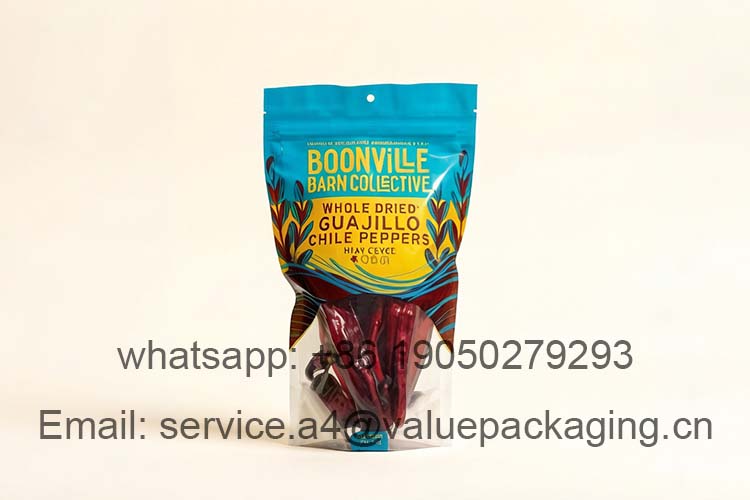
Dried chili products are highly sensitive to moisture, oxygen, light, and physical damage during storage and transportation. Compared with many dry food products, dried chili peppers and chili flakes contain natural oils, pigments, and aromatic compounds that may gradually lose color, flavor, and pungency after prolonged exposure to air, humidity, or sunlight. Because dried chili products are often distributed across long supply chains and stored under varying environmental conditions, packaging plays an important role in maintaining product quality and shelf life.
As flexible packaging continues expanding in the food industry, dried chili packaging bags are increasingly used for retail pouches, bulk packaging, spice refill packs, and foodservice applications because they reduce packaging weight and improve transportation efficiency.
Common Flexible Packaging Formats for Dried Chili Products
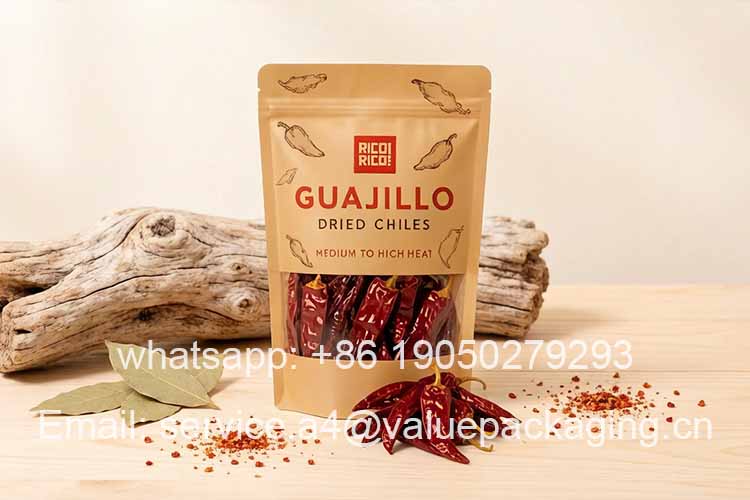
Several flexible packaging formats are commonly used for dried chili products depending on particle size, filling method, and market positioning. Compared with rigid containers, flexible packaging solutions can reduce material usage, improve storage efficiency, and help preserve product freshness.
Three Side Seal Pouches and Pillow Pouches
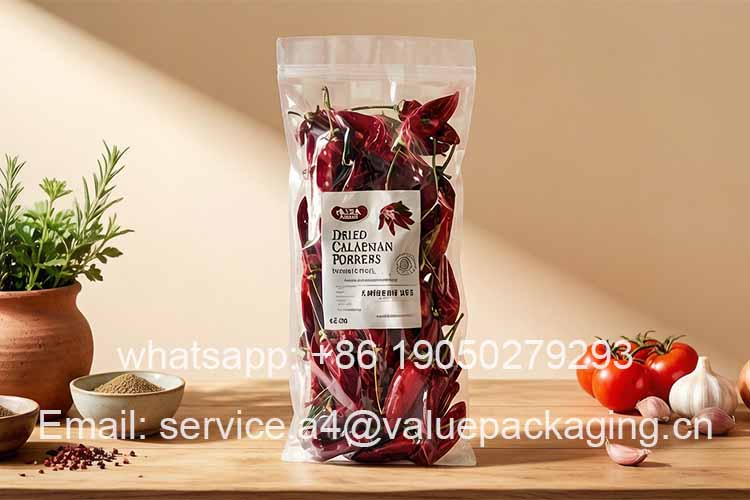
Small retail chili powder, chili flakes, and dried chili products are commonly packaged in three side seal pouches or pillow pouches. Compared with rigid jars, these formats use less packaging material while providing sealed portion packaging for improved freshness protection.
Because dried chili products may gradually absorb moisture after prolonged exposure to air, sealed pouches can also help reduce clumping and flavor loss during storage.
Key advantages include:
- Ideal for small retail packaging
- Reduced packaging weight
- Convenient for storage and transportation
- Helps maintain product freshness
Stand Up Pouches and Zipper Pouches
Stand up pouches are widely used for premium dried chili products, refill packaging, and larger volume applications. Their self standing structure improves shelf visibility while reducing the amount of rigid packaging material required. Many stand up pouches also include functional features such as resealable zippers, easy tear openings, matte or glossy finishes, and transparent windows to improve convenience, product presentation, and consumer experience.
Zipper pouches are especially suitable for repeated use applications because they help reduce moisture exposure after opening while improving consumer convenience. Compared with rigid spice containers, stand up pouches can reduce overall packaging weight, require less storage space, lower transportation costs, and improve packaging efficiency.
As demand for sustainable packaging continues to grow, stand up and zipper pouch formats are becoming increasingly popular in both retail and foodservice markets.
Key Requirements for Dried Chili Packaging
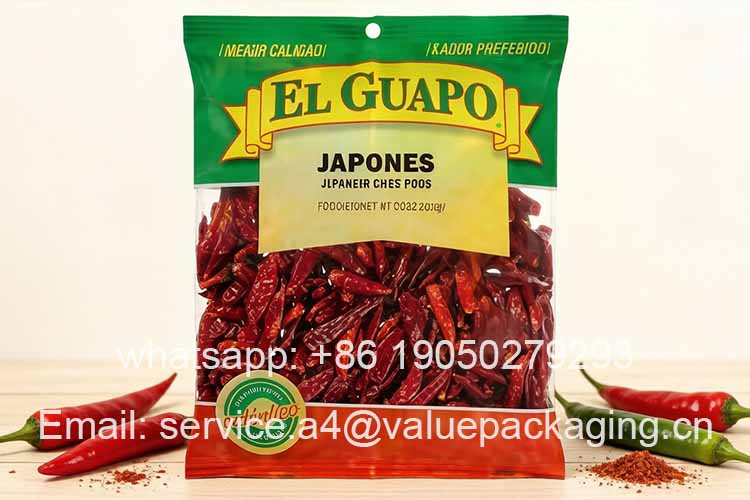
Compared with many dry products, dried chili packaging requires stronger moisture protection and aroma retention because chili products are sensitive to humidity, oxidation, and flavor loss. In practical applications, packaging must balance barrier protection, sealing performance, puncture resistance, and storage durability.
- Moisture Barrier
Reliable moisture barrier helps prevent chili products from absorbing humidity during storage and transportation. Moisture control is especially important for maintaining texture, preventing clumping, and reducing microbial risks. - Oxygen Barrier
Oxygen exposure may gradually reduce aroma intensity and color stability in dried chili products. Barrier protection helps maintain product freshness and shelf life. - Seal Integrity
Strong seals are important for preventing leakage, contamination, and moisture penetration throughout distribution and storage. - Mechanical Strength
Dried chili peppers may contain stems or sharp edges that can place stress on packaging materials. Packaging should provide sufficient puncture resistance and structural durability during handling and transportation.
Common materials include:
Aluminum foil is commonly used in dried chili packaging because it provides excellent oxygen, moisture, and light barrier protection. Compared with standard dry food packaging, dried chili products often require improved aroma retention and moisture control for longer shelf life applications.
Material Selection in Dried Chili Packaging
| Main Component | Packaging Consideration | Why It Matters |
|---|---|---|
| Chili Powder | Moisture barrier | Helps reduce clumping and quality loss |
| Chili Flakes | Oxygen barrier | Helps preserve aroma and color stability |
| Whole Dried Chili | Mechanical strength | Sharp edges may damage weak packaging |
| Spicy Oils and Pigments | Light protection | Reduces discoloration during storage |
| Bulk Chili Packaging | Seal integrity | Helps prevent leakage and contamination |
In practical applications, packaging structure selection often depends on shelf life requirements, distribution conditions, and product format. Different laminate structures provide varying levels of barrier protection, sealing reliability, and puncture resistance.
Typical Structures for Dried Chili Packaging
Standard Laminates
These are commonly used basic to mid-range structures that offer a good balance of printability, sealing performance, and cost efficiency. PET provides good stiffness and printing performance, while PE ensures reliable heat sealing. BOPP/CPP offers good transparency, gloss, and flexibility with stable sealing performance. These structures are suitable for products requiring standard moisture protection and moderate barrier performance, especially in cost sensitive applications.
High Performance Laminates
These structures are designed for higher protection requirements, focusing on either improved barrier performance or enhanced mechanical strength. PA/LDPE and PET/PA/PE provide excellent puncture resistance and durability for products that may face pressure or sharp edges during transportation. PET/VMPET/PE offers improved protection against oxygen, moisture, and light, helping extend shelf life and maintain product stability. These laminates are commonly used for more demanding packaging applications requiring stronger overall performance.
Recyclable Mono Material Dried Chili Packaging
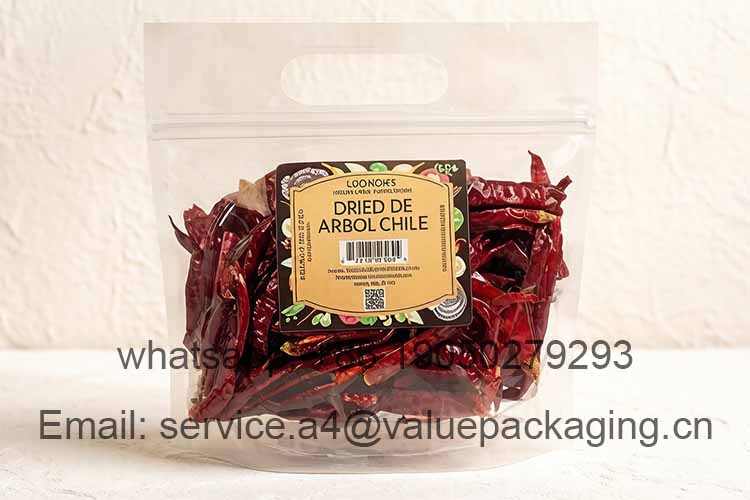
Under growing sustainability pressure, mono material solutions are increasingly being explored for dried chili packaging. By keeping the structure within a single polymer family, these pouches are more compatible with existing recycling systems and help reduce the complexity associated with conventional multi layer laminates.
PE based recyclable solutions for dried chili packaging may include:
Polyethylene structures are valued for their flexibility and reliable sealing performance. In dried chili applications, EVOH containing structures may help improve oxygen barrier performance, which is important for maintaining aroma and color stability.
Examples of recyclable mono material structures include:
- MDOPE/LDPE
- MDOPE/EVOH-LDPE
- MDOPE/BOPE/LDPE
- MDOPE/BOPE/EVOH-LDPE
These structures are designed to balance recyclability with practical packaging performance. In practical applications, they are mainly suitable for products with moderate shelf life requirements or controlled storage conditions.
Compared with conventional foil laminates, recyclable mono material structures may still have limitations in long term oxygen and moisture barrier performance for certain high sensitivity spice products.
Compostable Dried Chili Packaging
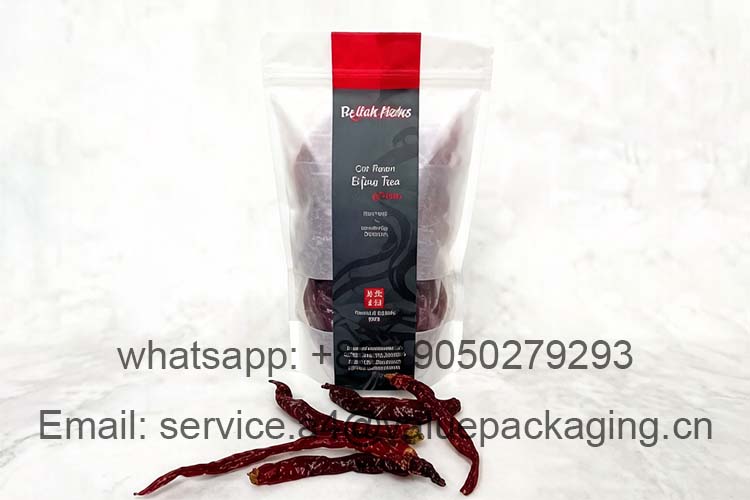
Another emerging direction in dried chili packaging is the use of compostable materials derived from renewable resources such as PLA, PBAT, and cellulose based films. These materials are designed to break down under industrial composting conditions and are being explored for sustainability focused food packaging applications.
Common compostable materials include:
In practical applications, these materials are typically laminated to improve sealing reliability, mechanical durability, and barrier performance. For dried chili products, packaging must also maintain moisture resistance and aroma retention throughout storage and transportation.
Typical compostable structures include:
One of the main limitations of compostable laminates is their generally lower and less stable barrier performance compared with conventional high barrier structures. Moisture protection may also remain a challenge for long shelf life dried spice applications.
As a result, compostable structures are generally more suitable for short shelf life products or controlled distribution environments.
Conclusion
Dried chili packaging is primarily driven by moisture protection, aroma retention, seal reliability, and mechanical durability. In practical applications, conventional laminated structures remain the most widely used solution because they provide stable barrier protection, reliable sealing performance, and good processing efficiency.
While recyclable mono material and compostable packaging solutions continue gaining attention, their practical application still depends on balancing sustainability with moisture barrier performance, puncture resistance, and long term product freshness. For future development, achieving both effective product protection and improved environmental performance remains a major focus in dried chili packaging.