
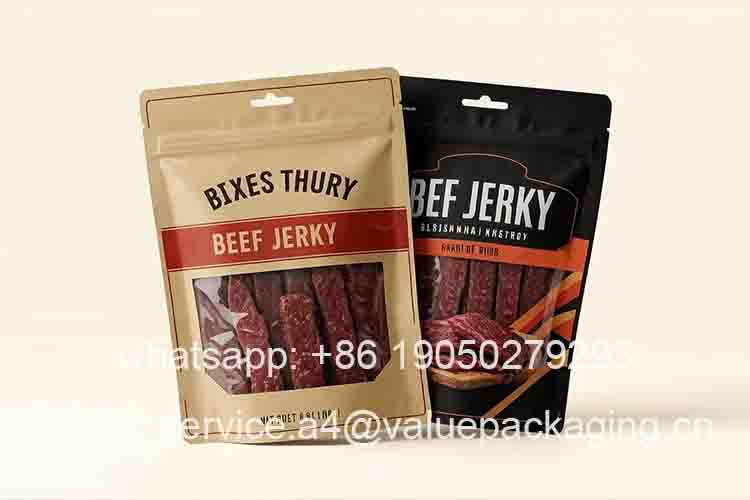
Beef jerky is a high protein dried meat snack that is sensitive to oxygen, moisture, grease migration, and microbial contamination during storage and transportation. Because beef jerky contains natural fats, proteins, seasonings, and marinades, improper packaging may lead to oxidation, rancidity, texture hardening, flavor deterioration, or shortened shelf life over time. Compared with many dry snack products, beef jerky packaging generally requires stronger oxygen barrier performance and more reliable sealing systems in order to maintain freshness, chewiness, and product safety throughout distribution and retail storage.
In practical applications, beef jerky packaging must also balance product protection, consumer convenience, and shelf presentation. Retail packaging often emphasizes resealability, portability, and premium visual appearance, while bulk foodservice packaging may focus more on durability, puncture resistance, and transportation efficiency.
1. Common Beef Jerky Packaging Solutions
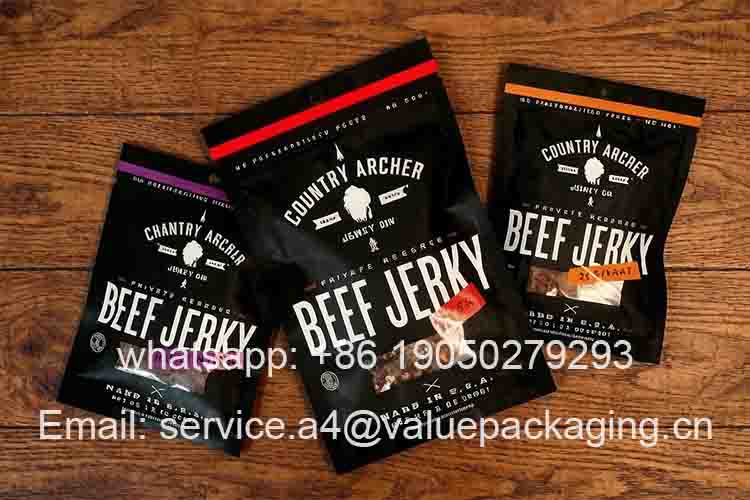
Stand Up Zipper Pouches
Stand up zipper pouches are one of the most widely used packaging formats for beef jerky. The resealable zipper helps reduce repeated exposure to oxygen and moisture after opening while improving convenience for consumers. Compared with rigid packaging, stand up pouches also reduce packaging weight and transportation space.
Many beef jerky stand up pouches include features such as:
- Resealable zippers
- Tear notches
- Matte or glossy finishes
- Transparent windows
- Hang holes
- Nitrogen flushing
Because beef jerky products may release oil during storage, many zipper pouches are designed with higher puncture resistance and grease resistant inner sealing layers to improve packaging stability.
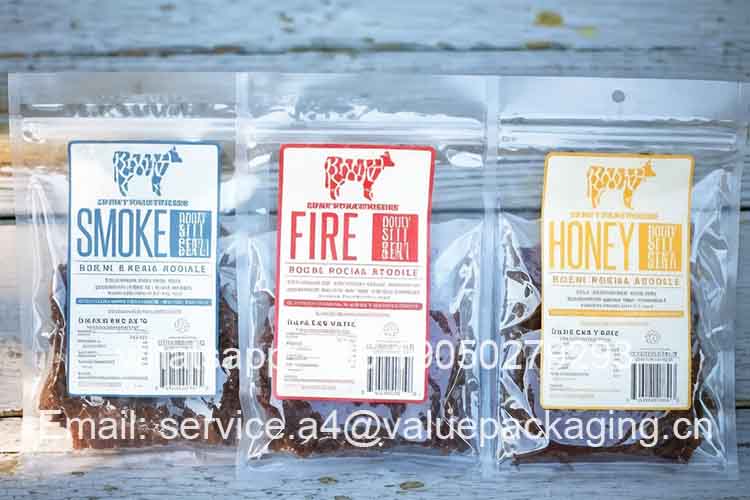
Vacuum Pouches
Vacuum packaging is widely used for beef jerky products requiring extended shelf life and stronger oxygen protection. By removing internal air before sealing, vacuum packaging helps slow fat oxidation and microbial growth while maintaining product texture and flavor quality throughout storage and transportation.
This packaging format is commonly used for premium beef jerky, export products, bulk packaging, high protein snack products, and low preservative formulations. Because vacuum packaging places greater stress on sealing areas and film structures, these pouches often use nylon containing laminates to improve puncture resistance and mechanical durability. High barrier materials are also commonly incorporated to help reduce oxygen exposure and maintain product freshness during long term storage.
Four Side Seal Pouches
Four side seal pouches are commonly used for single serve beef jerky packaging, premium snack portions, and retail multipack inner bags. Their fully sealed edge structure provides a clean and compact appearance while improving sealing consistency and package strength during transportation and storage.
Compared with pillow pouches, four side seal pouches offer better flatness and a more premium presentation, making them suitable for high end beef jerky products and portion controlled packaging. They are also widely used for nitrogen flushed packaging applications because the stable pouch structure helps maintain package integrity and barrier performance.
The combination of cartons and sealed inner pouches also improves portion separation and helps maintain freshness after opening.
Because beef jerky is highly sensitive to oxygen exposure and fat oxidation, many packaging systems also incorporate oxygen absorbers or nitrogen flushing to help extend shelf life and preserve flavor quality.
2. Materials Used in Beef Jerky Packaging
| Main Ingredients | Packaging Considerations |
|---|---|
| Beef Protein | Sensitive to oxygen and moisture changes, which may affect texture, freshness, and shelf stability. |
| Natural Fats and Oils | Fat oxidation may lead to rancidity and off flavors. Strong oxygen barrier packaging is important. |
| Seasonings and Spices | Aroma compounds may gradually dissipate when exposed to oxygen. Barrier packaging helps preserve flavor intensity. |
| Sugars and Marinades | Moisture migration may cause stickiness or texture instability during storage. |
| Smoke Flavor Components | Sensitive to oxygen and light exposure, which may reduce aroma quality over time. |
Beef jerky packaging requires reliable barrier protection to maintain product quality throughout shelf life. Key considerations include:
- Oxygen Barrier: Helps reduce fat oxidation and preserve flavor stability.
- Moisture Control: Maintains chewy texture and prevents excessive hardening or microbial risk.
- Grease Resistance: Helps prevent oil migration and seal contamination.
- Sealing Performance: Maintains package integrity during transportation and repeated use.
- Puncture Resistance: Protects packaging from sharp meat edges and handling damage.
To meet these requirements, beef jerky packaging commonly uses multilayer flexible laminates that combine barrier performance, sealing reliability, and mechanical strength.
Common materials used in beef jerky packaging include:
- PET film
- VMPET film
- Aluminum foil
- LDPE film
- BOPP film
- PA film
- Kraft paper
- Metallized PET film
- AlOx and SiOx coated PET film
In practical production, these materials are often laminated together to balance oxygen barrier performance, puncture resistance, sealing strength, and packaging appearance.
3. Traditional Beef Jerky Packaging Structures
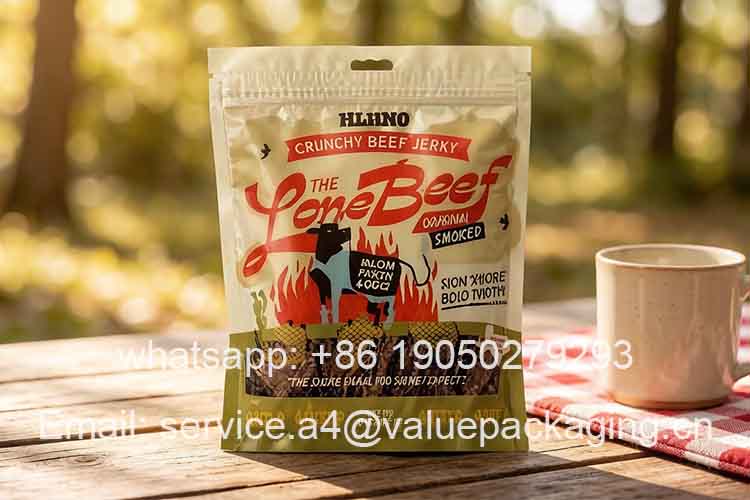
Different multilayer structures are used in beef jerky packaging depending on product formulation, shelf life requirements, packaging format, and brand positioning. Products with higher fat content, softer texture, or lower preservative levels may require stronger oxygen barrier performance to help reduce oxidation and maintain flavor stability during storage. As a result, manufacturers often select specific laminate structures that balance oxygen protection, puncture resistance, shelf presentation, and packaging cost.
Common types of composite foil include:
To maintain freshness and reduce fat oxidation, VMPET is widely used in beef jerky packaging due to its balanced oxygen and moisture barrier performance. Compared with fresh meat products, beef jerky contains lower moisture content, so metallized structures are often sufficient to maintain product quality throughout normal retail shelf life. These laminates help protect beef jerky from oxygen, moisture, grease migration, and light exposure, which are key factors affecting texture, flavor, and shelf stability.
For products requiring longer shelf life, export transportation, or stronger protection against environmental conditions, aluminum foil structures are also commonly used. Adding an AL layer significantly improves oxygen and light barrier performance, helping preserve smoky flavor, texture consistency, and product freshness during long term storage.
- PA/LDPE
- PET/PA/LDPE
- PA/VMPET/LDPE
Because beef jerky products often have a dense texture, rough surface, or hardened edges, packaging materials must also provide good puncture resistance and mechanical durability during filling, transportation, and handling. Nylon based structures are widely used in beef jerky packaging because PA film offers excellent puncture resistance, flex crack resistance, and structural strength.
These nylon containing laminates are especially common in vacuum packaging applications, large volume packaging, and export products where packaging stability and seal integrity are critical throughout distribution and storage.
4. Recyclable Mono Material Beef Jerky Pouches
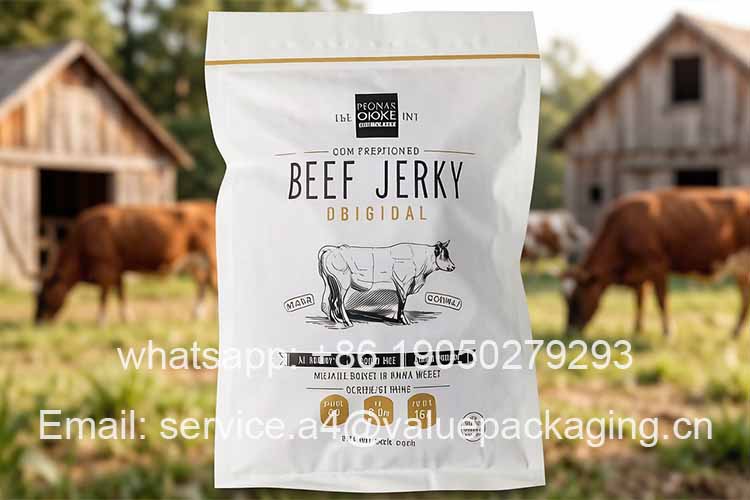
As sustainability becomes increasingly important in the snack food packaging industry, recyclable mono material beef jerky pouches are gradually becoming more widely adopted. Compared with traditional multilayer laminates, mono material structures are designed to improve recyclability while still maintaining the barrier performance required for dried meat products.
For beef jerky packaging, recyclable structures must still provide sufficient oxygen barrier properties, grease resistance, sealing strength, and puncture resistance in order to maintain product freshness and shelf life.
Common PE based materials include:
Different material combinations may be selected depending on required stiffness, barrier performance, sealing strength, and packaging appearance.
Typical recyclable beef jerky pouch structures include:
- MDOPE/LDPE
- MDOPE/EVOH-LDPE
- MDOPE/BOPE/LDPE
- MDOPE/BOPE/EVOH-LDPE
These recyclable structures help maintain freshness and sealing performance while improving compatibility with existing recycling systems.
5. Compostable Beef Jerky Packaging
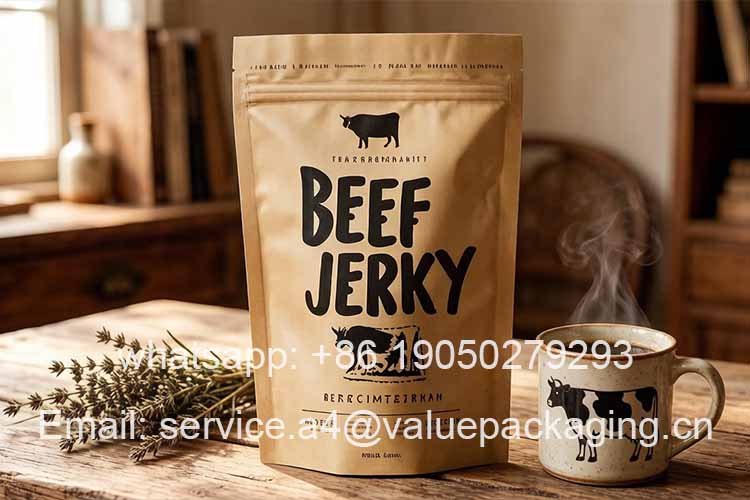
Another developing trend in sustainable beef jerky packaging is the use of compostable flexible materials. These materials are often derived from renewable or bio based resources and are designed to decompose under industrial composting conditions.
Common compostable materials include:
- Metallized BOPLA Membrane
- Cellulose or coated paper structures
- PVDC Coated Cellulose Film
- Metallized Cellulose Paper
- Metallized paper
- Kraft-paper
In practical applications, these materials are often laminated together to improve durability, sealing strength, grease resistance, and barrier performance.
Typical compostable structures include:
Typical compostable structures include:
- Cellulose/Metallized Cellulose/PLA+PBAT Membrane
- Kraft Paper/Metallized Cellulose/PLA+PBAT Membrane
- Kraft Paper/Cellulose/PLA+PBAT Membrane
- Kraft Paper/Cellulose/PBS Membrane
- Metallized Paper/Cellulose/PLA+PBAT Membrane
Because beef jerky products contain fats and oils, compostable packaging structures must still provide adequate oxygen barrier properties to help reduce oxidation and preserve flavor quality during shelf life.
6. Conclusion
As consumer demand for high protein snacks and sustainable packaging continues to grow, beef jerky packaging is gradually evolving toward higher barrier performance, improved convenience, and more environmentally responsible material solutions. Modern beef jerky packaging must balance oxygen protection, grease resistance, shelf presentation, transportation durability, and sustainability requirements while maintaining freshness, flavor stability, and product safety throughout the supply chain.
With the ongoing development of recyclable mono material structures, compostable laminates, and premium flexible packaging formats, beef jerky packaging continues to adapt to changing market trends and consumer expectations across retail, outdoor snack, and functional protein food applications.