

In biscuit packaging, quality assurance relies on a range of performance evaluations, including seal strength testing, moisture barrier performance, and compression resistance. However, before these properties can be accurately assessed, impact resistance must be verified as the first critical requirement. Because biscuits are inherently fragile and highly sensitive to shock, drop testing is a fundamental method for validating biscuit packaging reliability.
Throughout filling, packing, warehousing, and distribution, biscuit packages are subjected to frequent handling and unavoidable drops. Even low-impact events can cause internal breakage, excessive crumb formation, or damage to package seals. Without sufficient impact resistance, these issues may not be detected through standard laboratory evaluations, leading to packaging failures that only emerge under real handling and logistics conditions. Drop testing helps identify these risks early, ensuring biscuit packaging performance is verified where it matters most.
1.Why Biscuit Packaging Is Highly Sensitive to Drop Impact
Unlike products that can tolerate deformation, biscuits rely entirely on packaging to absorb and disperse external forces. Damage may not always be visible from the outside, but internal breakage directly affects consumer experience and brand perception.
Internal Product Fragility
Biscuits crack easily under sudden acceleration or deceleration. When a package is dropped, internal movement can cause biscuits to collide with each other or with rigid packaging surfaces, leading to breakage even when the outer pack remains intact.
Seal Integrity Under Dynamic Stress
Drop impact transfers force to the sealed areas of the package. Weak or inconsistent seals may partially separate during impact, increasing the risk of moisture ingress or gradual leakage during storage.
Structural Weak Points at Edges and Corners
Edges and corners experience concentrated stress during drops. Repeated impacts can weaken these areas over time, creating micro-damage that compromises packaging performance later in the supply chain.

2.Applying Drop Testing to Biscuit Packaging
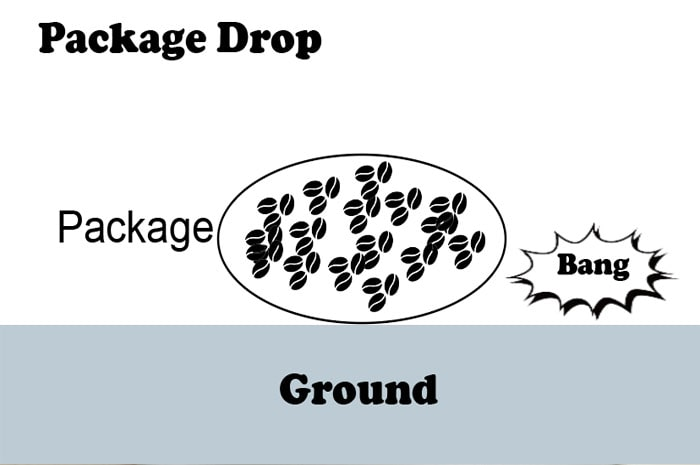
Drop testing is used to replicate real-world handling and logistics conditions rather than idealized laboratory scenarios. For PET/LDPE biscuit pouches, test samples are filled with actual biscuits or equivalent loads to accurately reproduce internal product movement during drops and handling.

The combination of PET and LDPE in the laminate provides a balance of rigidity and flexibility: the PET layer adds structural support to resist punctures and maintain shape, while the LDPE layer absorbs impact energy and ensures seal reliability.
Testing follows widely recognized standards such as ASTM and ISTA to ensure results are both realistic and repeatable.
ASTM D5276 specifies free-fall drop heights that simulate the shocks encountered during manual handling, packing line transfers, and warehouse operations. ISTA protocols introduce multiple drop orientations—flat, edge, and corner impacts—to evaluate cumulative damage rather than single-event failures. These testing conditions are particularly relevant for PET/LDPE biscuit pouches, where repeated minor impacts can compromise the laminate’s protective barrier or the integrity of the seals more than a single severe drop.
3.Practical Drop Testing Methodology for Biscuit Packaging
Representative Sample Selection
Samples are randomly taken from production to reflect actual manufacturing conditions, ensuring that results are relevant to real shipments rather than ideal samples.

Realistic Drop Heights
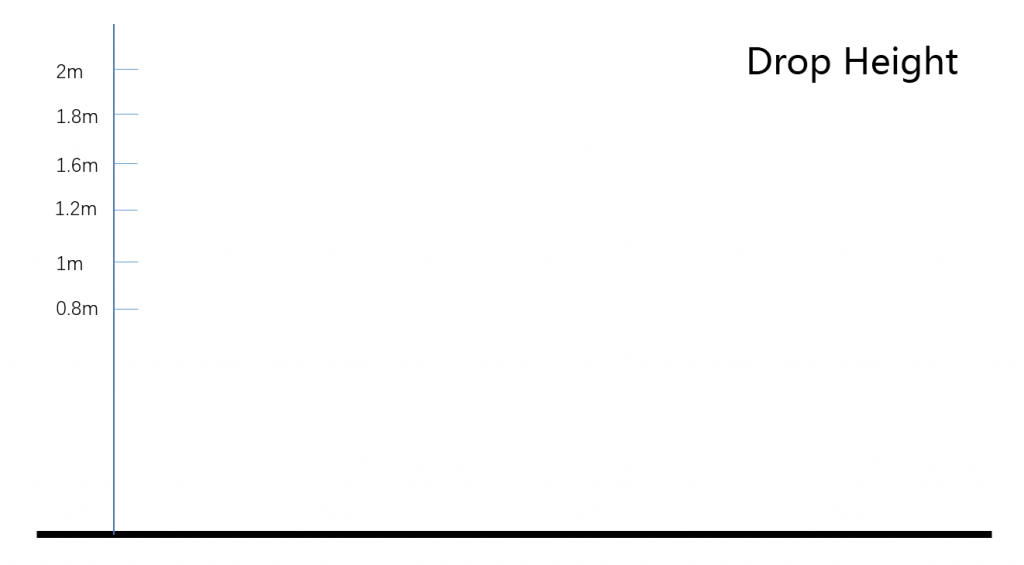
Drop heights are selected based on package weight, handling scenarios, and retail replenishment conditions. Larger family packs or bulk formats are tested under higher drop conditions to reflect warehouse and pallet handling.
Multiple Orientations and Repetitions
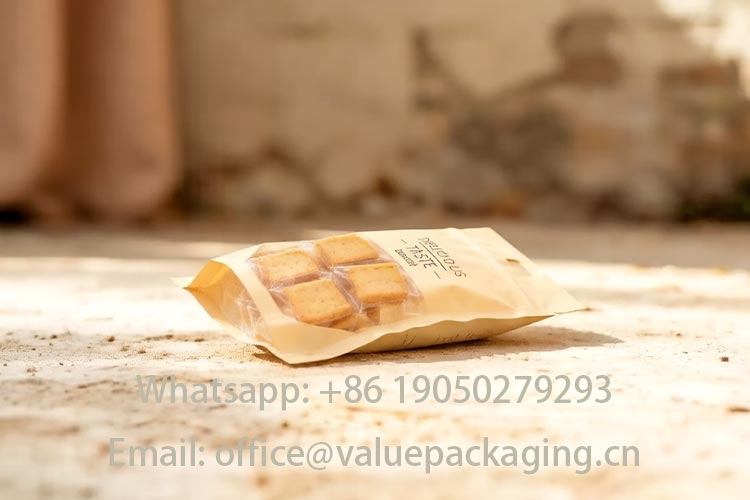
Packages are dropped in various orientations, with particular attention to edges and corners, which are most susceptible to impact-related damage.
Post-Test Evaluation
After testing, packaging is inspected for seal separation, deformation, and film damage. Biscuits are examined for cracking, fragmentation, and excessive crumb generation. Only packages that remain fully sealed and protect product integrity are considered to pass.
4.The Benefits of Drop Testing in Biscuit Packaging
Protecting Biscuit Integrity During Handling
Biscuit products are fragile and prone to breaking or crumbling under impact. Drop testing simulates real-world handling conditions, allowing manufacturers to identify weak points in the packaging, such as corners, seals, or internal cushioning. By ensuring the packaging can withstand shocks and drops, biscuits arrive intact, preserving their shape, texture, and overall quality.
Maintaining Seal and Barrier Reliability
Beyond visible damage, repeated minor impacts can gradually weaken seals or create micro-defects that allow moisture ingress or contamination. Drop testing verifies that packaging maintains seal strength and barrier performance under cumulative stress. This is especially important for structures where edges and corners are most vulnerable, supporting shelf life stability and consistent product performance.

Optimizing Packaging Structure and Materials
Drop testing provides valuable insights into how packaging materials and structures behave under impact stress. For PET/LDPE pouches, testing confirms whether the PET layer delivers sufficient rigidity while the LDPE layer absorbs impact energy effectively. These results support packaging optimization, helping achieve a balance between protection, material efficiency, and cost control.
Reducing Logistics Losses and Strengthening Brand Trust
By identifying potential failure points before products leave the factory, drop testing helps reduce damage during transportation, pallet movement, and retail handling. Fewer damaged packages lead to lower return rates, improved handling efficiency, and smoother distribution operations. Consistently delivering intact biscuits reinforces brand credibility and builds long-term trust among retailers and consumers.
Conclusion

Drop testing reveals hidden weaknesses that visual inspection and static testing cannot detect. For biscuit packaging, it confirms whether the package can protect fragile products from cumulative impact throughout the supply chain.
By validating impact resistance first, biscuit packaging quality is assessed where it matters most: under real handling conditions, not controlled assumptions.