
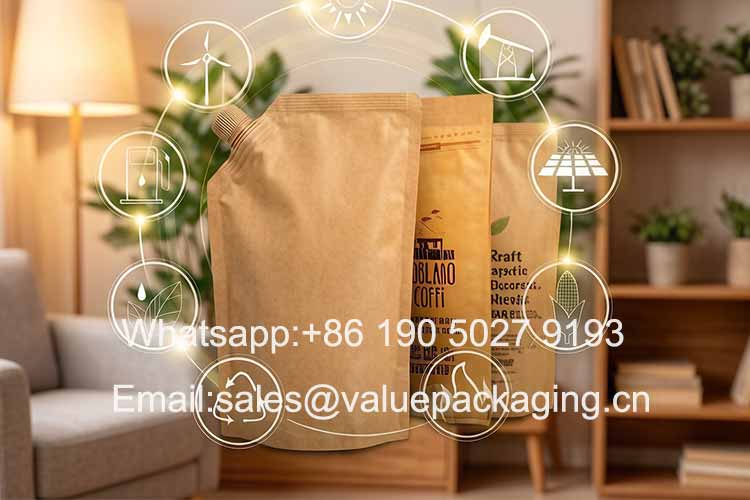
As Eco-friendly becomes a central concern for food brands worldwide, sugar packaging is undergoing a transformation. Terms like “green,” and “sustainable” appear on countless sugar bags, yet many brand owners and consumers struggle to understand what these claims truly mean in technical terms.
So how Eco-friendly is your sugar packaging, really? The answer depends on material composition, barrier requirements, end-of-life options, and how environmental impact is measured across the entire packaging lifecycle.
In this article, we will examine the key factors that determine the environmental profile of sugar packaging and explain how brands can make informed decisions that deliver genuine, credible sustainability to their businesses.
1. Why Sugar Packaging Presents Unique Eco-friendly Challenges
Sugar, whether white refined, brown, caster, or specialty variants, is highly hygroscopic,meaning it readily absorbs moisture from the environment. This moisture sensitivity creates specific packaging requirements that complicate Eco-friendly efforts.
At present, most traditional sugar bags rely on multilayer film structures that combine different materials to achieve necessary protection. These typically include:
- PET film
- BOPP film
- PE film (polyethylene – LDPE, LLDPE, HDPE)
- Metallized films (VMPET)
- Kraft paper
- Barrier coating films (AlOx-PET,SIOx-PET)
While kraft paper contributes positively to the Eco-friendly narrative, the recyclability and reusability of kraft paper composite laminates require further investigation. Reducing fossil-chemical film materials certainly helps achieve better sustainable sugar packaging. However, sugar packaging sustainability is not simply paper versus plastic. It must balance product protection, environmental impact, and long-term business viability.
2.Understanding Common Foil Structures for Sugar Package
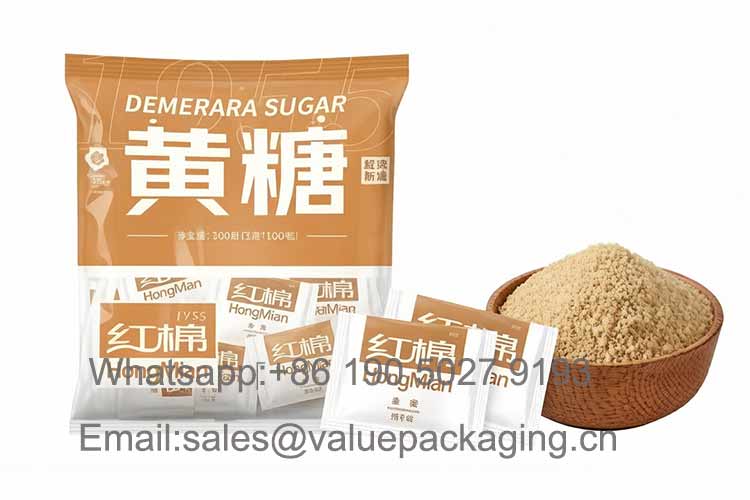
To properly evaluate the eco-friendliness of sugar packaging, we need to examine common foil structures used in flat bottom bags.
Traditional Fossil-Chemical Sugar Bags
These laminates provide excellent moisture barriers and mechanical strength but are not recyclable in most existing waste management systems. From a performance standpoint, these structures are highly effective for protecting sugar, but environmentally complex.
Here enters kraft paper as a potential solution.
3. The Role of Kraft Paper in Sustainable Sugar Packaging
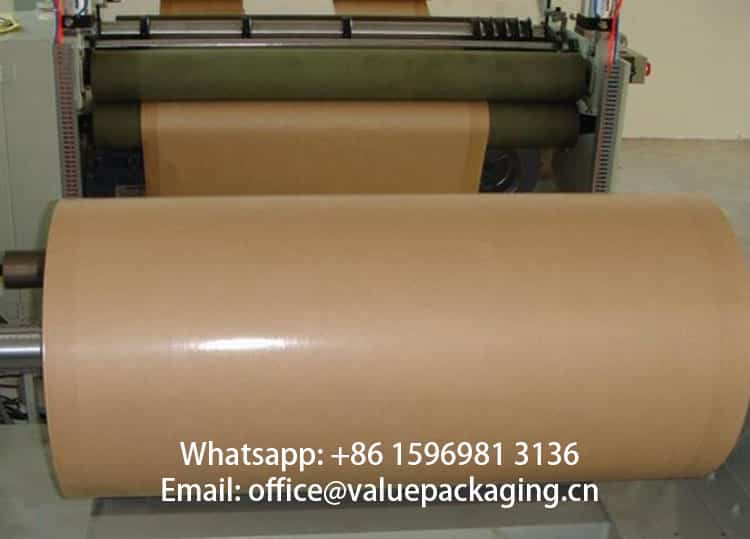
Kraft paper is fully recyclable, biodegradable, and compostable. In the sugar packaging market, bags incorporating kraft paper are often perceived as more sustainable choices.
Sustainability Advantages of Kraft Paper
- Made from renewable wood fibers
- Lower plastic content by weight
- Positive consumer perception and brand image
- Excellent print surface requiring less ink coverage
- Natural aesthetic aligns with premium sugar brands
However, using kraft paper in sugar packaging also faces practical limitations:
- Kraft paper alone provides no moisture barrier
- Must be laminated with plastic or barrier coatings for sugar protection
- Lamination reduces overall recyclability
- More expensive than standard plastic films
Common kraft paper foil laminates for sugar include:
- Kraft Paper / PE
- Kraft Paper/Poly Coating
- Kraft Paper/PET/LDPE
- Kraft Paper/VMPET/LDPE
- PET/Kraft Paper/LDPE
Kraft paper improves sustainability perception and reduces fossil-based material usage, but it does not automatically make a sugar bag ultimately environmental-friendly. The plastic layers necessary for moisture protection still present end-of-life challenges.
4. Mono-Material Sugar Bags: A Recyclable Alternative
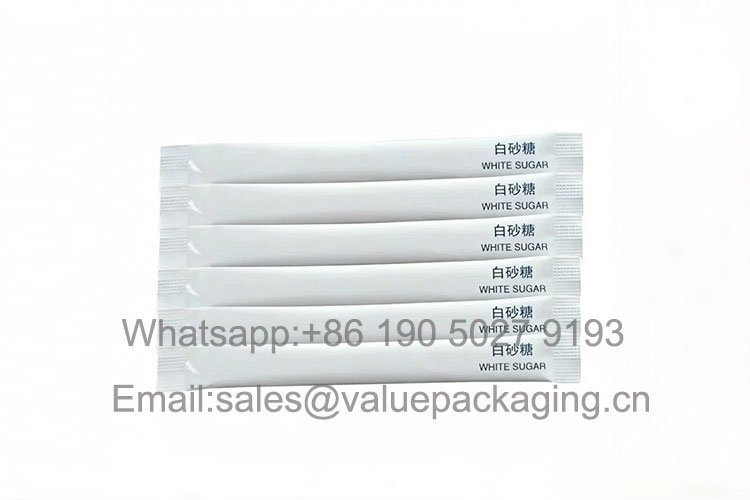
Mono-material packaging—typically all-PE structures,represents a significant advancement in recyclable sugar packaging. These bags are designed to be processed in existing plastic recycling streams.
a. Current Mono-Material Options for Sugar Packaging
At present, we utilize various polyethylene-based film materials to produce fully recyclable sugar flat bottom bags:
- MDOPE Film
- BOPE Film
- LLDPE Film
- HDPE Film
- EVOH-PE Film
- APE Film
①MDOPE/LDPE
②BOPE/LDPE
For decades, PET/LDPE has been the standard structure for sugar packaging due to its strength, printability, and moisture protection. However, as sustainability and recyclability become essential requirements, packaging structures based entirely on polyethylene, such as MDOPE/LDPE and BOPE/LDPE, are increasingly replacing PET/LDPE in sugar applications.
As a flexible packaging manufacturer, we help brands evaluate these structures based on performance, recyclability, and real-world usability, not just material trends.
| Structure | PET/LDPE | MDOPE/LDPE | BOPE/LDPE |
| Polymer type | Multi-material | Mono-material PE | Mono-material PE |
| Recyclability | Limited | PE recyclable | PE recyclable |
b. Advantages of Mono-Material PE Bags
- Truly recyclable in existing municipal systems
- No mixed polymers or aluminum foil
- Can be reprocessed into new plastic products
- Increasingly accepted in curbside recycling programs
c. Limitations to Consider
Compared to metallized or aluminum foil bags, mono-material laminates provide:
- Lower moisture barrier performance
- Potentially shorter shelf life in humid environments
- May require additional protective measures for export or long distribution
Mono-material bags are an excellent choice for sugar sold in controlled retail environments with reasonable turnover but may not suit all markets or climate conditions.
5. Compostable and Biodegradable Sugar Bags
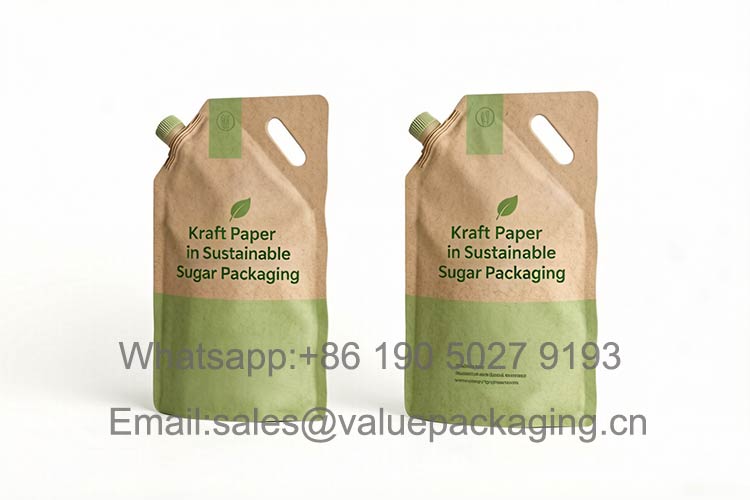
Compostable materials offer another pathway for the sugar industry to achieve greater eco-friendliness, even when municipal recycling infrastructure is unavailable. These materials break down into nutrients that enrich soil.
a. Typical Compostable Film Materials
b. Reality Check on Compostable Claims
While the films themselves are compostable, printing inks and lamination adhesives are not yet fully compostable. However, these components represent only 2-5% by weight, making the overall package substantially more biodegradable than traditional structures.
Critical consideration: If compostable packaging ends up in landfills or general waste streams, its environmental advantage is largely lost. Effective composting infrastructure and consumer education are essential. Claims must be carefully communicated to avoid greenwashing accusations.
6.Zippers and Accessories: Hidden Sustainability Considerations
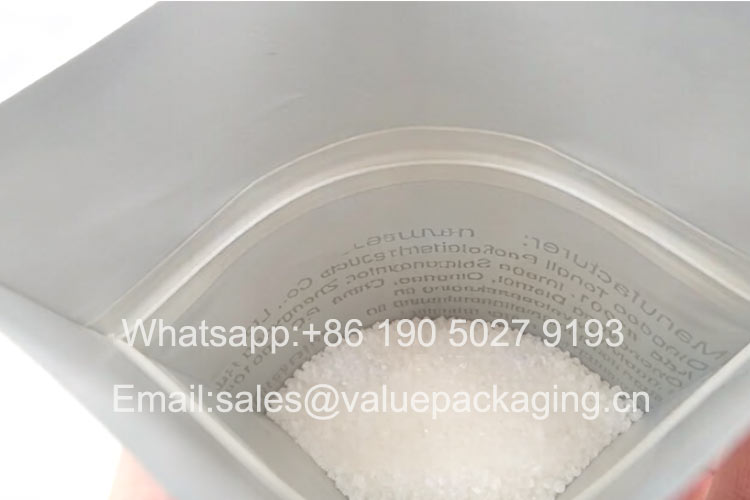
The zipper closure system significantly impacts overall recyclability:
a. Recyclable Options
- PE zippers (EPE, PPE) match mono-material PE sugar bags perfectly
- PP zippers work well with PP-based structures
b. Compostable Developments
- PLA zippers have been developed for compostable sugar bags
However, tear notches and easy-open features cannot yet be achieved with fully compostable materials under current technologies. We will keep our clients informed as innovation progresses in this field.
7.Conclusion
Eco-friendly sugar packaging is not defined by a single material choice or certification label. It emerges from thoughtful design, honest evaluation of trade-offs, and responsible communication.
Whether your sugar flat bottom bags use kraft paper, mono-material PE films, compostable structures, or traditional multilayer laminates, sustainability depends on how well the packaging:
- Protects the product from moisture and contamination
- Minimizes unnecessary material usage and waste
- Fits available infrastructure for end-of-life management
- Communicates honestly about environmental attributes
In sugar packaging, the most sustainable bag is not necessarily the one with the boldest claim—but the one that protects sugar effectively, minimizes unnecessary environmental impact, and communicates its choices clearly and responsibly to consumers.
At Tongli Packaging, we work with sugar brands to navigate these complex decisions. Whether you’re exploring kraft paper laminates, mono-material recyclable structures, or compostable options, we provide technical guidance, testing support, and honest assessments of environmental trade-offs.
You are welcome to reach us for further discussion whenever you have ideas to customize, and together we will determine how sustainable we can make your expected sugar packaging.