
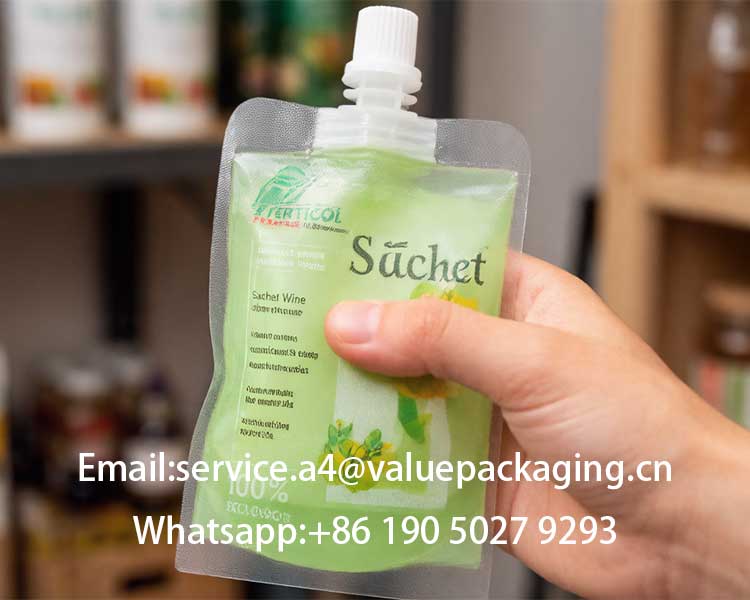
In the packaging business, a test is not a rare thing. For one packaging bag, it may need to experience many times testing to ensure if it’s qualified or not, like drop test, airtight property test, anti-pressure test, and so on. However, before all these tests, packaging must first prove one fundamental capability: the ability to survive physical impact and remain undamaged during packaging and transportation.
Not only for alcohol drinks packaging, but also for every packaging pouch, is it critical before any other packaging test. It establishes whether a package can physically protect the product under real-world conditions. Without passing this basic requirement, all subsequent tests lose practical meaning.
1. The Real-World Challenge in Alcohol Drinks Packaging
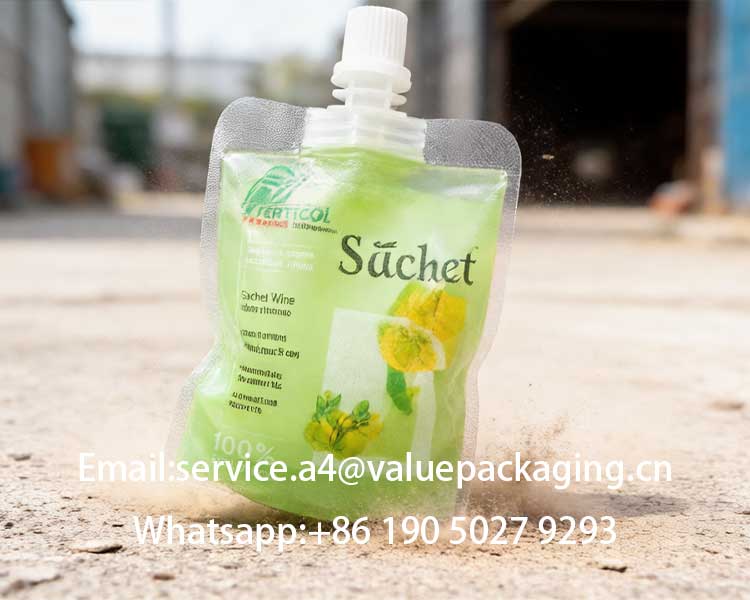
Spout stand-up sachets are a normal and convenient packaging choice for alcoholic drinks. But for this type of bag, features make them vulnerable:
- Bottom Gusset and Base Seal
When a filled pouch is dropped, the entire liquid weight impacts the bottom area. Weak base seals or insufficient sealing strength can cause cracking or leakage during the first few drops. - Spout Welding Area
Because the spout is rigid and the pouch body is flexible, impact force concentrates at the welding interface. Poor spout bonding may lead to leakage or spout detachment, especially when the pouch lands on the spout corner. - Side Seals
During impact, internal liquid movement puts sudden stress on the side seals. Inconsistent sealing or weak lamination can result in seal opening or slow leakage.
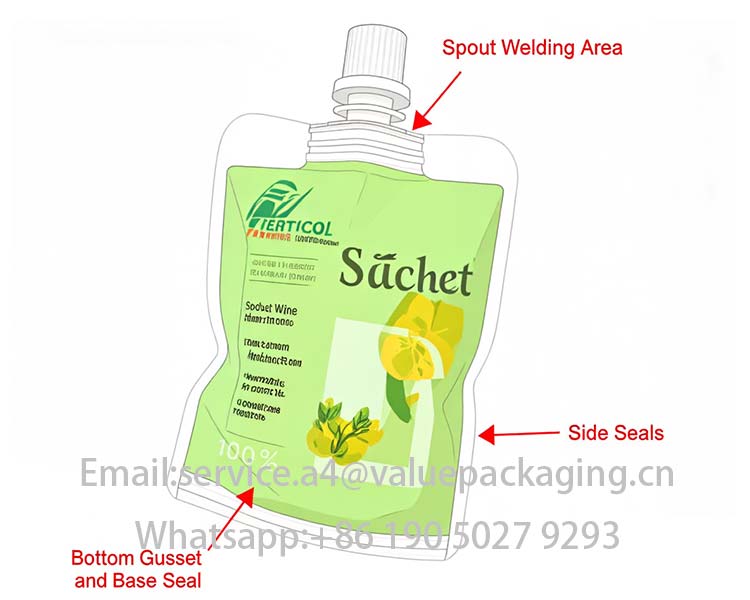
A failed pouch doesn’t just spill beverage—it erodes consumer trust and is harmful to consumers’ interests. So to ensure these three key areas of stress will not break after withstanding a certain amount of physical impact, a drop test is an effective tool for evaluating packaging integrity.
2. How To Conduct A Drop Test
In our factory, drop testing is both art and science. We randomly select samples from each batch and fill them with liquid or fill in the corresponding products.
The specific procedures are as follows:
- Drop height (0.8 m, 1.0 m, 1.2 m, 1.5 m, 1.6 m)
- Drop orientation (flat drop, bottom drop, side drop)
- Number of drops (3 ~ 5 times)
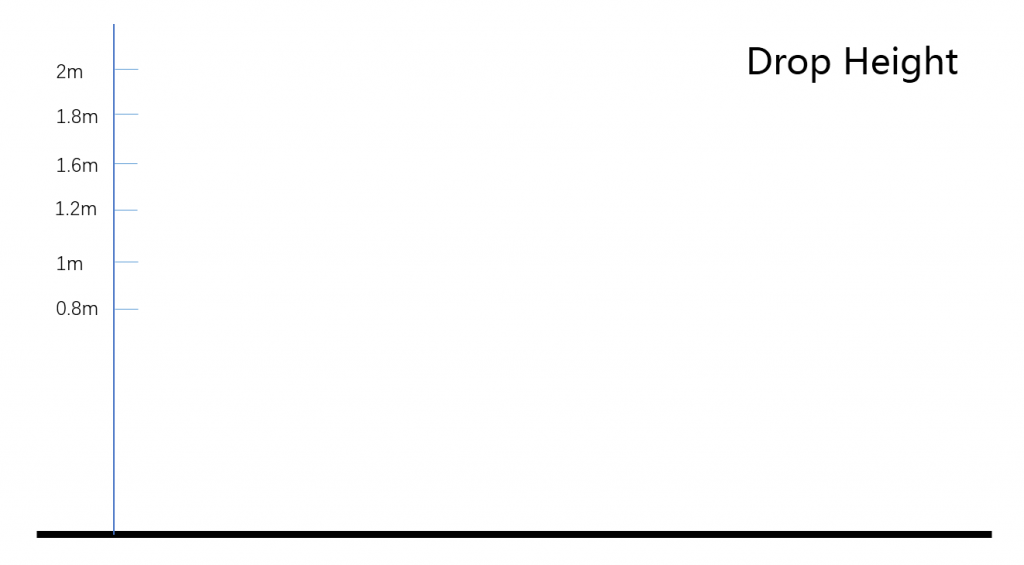
To test the sturdiness of the bag from various angles, pouches are dropped from realistic heights and in multiple orientations: bottom, side, and spout corner. Any damage detected in drop testing triggers immediate analysis and process adjustments to ensure consistent quality.
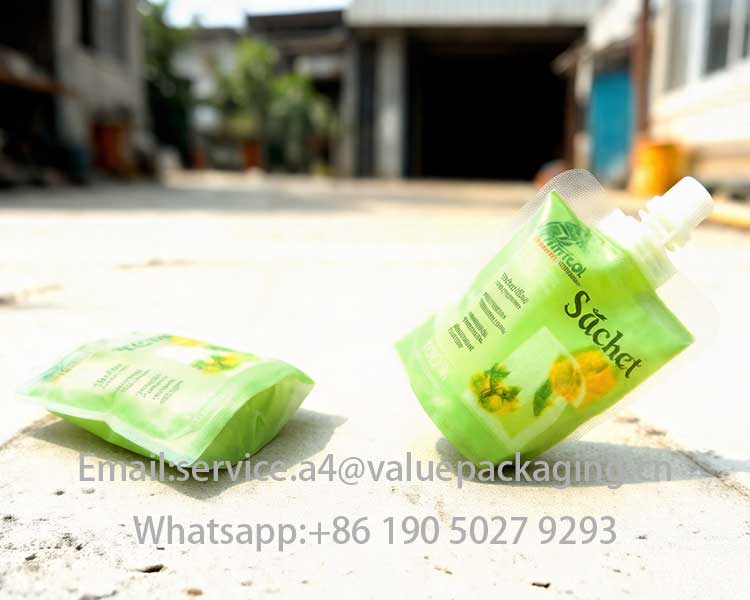
3. The Process Behind Our Drop Testing
Step 1: Prepare the Sample Pouches
We randomly select 20 pouches from the bulk order (usually from bundles of 50). Each pouch will be filled with the actual beverage or a substitute material such as water to simulate liquid weight and movement. This ensures consistent and repeatable results.
Step 2: Determine the Drop Height
- Retail-size pouches: 0.8–1.2 meters, simulating drops from tables, counters, or conveyor belts.
- For larger industrial or export bags, heights of up to 2 meters may be used to simulate warehouse or pallet drops.
Step 3: Decide Drop Orientation
Each pouch is dropped multiple times in different orientations to cover all critical stress points:
- Bottom flat: tests base gusset and bottom seal strength
- Side flat: tests side seals and lamination integrity
- Spout corner: tests the most vulnerable area around the spout
Some tests may emphasize a single orientation depending on the pouch design or customer requirements.
Step 4: Inspect the Results
Our inspectors carefully examine each sample pouch after the planned drops to verify that it maintains structural integrity, prevents leakage, and functions as intended. You can also watch a demonstration video of our standard drop test procedure in the plant for reference.
4. Why Drop Testing Always Comes First
Before measuring barrier performance, shelf life, or visual appeal, the pouch must physically survive the journey.
- Early detection of weak points prevents costly downstream failures
Potential issues are identified and corrected before mass production, reducing product loss, claims, and disruptions in your supply chain. - Consistency across batches ensures every pouch reaching consumers meets the same high standard
This protects brand reputation, strengthens consumer trust, and supports smooth logistics across markets. - Clear testing standards simplify communication between brand owners and packaging suppliers
Shared criteria reduce misunderstandings, improve collaboration, and help both sides align on quality expectations from the start.
5. The Brand and Consumer Benefit
- Fewer wasted products during shipping and handling
Pouches that pass rigorous drop testing are far less likely to leak during transport. This reduces product loss, minimizes returns or claims, and lowers overall operational costs. - Peace of mind for consumers—no spills, no leaks
When pouches arrive intact, consumers can enjoy the beverage without mess or safety concerns. This enhances the user experience and strengthens trust in your brand’s quality. - Stronger shelf presence—pouches maintain shape, even after handling
Durable pouches retain their structure and visual appeal, even after stacking, shipping, or store handling. A consistently attractive package reinforces brand image and draws attention on retail shelves. - Global logistics confidence—pouches survive long-distance transport and rough handling
Whether shipping domestically or internationally, these pouches withstand the stresses of long-distance transport, pallet stacking, and variable conditions. This reliability ensures products reach markets safely, maintaining supply chain efficiency and brand reputation.
6. Integrating Drop Testing into Daily QC
Drop testing isn’t a one-time procedure; it is fully integrated into our quality control workflow to ensure every pouch meets the highest standards of reliability.
- Seal strength verification
Seals are tested to confirm they can withstand the stresses of filling, transport, and handling, preventing leaks or rupture in finished pouches. - Routine multi-orientation drop tests
Each batch undergoes repeated drops from different angles, including bottom, side, and spout corner, to simulate real-world handling conditions. - Spout function and leakage checks
The spouts are examined for proper attachment and leakage resistance, ensuring they remain fully functional even after impact.
By embedding drop testing throughout the production process, we guarantee that only robust, durable, and reliable pouches leave our plant. This systematic approach not only minimizes product loss and damage during shipping but also reinforces brand trust and ensures a consistent, high-quality experience for every consumer.
7. Conclusion
Drop testing might appear simple, but it is the cornerstone of reliable packaging for alcoholic beverage spouted stand-up pouches.
Each successful test confirms that the pouch can withstand real-world handling, that the spout remains secure, and that the beverage arrives exactly as intended. By prioritizing drop testing before any other assessment, we ensure every pouch leaving our plant meets the highest standards of safety, durability, and quality. In doing so, we protect both the product and the trust consumers place in your brand.