
In the real world of coffee packaging, perfection isn’t just about how the bag looks — it’s about how it performs.
Before a bag is ever opened by the consumers, it should be strong enough to survive every step of its journey: from filling lines and logistics to warehouse stacking, goods-shelf presentation and then finally the consumer’s hands. That’s where the drop test comes in — a deceptively simple yet essential quality control method that marks the first step toward true packaging excellence.

1. The Hidden Challenge in Coffee Packaging
Coffee is a delicate product. From the moment beans are roasted, oxygen, moisture, bacteria and light can all degrade flavor and aroma. Packaging is therefore not just a container — it’s a protection system.
But even the best barrier films and degassing valves mean little if the bag itself is not strong enough to suffer the possible damages before it comes into the consumers’ hands. During transport, bags are routinely dropped, tossed, or crushed. A single weak seal or brittle film layer can cause a rupture — spilling product, compromising freshness, and damaging brand reputation.
That’s why we now view drop testing as an indispensable checkpoint in our pursuit of packaging excellence in our manufacturing plant.

2. What Exactly Is a Drop Test?
A drop test simulates the mechanical shocks a coffee bag experiences during handling and transportation. It involves dropping a filled, sealed coffee bag from a set height onto a hard surface to evaluate its resistance to impact.
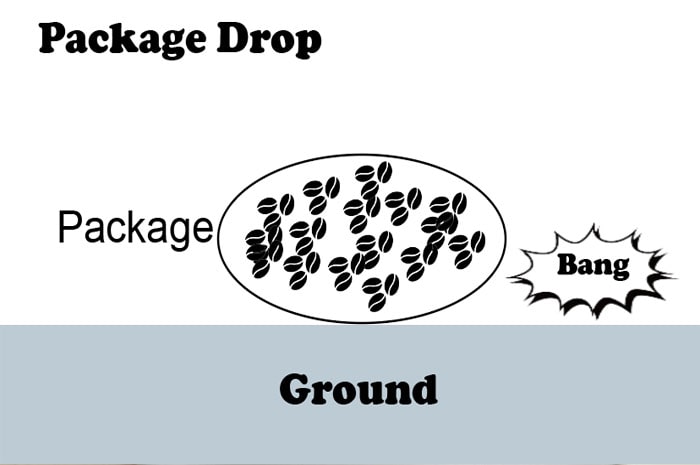
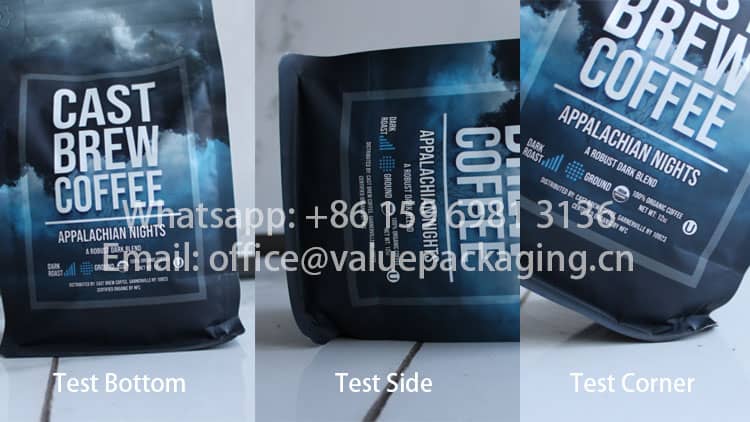
To ensure all the sides of the package are sufficiently tested, usually we need to drop the package with the intended side touching the ground first. 3 orientations are considered in our plant.
- Flat on the bottom (to test bottom gusset and seal strength)
- Flat on the side (to test side seal)
- On a quad-seal corner (to test the most vulnerable point)
3. Why It’s the First Step Toward Excellence
Many people think packaging excellence begins with visual design or material selection. In reality, those come later. The first proof of excellence lies in mechanical reliability — the packaging’s ability to protect the product physically.
Here’s why the drop test deserves to come first:
a. It Tests Real-World Performance
The drop test mimics real conditions: the courier dropping a carton, the warehouse worker stacking pallets, or the consumer accidentally letting a bag fall on the kitchen floor. No simulation better represents these everyday hazards.
b. It Exposes Weak Points Early
A failed drop test tells engineers exactly where a bag’s design is vulnerable — whether it’s the bottom gusset, seal width, or zipper strength. By bursted packages, we are able to analyze and improve our craftsmanship to produce the bulk order in an expected way.
c. It Builds Trust Through Consistency
No coffee brand wants their coffee to be revealed in dangerous situstions before it reaches to the consumers, and this job will have to be fulfilled by a trustworthy packaging supplier. As a high-experienced manufacturer of coffee bags, we have incorporated the drop test into our daily QC work, and ensure every order is produced to meet the highest standard. The trust will extend to the market in some way.
4. How the Drop Test Is Performed in Our Plant
Let’s look at how our team typically carry out this test in our plant.
Step 1: Prepare the Sample Bags
One sample bag will be picked out from one bundle (usually 50 pcs) randomly, and we are going to collect 20 bags from the bulk order. Each bag will be filled with coffee beans or similar materials, and in our factory, we are going to fill plastic granules into the bags.
Step 2: Decide the Drop Height
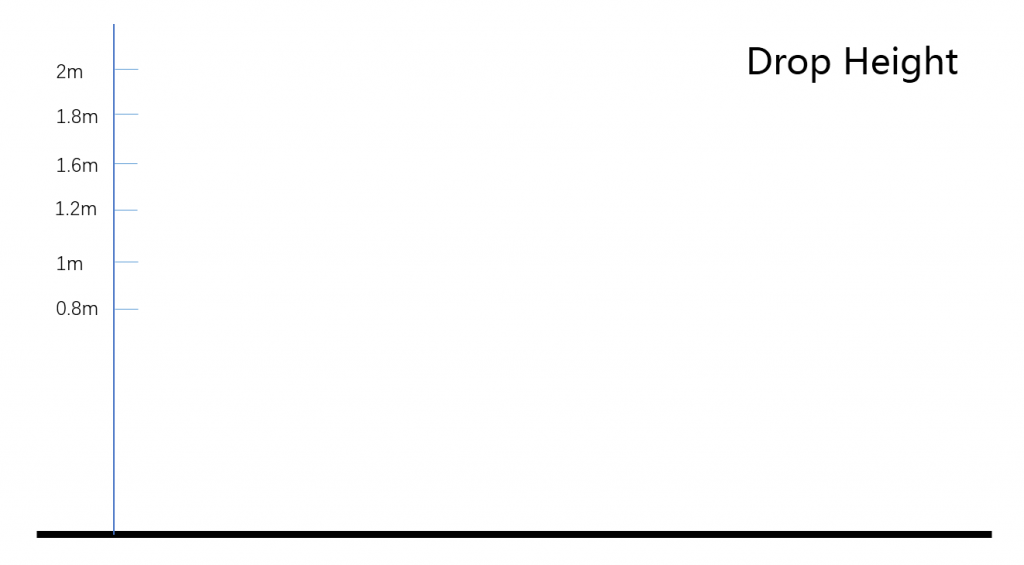
- For retail-size coffee bags, the typical height is 0.8 to 1.2 meters — simulating the distance from a table or conveyor belt to the floor.
- For larger industrial or export bags, heights of up to 2 meters may be used to simulate warehouse or pallet drops.
Step 3: Decide How to Drop
Generally, each bag is dropped several times in different orientations, bottom, side and corner. Sometimes, drop test in one orientation should be emphasized.
Step 4: Examine the Results
Our inspectors will check on each sample bag after the intended drops and see if the bag fulfills its purpose. Here, you are advised to watch the video of regular drop test on coffee in our plant.
If a bag remains fully intact after multiple drops, it passes. Otherwise, our engineers have to document the failure and analyze for an improved craftsmanship.
5. How Coffee Brands Benefit
1. Reduced Product Loss
A bag that passes drop testing won’t burst or leak during transit, cutting waste and saving costs.
2. Improved Consumer Confidence
Consumers notice when packaging feels solid and secure. The subconscious message: this brand cares about quality.
3. Extended Shelf Appeal
Bags that resist damage also maintain shape and appearance on retail shelves — crucial for brand image and perceived freshness.
4. Easier Export and Logistics
Coffee exporters rely on durable packaging to withstand long-distance transport and rough handling in containers. Drop testing ensures confidence across markets.
8. Integrating Drop Testing Into Quality Control
The drop test provides valuable insights beyond simple pass-or-fail results. It helps us to understand how and why a bag fails — that’s the reason why our company is committed to continuous improvement, and now moving steadily toward a sustainable and reliable supply for our customers.
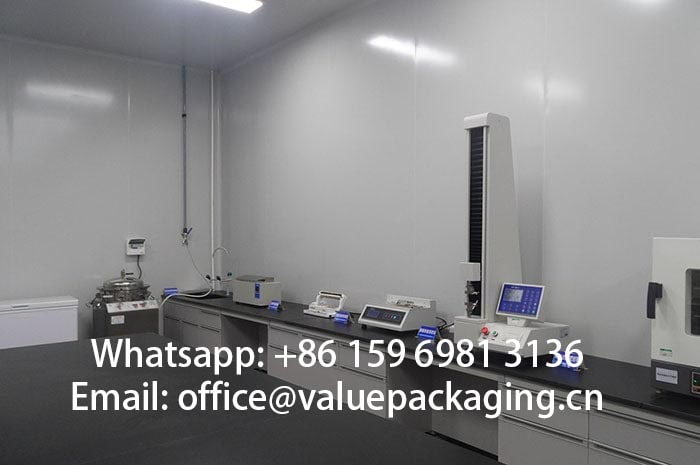
For us, it’s part of a systematic QC process.
It requires us to perform thorough inspection on the incoming materials, thickness uniformity and surface wetting tension.
It provides insight to the unexpected factors that may cause bad bonding strength between each layer, which are not visiable to the naked eye.
It provides an apparent proof to the seal quality in the continous output of the orders.
By making drop testing an early and routine part of QC, our team ultimately avoid sending bad bags out of our factory.
9. Conclusion
Packaging excellence isn’t achieved through luck or appearance — it’s earned through performance and expertise. The drop test may seem humble, but it’s the foundation of durable, reliable, and trustworthy packaging.
By integrating drop testing as the first step in quality assurance, we ensure that their bags not only look beautiful but also stand up to the realities of the supply chain.
Every successful drop test is a quiet guarantee: that the coffee inside remains safe, fresh, and worthy of the brand it represents. And that’s why, in the pursuit of coffee packaging perfection, drop testing truly is the first step toward excellence.