
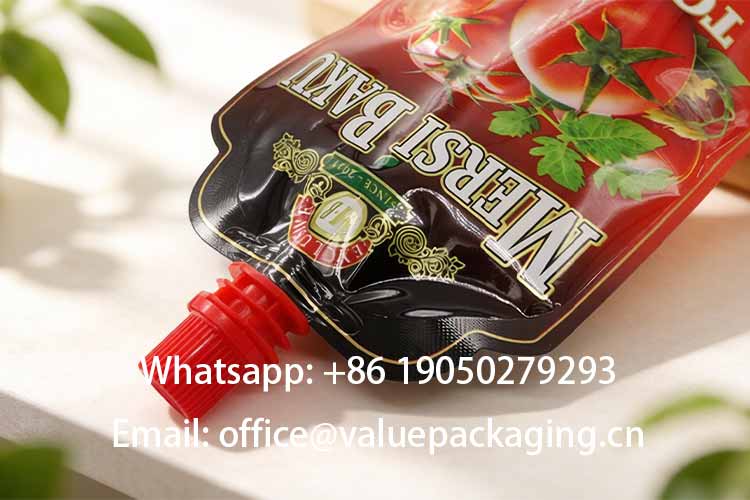
In the global sauce market, sustainability has become an increasingly important factor influencing ketchup packaging and overall sauce packaging decisions. As consumers become more aware of environmental issues, brands are under growing pressure to adopt sustainable packaging solutions that reduce waste while maintaining product safety and convenience.
Ketchup is one of the most widely consumed sauces worldwide, making ketchup packaging a key factor in both product protection and environmental impact. To develop more sustainable ketchup packaging, it is essential to first understand the current packaging landscape, its limitations, and the emerging materials and technologies that may shape the future of eco friendly sauce packaging.
1.The Current Landscape: Traditional Ketchup Packaging
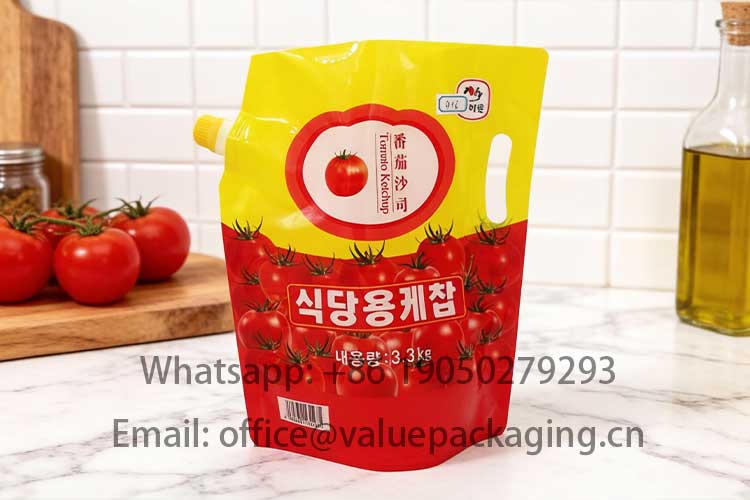
Ketchup is a viscous sauce that requires packaging with strong sealing performance, oxygen resistance, and leak prevention. To meet these requirements, several types of packaging are commonly used in the market.
Flexible ketchup pouches are increasingly used in food service, takeaway meals, and portion controlled packaging. These pouches are lightweight and convenient, making them ideal for on the go consumption.
Common Packaging Materials for Ketchup:
These materials are rarely used alone. In most ketchup pouch packaging they are combined into multilayer structures to achieve the necessary barrier protection and sealing strength. Different layers work together to provide mechanical strength, sealability, and product protection throughout storage and transportation. This layered design helps ensure that the packaging can withstand handling, pressure, and long distribution chains without leakage or damage.
2.Why Traditional Ketchup Packaging Falls Short in Sustainability
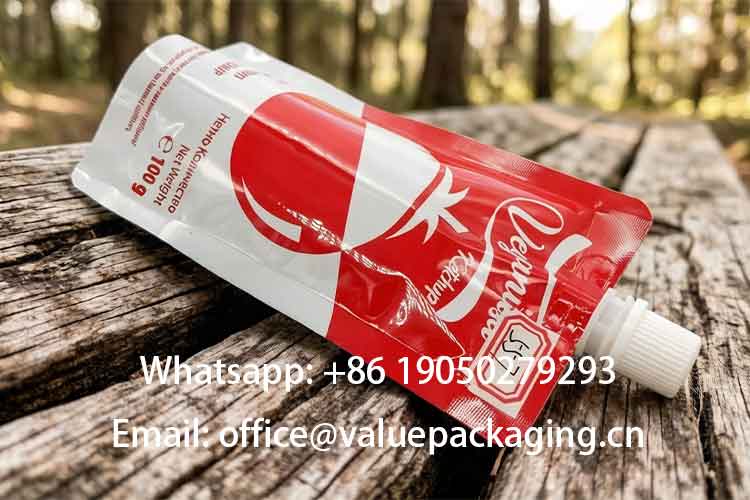
To meet the demanding protection requirements of ketchup, manufacturers often rely on multilayer laminated structures. Ketchup contains water, acids, and natural pigments that can be sensitive to oxygen, light, and contamination, making barrier performance essential. By combining different films and functional layers, these laminated structures can provide improved strength, sealing reliability, and extended shelf life, ensuring that the product remains stable during storage, transportation, and distribution.
Typical structures often include multilayer laminates such as:
- PET / AL / PE
- BOPP / VMPET / PE
- PET / VMPET / PE
- PET/VMPET/LDPE
- PET/AL/PA/LDPE
- PA/PA/LDPE
- PET/AL/PET/LDPE
- BOPP/VMPET/PA/LDPE
These multilayer combinations allow different materials to work together to achieve the desired packaging performance. Structural layers such as PET, BOPP, or PA help provide strength and stability, while aluminum foil or metallized films improve barrier properties against oxygen, moisture, and light. The inner PE or LDPE layer usually serves as the sealing layer, ensuring secure closure and safe contact with the sauce.
Through this layered design, ketchup pouches can maintain product freshness and prevent leakage during long distribution cycles. However, while these structures perform well in protecting the product, the combination of multiple materials also makes recycling more difficult, which has become a growing concern as brands seek more sustainable packaging solutions.
3.Moving Toward More Sustainable Ketchup Packaging
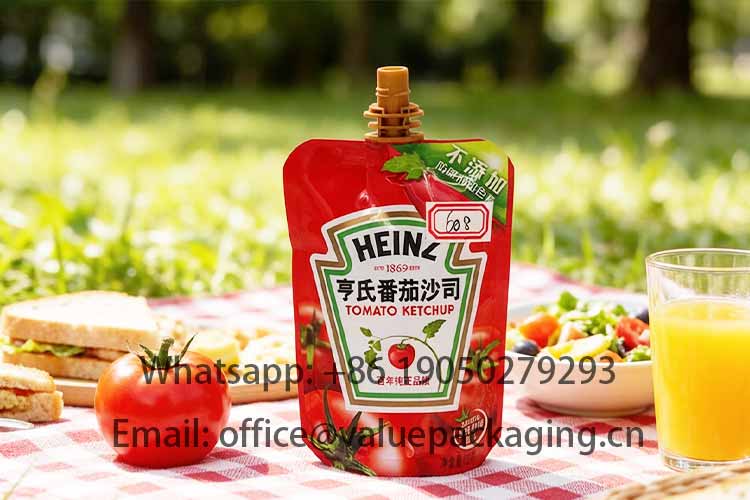
To improve environmental performance, packaging manufacturers and condiment brands are increasingly exploring new approaches to make ketchup packaging more sustainable. As environmental awareness grows, companies are seeking solutions that can reduce material complexity while still maintaining the protection and convenience required for sauce products.
Several key directions are currently being developed within the packaging industry:
- Mono material recyclable pouches (PE or PP based)
- Paper based recyclable packaging
- Compostable flexible packaging
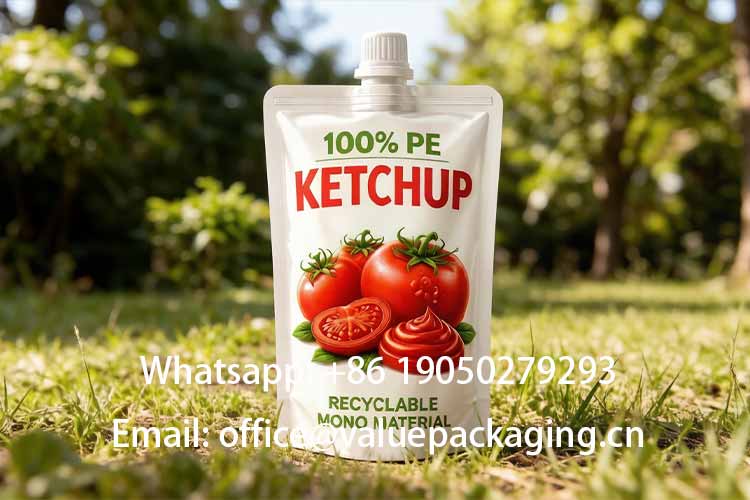
Among these options, mono material flexible packaging has attracted growing attention in recent years. By using a single polymer structure, such as polyethylene based films, mono material pouches can improve compatibility with existing recycling streams while maintaining good sealing performance and product protection. This approach helps reduce the recycling challenges associated with traditional multilayer laminates and provides a more practical pathway toward sustainable ketchup packaging.
4.Mono Material Pouches: A Practical Recyclable Solution
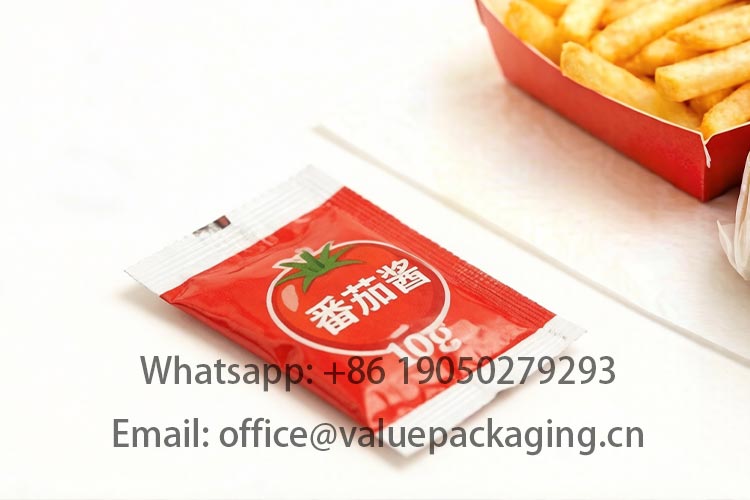
Unlike traditional multilayer laminates that combine several different polymers, mono material packaging is designed around a single material system, which helps simplify recycling and improve compatibility with existing waste management infrastructure. For sauce products such as ketchup, these structures must still provide reliable sealing, durability, and adequate barrier performance to protect product quality throughout storage and distribution.
To achieve these functions, manufacturers often rely on advanced films and functional substrates that can be combined within compatible material systems. These materials provide mechanical strength, sealing performance, and barrier protection while supporting more sustainable packaging designs.
Common materials used in these structures include:
- MDOPE Film
- BOPE Film
- APE Film
- LDPE Film
- LLDPE Film
- CPE Film
- EVOH-LDPE Film
- CPP Film
- VMCPP Film
- VMBOPP Film
5.Typical Mono Material Structures for Ketchup Pouches
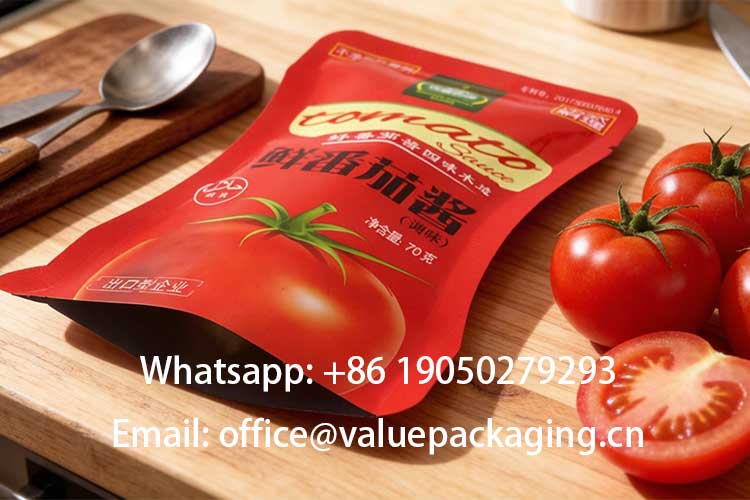
In practice, these mono materials are typically combined into mono material laminated structures to enhance packaging performance while maintaining recyclability. By carefully selecting compatible films, manufacturers can achieve a balance between product protection and environmental performance.
Typical PE based mono material structures include:
- MDOPE/LDPE
- MDOPE/EVOH-LDPE
- MDOPE/BOPE/LDPE
- MDOPE/BOPE/EVOH-LDPE
Typical PP based structures include:
These mono material structures help simplify packaging design while maintaining the performance required for ketchup products. By reducing the use of mixed materials, they improve compatibility with existing recycling systems and support more sustainable packaging solutions.
At the same time, modern films such as MDOPE and BOPE provide good mechanical strength, sealing reliability, and processing stability. This allows ketchup pouches to maintain product protection during filling, transportation, and storage while moving toward more recyclable packaging structures.
6.Compostable Packaging: An Emerging Alternative
Another direction is compostable packaging designed to break down under controlled composting conditions. Compared with conventional plastic packaging, compostable materials are developed to reduce long term environmental impact after disposal.
Common materials used in compostable ketchup packaging include:
- PLA+PBAT Film
- Kraft Paper
- Metallized Paper
- Cellulose Film
- Metallized Cellulose Paper
- PBS Film
- PVDC Coated Cellulose Film
Each of these materials offers different functional characteristics. For example, PLA+PBAT films provide flexibility and sealing performance, while paper and cellulose based materials can improve stiffness and offer a more natural appearance for sustainable packaging designs.
7.Compostable Laminate Structures for Ketchup Packaging
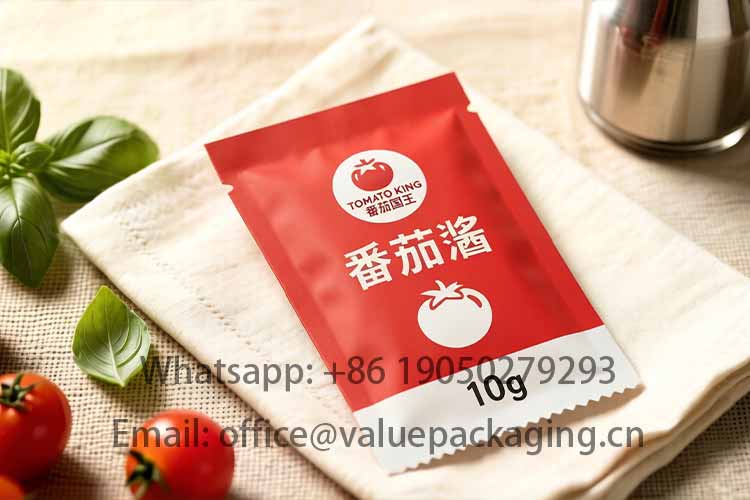
In practical applications, these materials are usually combined into laminated structures to achieve the mechanical strength, sealing performance, and barrier protection required for sauce products. By combining different compostable substrates, manufacturers can improve moisture resistance, oxygen barrier properties, and overall pouch durability.
Typical compostable pouch structures include:
- Kraft Paper/PLA+PBAT Membrane
- Cellulose/PLA+PBAT Membrane
- Metallized Paper/PLA+PBAT Membrane
- Cellulose/Metallized Cellulose/PLA+PBAT Membrane
- Cellulose/Metallized Paper/PLA+PBAT Membrane
- Kraft Paper/Cellulose/PLA+PBAT Membrane
These compostable laminate structures help provide the functional properties required for ketchup packaging. Tomato ketchup is sensitive to oxygen exposure and moisture changes, which can affect flavor, color stability, and shelf life. Therefore, packaging materials must offer adequate oxygen and moisture barrier performance.
Barrier Properties of Compostable Laminates
| Biodegradable Foil Laminate | WVTR(g/m2/24hr) | OTR (cc/m2/24hr) |
| Cellulose30/PLA+PBAT60 | 131.5 | 5.6 |
| Kraft Paper45g /PLA+PBAT60 | 184 | 742 |
| Metallized Paper69g/PLA+PBAT40 | 27 | 127 |
| Cellulose20/Metallized Cellulose20/PLA+PBAT60 | 18 | 2.1 |
| Metallized Paper 69g/Cellulose30/PLA+PBAT60 | 5.6 | 1.12 |
| Cellulose30/Metallized Paper69g/PLA+PBAT60 | 8.9 | 1.1 |
8.Conclusion: Rethinking Ketchup Packaging Sustainability
While these packaging solutions provide strong product protection, growing sustainability expectations are encouraging the industry to explore new materials and more environmentally responsible packaging structures.
Moving forward, the development of recyclable mono material pouches, compostable materials, and more efficient material usage will play an important role in reducing the environmental impact of ketchup packaging. Achieving truly sustainable packaging requires not only alternative materials but also thoughtful structural design and cooperation across the packaging supply chain, allowing brands to maintain product protection while supporting long term environmental goals.